What to Do When a Frozen Pipe Bursts in Kansas City
Learn immediate steps to take when a frozen pipe bursts in your Kansas City home. Discover emergency fixes, repair processes, costs, and prevention.

Need a Plumber in Kansas City, MO?
Plumbing Problem? Call for professional plumbing help.
Get help with emergency plumbing, clogged drains, leaking pipes, water heaters, burst pipes and other residential plumbing problems in Kansas City, Missouri.
Need a Plumber in Kansas City, MO?
Plumbing Problem? Call for professional plumbing help.
Get help with emergency plumbing, clogged drains, leaking pipes, water heaters, burst pipes and other residential plumbing problems in Kansas City, Missouri.
What to Do When a Frozen Pipe Bursts in Kansas City
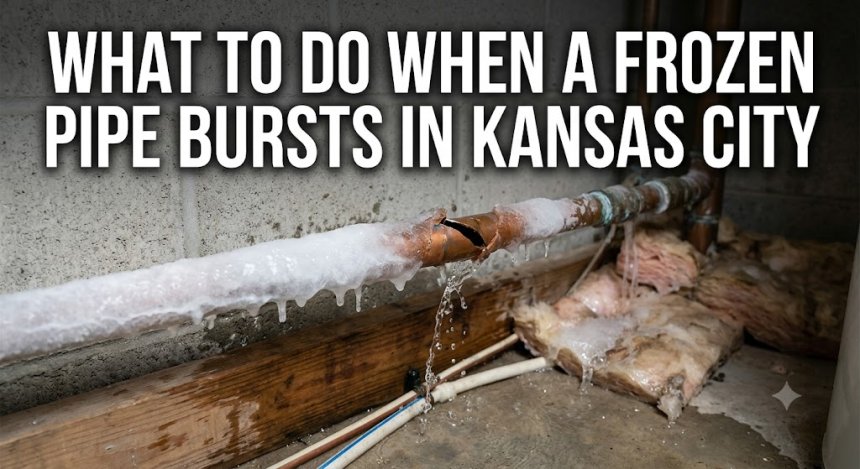
Few household emergencies panic a homeowner faster than the sudden sound of rushing water during a sub-zero winter storm. When an arctic freeze sweeps across the Kansas City metro area, temperatures drop sharply, turning trapped water inside uninsulated pipes into solid ice. As that ice expands, it builds extreme internal pressure until the pipe wall tears open.
When the temperature rises and that ice thaws, water rushes out under full household pressure. A single burst line can spew over 400 gallons of water per hour into your living room, basement, or crawlspace. Whether you own a historic home in Midtown, a suburban property in Overland Park, or operate a storefront in Downtown KC, knowing exactly what to do when a frozen pipe bursts will limit structural destruction, protect your health, and save thousands in water damage remediation.
What Is a Burst Frozen Pipe?
A burst pipe occurs when water inside a supply line freezes, expands, and breaks the structural integrity of copper, PEX, PVC, or galvanized steel piping.
                                [Ice Blockage Forms]
                                         │
                                         ▼
                             [Water Expands Up to 9%]
                                         │
                                         ▼
                      [Static Pressure Reaches Extreme PSI]
                                         │
                                         ▼
                      [Pipe Wall Fractures or Splices Open]
                                         │
                                         ▼
                   [Water Releases Rapidly During the Thaw]
Common Situations
Burst pipes frequently happen during sudden temperature drops or when furnace systems fail while homeowners are away. The split often goes unnoticed while the pipe stays frozen solid. The true emergency strikes during the thaw, when the ice block melts and unblocks the pressurized line.
Key Symptoms of a Burst Pipe
-
Active water pooling on floors or cascading through ceiling drywall.
-
Sudden, severe drop in water pressure across household fixtures.
-
Sound of running water behind walls when all taps are closed.
-
Soggy, sagging drywall or bubbling paint on exterior-facing walls.
-
Water meter dial spinning rapidly despite no intentional water usage.
Why Does This Plumbing Problem Happen?
Understanding the underlying causes of winter pipe ruptures helps homeowners recognize vulnerable areas before disaster strikes:
+-------------------------------------------------------------------------+
| Primary Causes of Winter Pipe Ruptures                                  |
+-------------------------------------------------------------------------+
                                     │
    +------------------+-------------+-------------+------------------+
    |                  |                           |                  |
    v                  v                           v                  v
[Extreme Cold Snaps] [Unheated Basements]    [Air Drafts & Gaps]   [System Strain]
Sub-zero wind      Uninsulated crawlspaces   Cracks in rim joists  Aging metal & high
chill factors      & cold wall cavities      & dryer vents         water pressure
-
Severe Winter Weather: Midwest winters bring sudden freeze-thaw cycles. Plunging temperatures freeze standing water inside pipes within hours.
-
Inadequate Insulation: Lines running through unheated crawlspaces, outer walls, attics, or attached garages lack sufficient thermal protection.
-
Cold Air Drafts: Small gaps around exterior penetrations (such as dryer vents, hose bibbs, or foundation rim joists) funnel freezing wind directly onto bare metal lines.
-
Aging and Corroded Pipes: Older galvanized iron or thin-walled copper pipes lose structural strength over time, making them far more likely to split under ice expansion.
-
High Water Pressure: Municipal supply pressure above 80 PSI puts extra stress on pipes, turning a small freeze point into a massive structural burst.
-
Improper Pipe Installation: Plumbing run too close to outer building cladding without proper thermal breaks freezes rapidly during deep freezes.
Signs You Should Never Ignore
Do not wait for a full ceiling collapse before taking action. Watch out for these early warning indicators:
-
Low or Fluctuating Water Pressure: Indicates ice restrictions building up inside supply lines.
-
Damp Walls and Water Stains: Signals a hairline split leaking slowly behind interior paneling or drywall.
-
Discolored or Dirty Tap Water: Points to pipe wall damage, rust dislodging from split iron lines, or soil infiltration.
-
Musty Odors and Mold Growth: Dampness inside wall cavities breeds visible mold within 24 to 48 hours of a hidden freeze leak.
-
Unusual Hissing or Clunking Noises: Water escaping under high pressure creates audible vibration behind structural framing.
Common Plumbing Problems Related to Burst Pipes
A burst pipe rarely stays confined to one isolated fixture. It often causes wider damage across your plumbing:
[Burst Pipe Rupture] ──> [Pressure Shock] ──> [Water Damage & Structural Risk]
                                                    │
                                                    ├──> [Slab & Underground Leaks]
                                                    ├──> [Ruined Valve Cartridges]
                                                    └──> [Drain & Sewer Blockages]
-
Slab and Foundation Leaks: Water escaping under concrete slabs shifts supporting soil, threatening your foundation.
-
Fixture Cartridge Damage: Debris and ice fragments ruin delicate ceramic valves in shower diverters and faucets.
-
Drain and Sewer Backup Complications: Freezing temperatures can also freeze trap seals and roof vent stacks, slowing overall drainage.
-
Water Heater Strain: Rapid loss of hot water from supply line splits forces water heaters to run continuously, risking heating element failure.
Immediate Steps to Take When a Pipe Bursts
If a water line ruptures in your home, act quickly using this step-by-step emergency action plan:
+-------------------------------------------------------------------------+
| STEP 1: Turn Off the Main Water Valve Immediately                       |
+-------------------------------------------------------------------------+
                                     │
                                     ▼
+-------------------------------------------------------------------------+
| STEP 2: Shut Off Power to Wet Areas (At Breaker Box)                    |
+-------------------------------------------------------------------------+
                                     │
                                     ▼
+-------------------------------------------------------------------------+
| STEP 3: Open Faucets to Drain Remaining Line Pressure                   |
+-------------------------------------------------------------------------+
                                     │
                                     ▼
+-------------------------------------------------------------------------+
| STEP 4: Document Damage & Call an Emergency Plumber                     |
+-------------------------------------------------------------------------+
-
Shut Off the Main Water Supply: Locate your main shutoff valve (usually near the water meter, basement foundation wall, or utility closet) and turn it clockwise until fully closed.
-
Turn Off Electrical Power: If water is pooling near outlets, electrical panels, or appliances, switch off electricity at the main breaker box to avoid shock hazards.
-
Open Faucets: Turn on cold and warm taps across the home to relieve remaining system pressure and drain standing water.
-
Document the Damage: Take photos and videos of the burst area, standing water, and damaged belongings for insurance claims.
-
Call an Emergency Plumber: Contact a licensed local plumbing contractor right away to diagnose the break and make repairs.
Step-by-Step Professional Repair Process
When a licensed technician arrives at your home, they follow a systematic repair protocol to restore your water service safely:
-
Step 1: Emergency Assessment: The technician inspects the property, verifies main shutoff isolation, and assesses immediate safety hazards.
-
Step 2: Diagnostic Location: Using thermal imaging cameras and acoustic leak detectors, the plumber pinpoints every break point—even hidden cracks behind walls.
-
Step 3: Upfront Repair Estimate: You receive a detailed breakdown of work required, material choices, and clear pricing before repairs start.
-
Step 4: Section Removal & Replacement: Damaged pipe segments are cut out and replaced with code-compliant copper or flexible PEX lines using commercial press-fittings or solders.
-
Step 5: Controlled Pressure Testing: The plumber repressurizes the system slowly, checking every new joint and testing water pressure to ensure overall system stability.
-
Step 6: Site Cleanup: Technicians remove damaged pipe scrap and clear standing water from the immediate work area.
-
Step 7: Winterization & Advice: The plumber provides long-term preventive recommendations, such as adding pipe insulation sleeves or rerouting vulnerable lines.
Can You Fix It Yourself?
Knowing what you can safely manage versus when to call a professional protects your home and prevents costly mistakes.
| Safe DIY Temporary Fixes | Dangerous DIY Actions (Avoid!) |
| Closing the main water shutoff valve immediately. | Using open torches or flame tools inside dry wall cavities. |
| Applying rubber pipe repair clamps or silicone wrap on minor leaks as a temporary hold. | Leaving temporary clamps as permanent solutions. |
| Mopping up standing water and running dehumidifiers. | Working near live electrical outlets in flooded basements. |
| Opening under-sink cabinets to let room heat reach pipes. | Pouring harsh chemical openers into frozen or damaged drain lines. |
When Professional Plumbing Is Mandatory
-
The pipe break is located inside concrete slabs, subfloors, or structural framing.
-
Water leaks near electrical panels, ceiling fixtures, or gas appliances.
-
Multiple pipe splits occur across different areas of the house.
-
The main shutoff valve is stuck, broken, or frozen open.
Tools Professionals Use for Emergency Repairs
Licensed plumbers rely on specialized tools to handle complex pipe failures safely and accurately:
                  +-----------------------------------+
                  |   Professional Plumbing Equipment |
                  +-----------------------------------+
                                    |
   +--------------------+-----------+-----------+--------------------+
   |                    |                       |                    |
   v                    v                       v                    v
[Thermal Cameras]   [Acoustic Detectors]  [Pipe Thaw Units]    [ProPress Systems]
Spot hidden moisture Locate subterranean  Safely melt internal Connect new lines without
behind drywall      cracks & slab leaks   ice blockages        open torch flames
-
Thermal Imaging Cameras: Locate hidden moisture trails and ice blockages inside wall cavities without tearing out drywall unnecessarily.
-
Acoustic Leak Detectors: Listen for high-frequency water noise inside concrete slabs or underground lines.
-
Electric Pipe-Thaw Units: Deliver safe, low-voltage current through metal piping to clear frozen blocks without fire hazards.
-
ProPress Pipe Crimpers: Create permanent, cold-weld connections on copper and PEX without open flames in confined spaces.
How Long Does the Repair Usually Take?
Repair timelines depend on pipe accessibility, structural damage, and line complexity.
Simple Patch/Replace (Exposed Line)   [==] 1 - 2 Hours
In-Wall Line Repair & Re-Pipe        [====] 2 - 4 Hours
Major Burst & Multi-Section Repair   [========] 4 - 8+ Hours
-
Simple Exposed Repairs (1 to 2 Hours): Replacing an accessible copper or PEX section in an open basement or utility room.
-
In-Wall Pipe Replacements (2 to 4 Hours): Opening wall sections, cutting out damaged pipe, installing new fittings, and testing pressure.
-
Major Multi-Line Restoration (4 to 8+ Hours): Replacing multiple split lines across crawlspaces or rebuilding damaged main supply manifold runs following severe winter storms.
Cost Factors for Burst Pipe Repairs
Plumbing repair costs vary depending on the severity of the problem, accessibility, materials required, emergency service, property type, and local labor rates.
Key variables affecting final repair costs include:
-
Pipe Accessibility: Break points inside concrete slabs, tiled shower walls, or tight crawlspaces demand more labor to reach.
-
Extent of Damage: Replacing a single split fitting is far less costly than re-piping an entire exterior wall run.
-
Material Requirements: Heavy-gauge copper fittings carry different material costs than flexible PEX piping.
-
Emergency Service Timing: Late-night, weekend, or holiday response during major regional freeze events affects service rates.
-
Permitting & Code Requirements: Major structural modifications or main supply rerouting may require local municipal permits and building inspections.
Hidden Truths Homeowners Should Know
+---------------------------------------------------------------------+
| 1. Small leaks produce hidden mold inside walls within 24 hours.    |
| 2. Temporary rubber wraps degrade quickly under normal line PSI.    |
| 3. Insurers may deny claims if homes were left unheated.            |
| 4. Frozen main lines can split underground without surface water.   |
| 5. High water pressure turns minor cracks into major ruptures.     |
+---------------------------------------------------------------------+
-
Small Leaks Create Big Damage Fast: A minor hairline leak behind drywall can rot structural studs and fuel dangerous mold growth within 24 to 48 hours.
-
Temporary Wraps Fail Quickly: Emergency rubber clamps and silicone tapes are temporary stopgaps—they cannot handle full household water pressure ($40\text{--}80\text{ PSI}$) long-term.
-
Insurance Requires Reasonable Care: Home insurance carriers may reject freeze-damage claims if the building was left unheated below $55^\circ\text{F}$ ($13^\circ\text{C}$) during cold spells.
-
Underground Breaks Go Unnoticed: Burst lines beneath slabs or inside meter pits can leak thousands of gallons underground without showing surface water right away.
-
Pressure Drives the Destruction: Ice creates the crack, but normal municipal water pressure causes structural destruction during the thaw.
15 Common Mistakes Homeowners Make
-
Ignoring Slow Drips and Drops: Assuming small winter leaks will fix themselves once temperatures rise.
-
Using Open Flame Torches: Attempting to thaw pipes with blowtorches creates extreme fire risks inside wall frames.
-
Leaving Garden Hoses Connected: Traps water inside sillcocks, splitting pipes inside interior walls.
-
Setting Thermostats Too Low: Dropping indoor temperatures below $55^\circ\text{F}$ when traveling during winter.
-
Forgetting Under-Sink Cabinet Doors: Keeping cabinet doors shut cuts off warm room air from exterior-wall pipes.
-
Pouring Chemical Cleaners Down Frozen Drains: Exothermic chemical reactions can shatter cold PVC and spray corrosive liquids.
-
Turning Off the Heat During Outages: Failing to drain plumbing lines when household power or heat drops out for extended periods.
-
Delaying Main Water Shut-Off: Waiting to shut off main valves after discovering a burst line causes severe interior flooding.
-
Relying Solely on Unheated Pipe Insulation: Foam sleeves slow heat loss but cannot keep stagnant water warm during prolonged sub-zero snaps without a heat source.
-
Over-Tightening Frozen Shutoff Valves: Forcing frozen valve handles snaps stems and damages internal seals.
-
Pouring Boiling Water on Frozen Pipes: Sudden thermal shock can shatter cold cast iron or split metal joints instantly.
-
Leaving Space Heaters Unattended: Running portable electric heaters unmonitored in tight crawlspaces poses fire risks.
-
Hiring Unlicensed Handymen: Using uncertified labor for critical plumbing repairs often leads to code violations and repeat leaks.
-
Skipping Autumn Winterization: Failing to drain outdoor bibbs and seal foundation gaps before the first freeze.
-
Failing to Document Flood Damage: Cleaning up burst water damage before taking photos complicates insurance claims.
Maintenance Tips to Prevent Future Pipe Bursts
Protect your plumbing investment with a comprehensive seasonal maintenance routine:
Fall Preparation Checklist
-
Disconnect, drain, and store all garden hoses before freezing temperatures arrive.
-
Close interior isolation valves serving outdoor sillcocks and drain remaining water from exterior taps.
-
Seal cracks, gaps, and utility penetrations around foundation walls using expanding foam or exterior caulk.
-
Install thick foam insulation sleeves or self-regulating electric heat cable along exposed pipes in crawlspaces, basements, and garages.
-
Have a licensed plumber inspect backflow preventers, pressure-reducing valves, and main shutoff controls.
       [Fall Prep Checklist]                      [Deep Freeze Protocol]
  - Disconnect Exterior Hoses              - Drip Taps (Warm & Cold)
  - Shut Isolation Valves         ===>     - Keep Cabinet Doors Open
  - Seal Foundation Air Drafts             - Maintain Heat at 68°F (20°C)+
  - Insulate Bare Supply Lines             - Open Interior Room Doors
Deep Freeze Protocols
-
Dripping warm and cold water slowly from exterior-wall faucets keeps water moving and relieves line pressure.
-
Keep kitchen and bathroom vanity doors open so furnace heat circulates around sink piping.
-
Maintain a steady thermostat setting day and night—avoid setback temperatures during extreme cold snaps.
-
Keep garage doors shut if supply lines pass through garage walls or ceilings.
-
Keep interior doors open throughout your home to distribute warm air evenly.
When Should You Call an Emergency Plumber?
Call an emergency plumbing specialist immediately if you experience:
-
Active Burst Water Lines: Water spraying or flooding into living areas, basements, or crawlspaces.
-
Complete Loss of Water Service: Total loss of water flow during sub-zero weather suggests a frozen main line.
-
Sewage Backups or Frozen Sewer Vents: Foul odors, floor drain overflow, or gurgling toilets caused by frozen stacks.
-
Stuck or Broken Main Shut-off Valves: Inability to turn off household water during an active leak.
-
Water Near Electrical Panels or Outlets: Flooding near electrical infrastructure creates severe shock hazards.
Frequently Asked Questions
Why is my water pressure suddenly low during a cold spell?
Low pressure during sub-freezing weather usually indicates ice is forming inside your supply lines. Restricted water flow is an early warning sign of an impending total freeze or pipe rupture.
What should I do first when a frozen pipe splits?
Turn off your main water shutoff valve immediately to stop water flow. Next, open household faucets to relieve system pressure, and contact an emergency plumber.
Can a burst pipe leak through ceiling drywall safely?
No. Sagging or wet drywall can collapse suddenly under water weight. Place buckets underneath, carefully poke a small hole in the center of the bulge to drain standing water, and turn off your main supply valve.
Will a frozen pipe always leak immediately?
Not always. A frozen pipe may remain sealed by the ice block itself. The real leak typically starts during the thaw, when the ice melts and water flows through the rupture.
Should I use a hair dryer to thaw a frozen pipe?
You can use a hair dryer on accessible, exposed indoor pipes, provided there is no standing water nearby. Never use open-flame torches, heat guns, or electrical devices in flooded areas.
How much water leaks from a typical burst pipe per hour?
A burst supply line running at standard residential pressures ($40\text{--}80\text{ PSI}$) can spill 400 to 800 gallons of water per hour, causing rapid property damage.
Does homeowners insurance cover burst pipe repairs?
Most standard homeowners policies cover water damage restoration caused by sudden burst pipes, provided you maintained heat in the home and took basic precautions against freezing.
Is PEX piping less likely to burst than copper?
Flexible PEX pipe expands more than rigid copper or PVC before splitting, making it more freeze-resistant. However, PEX fittings and lines can still rupture under severe sub-zero conditions.
How do I locate my home's main water shutoff valve?
Main shutoff valves are typically found in basements near the front foundation wall, inside utility closets near the water heater, or inside an outdoor meter pit near your property line.
Can chemical drain openers thaw frozen drain lines?
No. Chemical openers rely on standing water movement to reach blockages, generating heat through chemical reactions that can crack cold pipes. Never use harsh drain chemicals on frozen lines.
Why Choose Our Plumbing Team?
When a winter plumbing emergency threatens your property, you need reliable local technicians who act fast. We deliver prompt emergency plumbing service across Kansas City, Overland Park, Olathe, Lee's Summit, Shawnee, and surrounding neighborhoods.
-
Licensed & Certified Master Plumbers: Experienced professionals trained in modern structural plumbing and emergency repairs.
-
24/7 Rapid Emergency Response: Fully stocked service vans ready to respond to burst pipe calls day or night.
-
Upfront Itemized Pricing: Clear, transparent estimates provided before repair work begins—no hidden surcharges.
-
Modern Equipment: Diagnostic thermal imaging cameras, electric thaw machines, and flame-free press tools ensure safe repairs.
-
Local Expertise: Deep experience working with Midwest housing designs, historic foundations, and local freeze conditions.
Need Immediate Emergency Plumbing Help?
Don't let a burst pipe destroy your home or business. If you suspect a freeze, discover a leak, or need immediate line repairs, our licensed emergency plumbing team is available 24/7.
Call our team today or visit