Why Does My Kansas City Home Smell Like Sewer Gas?
Catching a sewer gas smell in your Kansas City home? Discover common causes, safety hazards, DIY fixes, repair steps, and expert plumbing solutions.

Need a Plumber in Kansas City, MO?
Plumbing Problem? Call for professional plumbing help.
Get help with emergency plumbing, clogged drains, leaking pipes, water heaters, burst pipes and other residential plumbing problems in Kansas City, Missouri.
Need a Plumber in Kansas City, MO?
Plumbing Problem? Call for professional plumbing help.
Get help with emergency plumbing, clogged drains, leaking pipes, water heaters, burst pipes and other residential plumbing problems in Kansas City, Missouri.
Why Does My Kansas City Home Smell Like Sewer Gas?
Stepping into your basement, laundry room, or bathroom only to be hit with the distinct, unpleasant stench of rotten eggs or decaying waste is a immediate red flag. A sewer gas smell inside your home is more than just a foul odor—it signals a breach in your waste water system designed to keep toxic gases outside your living environment.
Homeowners across the Kansas City area face this issue regularly. From older brick homes in Brookside and historic historic properties in Midtown to established neighborhoods in Overland Park, Olathe, and Gladstone, our local housing stock experiences unique soil settling, seasonal freeze cycles, and aging infrastructure.
Understanding why sewer gas enters your living space, knowing how to spot the early warning signs, and taking quick action protects both your household's health and your property's value.
What Is a Sewer Gas Leak?
Sewer gas is a complex mixture of airborne chemicals and gases produced by the decay of domestic commercial organic waste. It primarily contains hydrogen sulfide (which provides the characteristic rotten-egg smell), methane, ammonia, carbon monoxide, and trace gases.
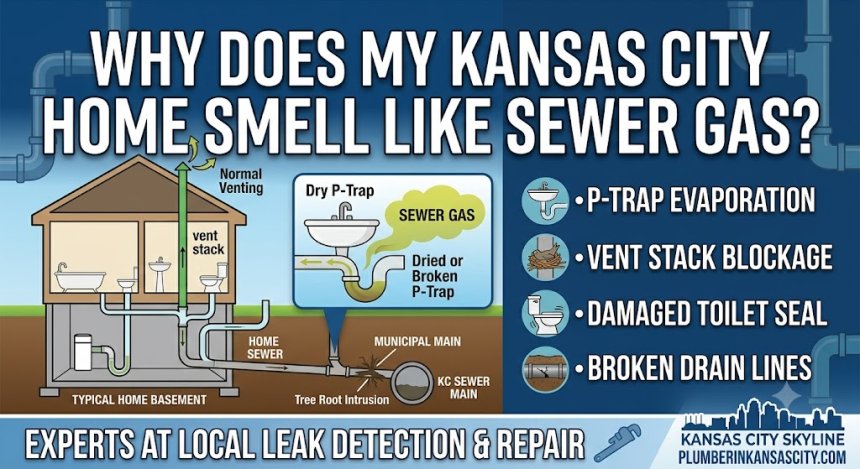
Your plumbing system uses two primary barriers to keep these gases out of your home: P-traps (the U-shaped pipe under every sink, tub, and floor drain filled with a small seal of water) and vent stacks (pipes extending through your roof that release system gases safely into the open air while regulating pressure).
When a P-trap dries out, a vent stack becomes clogged, or an underground pipe cracks, sewer gas flows backward into your rooms instead of escaping outside.
Why Does This Plumbing Problem Happen in Kansas City?
Sewer odors inside a residence or business stem from specific plumbing faults, environmental factors, and seasonal shifts:
-
Dried-Out P-Traps: Guest bathrooms, basement floor drains, or utility sinks used infrequently lose their water seal to simple evaporation over time.
-
Corroded or Damaged Vent Stacks: Winter ice, leaves, bird nests, or dead animals block the roof vent stack. Gas gets trapped and forces its way through interior drain traps.
-
Tree Root Intrusion: Fast-growing tree roots penetrate underground clay or cast-iron lateral pipes across Kansas City yards, causing partial blockages that push sewer gas backward through broken joints.
-
Loose or Damaged Toilet Wax Rings: The soft wax seal connecting the base of your toilet to the closet flange dries out, shifts, or breaks, letting gas leak into the bathroom floor space.
-
Aging Pipes & Foundation Shifts: Expansion and contraction of Kansas City's clay soil causes foundation movement, cracking brittle cast-iron or older galvanized drain pipes inside walls or crawl spaces.
-
Sewer Main Backups: Municipal sewer surges during heavy Midwest rainstorms fill lateral lines, pushing gas up through basement floor drains.
Signs You Should Never Ignore
While the smell itself is obvious, other accompanying symptoms highlight a progressive system failure:
-
Persistent Rotten-Egg Odor: The odor stays concentrated in a specific room or grows stronger during rainy weather.
-
Gurgling Fixtures: Hearing air bubbles or gurgling sounds from your toilet when the shower runs or washing machine drains indicates a blocked vent line.
-
Slow Drains Across Multiple Rooms: Bathtubs and sinks draining at a crawl signal main lateral line restriction rather than a simple localized clog.
-
Unexplained Health Symptoms: Family members experiencing headache, nausea, eye irritation, or dizziness when spending time in specific areas like the basement.
-
Damp Spots or Mold on Baseboards: Invisible sewer line cracks inside walls release moisture alongside sewer gas, encouraging rapid mold spore growth.
Common Plumbing Problems Related to Sewer Gas
A sewer gas smell rarely occurs in complete isolation. It is typically a symptom of broader issues within your drain-waste-vent (DWV) network:
-
Main Line Blockages: Heavy buildup of grease, wipes, or root masses forcing gas backward under pressure.
-
Slab Leaks & Cracked Lateral Lines: Underground drain lines breaking underneath concrete basement floors, releasing sewer air through concrete micro-cracks.
-
Corroded Cast-Iron Drain Stacks: Interior vertical stacks rusting from the inside out, creating hairline pinholes concealed inside finished walls.
-
Broken Cleanout Caps: Outdoor or basement cleanout access plugs cracked, missing, or improperly sealed.
Step-by-Step Professional Repair Process
When you call a licensed plumbing specialist to address sewer odor issues, they follow a systematic process to find and fix the root cause safely:
-
Step 1: Initial System Inspection: The technician inspects all visible P-traps, cleanout plugs, toilet bases, and basement floor drains for obvious drying or physical wear.
-
Step 2: Smoke Testing or Pressure Testing: If the leak source remains hidden inside walls or underground, non-toxic artificial smoke is pumped into the DWV system under mild pressure. Smoke rising out of wall cracks or around fixture bases reveals the exact point of failure.
-
Step 3: Sewer Camera Video Scoping: A high-definition, self-leveling sewer camera travels down cleanout lines to inspect internal pipe walls for cracks, bellies, or root intrusions.
-
Step 4: Detailed Repair Estimate: The plumber outlines clear solutions—ranging from replacing a toilet wax seal to hydro-jetting lines or repairing a vent stack.
-
Step 5: Professional Repair Execution: Technicians complete the targeted structural repair using code-compliant materials like Schedule 40 PVC or trenchless relining technology.
-
Step 6: Flow & Pressure Testing: The team flushes all lines and re-tests traps to verify zero gas leakage and smooth, unimpeded water flow.
-
Step 7: Prevention & Maintenance Guidance: Clear instructions are shared to keep P-traps primed and prevent future vent or pipe blockages.
Can You Fix It Yourself? Safe DIY Checks vs. Dangerous Pitfalls
Safe DIY Steps to Try First
-
Pour Water Down Seldom-Used Drains: Pour a half-gallon of warm water down unused basement floor drains, guest shower stalls, or utility sinks to restore the evaporated P-trap water seal.
-
Add Mineral Oil to Unused Traps: Adding 2 tablespoons of mineral oil over the water in rarely used floor drains slows down evaporation significantly.
-
Check Cleanout Plugs: Ensure threaded cleanout caps in your basement or yard are screwed on tightly.
When DIY Becomes Dangerous
-
Never Climb on Icy Roofs: Attempting to clear snow or leaves off a high, steep roof vent stack without proper safety harness equipment leads to severe falls.
-
Avoid Chemical Pouring: Pouring caustic chemical drain cleaners down smelly drains releases toxic fumes when mixed with hydrogen sulfide gas and eats away at old metal pipes.
-
Do Not Ignore Mold or Gas Illness: Attempting to patch structural drain line cracks inside walls with duct tape or hardware-store silicone permits gas and moisture to contaminate your home continuous.
Professional Tools Used for Sewer Gas Diagnostics
Master plumbers rely on specialized diagnostic equipment to locate leaks fast without destroying finished walls:
-
Plumbing Smoke Machines: Generates dense, non-toxic diagnostic smoke to spot invisible micro-gaps inside wall cavities within minutes.
-
Combustible & Toxic Gas Detectors: Electronic hand-held sensors that measure exact hydrogen sulfide and methane concentrations in parts per million (PPM).
-
HD Digital Sewer Cameras: Fiber-optic camera reels equipped with radio transmitters to pinpoint underground pipe breaks accurately.
-
Static Water & Air Pressure Testers: Gauges used to verify complete air-tight integrity across entire residential drain lines.
How Long Does Repair Work Take?
Project timelines vary based on the underlying cause:
| Diagnostic & Repair Task | Typical Timeframe |
| Priming Dried Traps / Adjusting Cleanout Caps | 15 – 30 Minutes |
| Replacing Toilet Wax Ring & Flange Fasteners | 1 – 2 Hours |
| Roof Vent Stack De-clogging & Clearing | 1 – 3 Hours |
| Smoke Testing & Complex Hidden Leak Diagnosis | 2 – 4 Hours |
| In-Wall Pipe Stack Replacement or Main Line Repair | 1 – 2 Days |
Cost Factors in Sewer Line & Odor Repair
Because sewer gas entry points range from simple dry traps to broken underground main lines, costs vary depending on structural variables:
-
Diagnostic Complexity: Simple visual inspection vs. advanced smoke testing or full HD camera scoping.
-
Access Requirements: Work inside open basements vs. removing drywall, cutting tile, or excavating under slabs.
-
Parts & Material Needs: Basic wax seals and rubber gaskets vs. heavy-duty PVC pipe fittings or trenchless liners.
-
Emergency Scheduling: Standard weekday service calls vs. immediate after-hours or holiday response.
-
Permitting & Code Requirements: Local city permits for main structural line replacements.
Note: Plumbing repair costs vary depending on the severity of the problem, accessibility, materials required, emergency service, property type, and local labor rates.
Hidden Truths Homeowners Should Know
-
Sewer Gas Is a Health Hazard: Low-level exposure causes fatigue, chronic headaches, and eye irritation, while severe concentrations displace oxygen.
-
Cheap DIY Patches Fail Quickly: Using duct tape or sealant over cracked indoor vent pipes decays quickly under constant moisture exposure.
-
Insurance Excludes Neglected Maintenance: Standard property insurance covers sudden pipe bursts, but generally denies claims caused by long-term pipe rot or unaddressed root damage.
-
Trees Intrude Continuously: Snaking a root-choked sewer lateral clears flow temporarily, but roots will break back through joints until the pipe is permanently repaired or lined.
-
Hidden Sewer Leaks Increase Utility Costs: Leaking waste lines strain home ventilation systems, ruin insulation, and cause secondary moisture damage that drives up electric bills.
15 Common Mistakes Homeowners Make
-
Assuming a sewer gas smell will simply fade away on its own.
-
Pouring heavy chemical drain cleaners down smelly floor drains.
-
Ignoring gurgling noises coming from toilets or bathroom sinks.
-
Pouring grease and fats down kitchen sinks, creating rotten organic blockages.
-
Flushing non-flushable wipes, shop towels, or hygiene products.
-
Forgetting to pour water down basement floor drains every few weeks.
-
Cover-up sewer gas smells with aerosol air fresheners or scented candles.
-
Hiring unlicensed handymen to alter drain-waste-vent lines inside walls.
-
Skipping professional sewer camera scopes when buying an older home.
-
Sealing over smelly basement drains with solid covers instead of fixing the trap.
-
Attempting to clear roof vent stacks during hazardous winter weather.
-
Driving or parking heavy vehicles over underground sewer lines in the yard.
-
Over-tightening toilet mounting bolts, cracking the porcelain base or flange.
-
Waiting until raw sewage backs up onto basement floors before calling a pro.
-
Neglecting routine yearly plumbing system checkups.
Essential Preventive Maintenance Tips
-
Pour Water Weekly: Pour one gallon of water down all unused floor drains, basement sinks, and guest bathrooms every week.
-
Clean Drain Stoppers: Periodically pull up sink stoppers to remove trapped hair and organic sludge that smells foul.
-
Inspect Vent Caps: Install wire mesh caps over roof vent stack openings to stop birds, leaves, and squirrels from nesting inside.
-
Use Enzyme Cleaners: Treat drains monthly with safe, non-corrosive natural enzyme cleaners that consume organic buildup.
-
Schedule Camera Inspections: Have your lateral sewer line camera-inspected every 2 years if your property features mature shade trees.
-
Check Toilet Stability: If a toilet wobbles when sat upon, replace the wax seal and tighten floor bolts promptly before leaks start.
-
Maintain Basement Floor Drains: Ensure cleanout plugs located inside floor drain housings remain tight and intact.
-
Keep Gutters Clean: Prevent roof runoff from pooling near your foundation and shifting shallow sewer lines.
-
Never Flush Garbage: Limit disposal usage for fibrous vegetables, eggshells, and coffee grounds.
-
Monitor Water Pressure: Ensure home water pressure stays below 80 PSI to avoid stress on pipe joints.
-
Know Your Main Shut-Off: Make sure every family member knows the location of the main water shut-off valve.
-
Insulate Outdoor Vents: Check attic vent pipe runs to ensure insulation prevents interior condensation freeze-ups.
-
Replace Old Rubber Gaskets: Update aging rubber washing machine hoses and drain seals every 5 years.
-
Schedule Annual Scopes: Hire a licensed plumber to perform an annual health audit of your waste systems.
-
Keep Cleanouts Accessible: Never cover yard cleanout access caps under dense landscape mulch or decorative gravel.
When Should You Call an Emergency Plumber?
Contact a professional plumbing service immediately if you experience:
-
Overwhelming Sewer Gas Odor: Heavy odor causing headache, nausea, or dizziness.
-
Sewage Backups: Raw sewage bubbling up through floor drains or shower pans.
-
Uncontrollable Water Leaks: Pipe cracks leaking dirty wastewater into living spaces.
-
Gurgling Accompanied by Standing Water: Total DWV system failure where using one fixture floods another.
Frequently Asked Questions
Can sewer gas in my house make me sick?
Yes. Sewer gas contains hydrogen sulfide, ammonia, and methane. Chronic exposure to even low concentrations causes headaches, dizziness, nausea, fatigue, and respiratory irritation.
Why does my bathroom smell like sewer gas only in the morning?
Overnight, water in P-traps sits undisturbed while household water usage stops. If a trap has a slow leak or thin water seal, sewer gas accumulates in the room during late hours.
How do I locate where the sewer gas smell is coming from?
Start by checking dry P-traps and toilet bases. If the odor source isn't obvious, a licensed plumber performs a professional smoke test to trace invisible leaks inside walls or ceilings.
Will a dry P-trap fix itself?
No. A P-trap requires liquid to create a seal. Pouring a half-gallon of water down the drain restores the seal immediately. If it dries out fast repeatedly, the trap may have a crack or siphonage issue.
Is hydro jetting safe for old pipes?
Yes, when performed by an experienced technician who conducts a video camera inspection first to check structural integrity before applying high pressure.
How do I know if my sewer line is broken?
Persistent sewer smells outdoors, spongy green patches on the lawn, gurgling toilets, and recurring basement floor drain backups indicate a broken main sewer line.
Why does my sink gurgle when I flush the toilet?
Gurgling indicates a blocked roof vent stack or main drain restriction. Air is being sucked through your sink's P-trap to vent the system, pulling away the protective water seal.
Can chemical drain cleaners cause sewer gas smells?
Yes. Caustic chemical cleaners corrode metal pipes, creating pinhole leaks. They also break down organic sludge into strong, foul-smelling airborne gases inside your drains.
How much does professional leak detection cost?
Diagnostic costs depend on whether standard visual inspections, thermal imaging, video camera scoping, or smoke tests are required to locate the issue.
When should I replace plumbing lines instead of repairing them?
If pipes show widespread interior corrosion, frequent structural cracks, continuous root intrusion, or have exceeded their 50-year lifespan (like old clay or cast-iron lines), full replacement is more cost-effective than continuous temporary repairs.
Why Choose Plumber in Kansas City?
Resolving sewer gas problems requires pinpoint accuracy, technical knowledge, and modern equipment. Property owners trust our service team for dependable, long-term results:
-
Licensed & Experienced Plumbing Specialists: Fully certified technicians who understand local Kansas City construction standards and municipal plumbing codes.
-
Advanced Leak Detection Equipment: Modern smoke machines, electronic gas detectors, and HD sewer cameras locate hidden leaks fast without unnecessary wall damage.
-
Upfront, Transparent Estimates: Honest pricing provided before work begins—no hidden fees or unexpected charges.
-
Fast Response & Emergency Availability: Immediate assistance when toxic sewer smells or wastewater backups threaten your living space.
-
Quality Workmanship & Local Expertise: Long-lasting solutions tailored to the unique climate and soil conditions of the Kansas City metro area.
If sewer gas odors are invading your home or business, don't wait for the issue to worsen. Contact