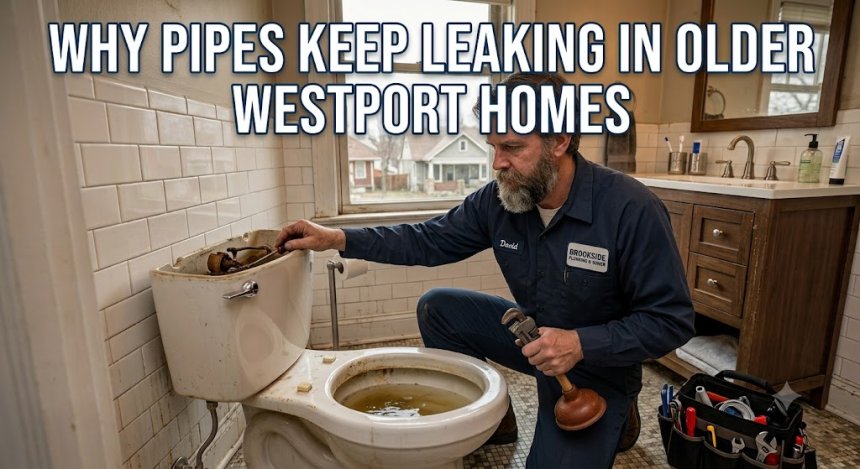
Why Pipes Keep Leaking in Older Westport Homes
Recurring pipe leaks in Westport? Learn why historic Kansas City homes suffer pinhole leaks, pipe corrosion, cost factors, and when to call a plumber.

Need a Plumber in Kansas City, MO?
Plumbing Problem? Call for professional plumbing help.
Get help with emergency plumbing, clogged drains, leaking pipes, water heaters, burst pipes and other residential plumbing problems in Kansas City, Missouri.
Need a Plumber in Kansas City, MO?
Plumbing Problem? Call for professional plumbing help.
Get help with emergency plumbing, clogged drains, leaking pipes, water heaters, burst pipes and other residential plumbing problems in Kansas City, Missouri.
Why Do Pipes Keep Leaking in Older Westport Homes?
Living in Westport means enjoying historic charm, beautiful architecture, and vibrant Kansas City culture. However, owning a historic home built in the late 19th or early 20th century comes with hidden structural quirks—especially inside the walls. If you find yourself repairing one water leak only for another to pop up months later under the bathroom sink or behind the laundry room wall, you are not alone.
Persistent pipe leaks are one of the most common issues reported by homeowners across Westport, Midtown, and surrounding Jackson County neighborhoods. Because many of these classic homes feature mixed plumbing materials installed across different decades, aging infrastructure constantly fights against mineral buildup, fluctuating municipal water pressure, and harsh Midwest weather swings.
Fixing a single leak might temporarily stop the drip, but understanding why your pipes keep failing is the key to preventing catastrophic water damage. This comprehensive guide covers the root causes of recurring leaks in vintage properties, warning signs to watch for, repair timelines, cost variables, and safe maintenance practices.
What Is Chronic Pipe Leaking in Historic Properties?
Chronic pipe leaking refers to a cycle where supply lines, drain stacks, or pipe joints fail repeatedly across different sections of a home's plumbing system. Unlike an isolated incident caused by a loose fitting, chronic leaking usually signals systemic material breakdown.
In older Westport residences, plumbing systems often look like a patchwork quilt. A home constructed in 1910 may have original lead or cast-iron drain lines joined with 1950s galvanized steel supply pipes, patched over with 1980s copper, and connected to modern PEX tubing under the kitchen sink.
When these incompatible materials interact under constant water pressure, electrochemical reactions and structural decay accelerate, leading to pinhole leaks, cracked joints, and structural weeping behind plaster walls.
[ Incoming Water Pressure ] ──> Mineral Scale & Corrosion ──> Thinning Pipe Walls
                                                                   │
[ Thermal Freeze/Thaw ]     ──> Galvanic Action (Mixed Metals) ──> Chronic Pinhole Leaks
Why Does This Plumbing Problem Happen?
Understanding the physical processes happening inside your home’s walls makes it easier to evaluate permanent solutions over quick patches.
1. Galvanic Corrosion from Mixed Metals
When two dissimilar metals (such as copper and galvanized steel) are joined directly without an insulating dielectric union, an electrical current naturally flows between them. This process, known as galvanic corrosion, causes the softer metal to deteriorate rapidly from the inside out, weakening pipe threads and joints.
2. Aging Galvanized Steel and Lead Lines
Galvanized steel pipes have an internal lifespan of roughly 40 to 50 years. As they age, the protective zinc coating wears off, allowing raw iron to rust. This rust creates internal mineral crusts (tuberculation) that choke off water flow, build up backpressure, and eventually rust through the pipe wall, creating sudden wall leaks.
3. Hard Water Scale Buildup
Water throughout the Kansas City metro area contains dissolved minerals like calcium and magnesium. Over decades, hard water scale coats the interior of supply lines. This buildup creates uneven water friction, wearing down thin copper walls through erosion-corrosion until tiny pinhole leaks develop.
4. Severe Winter Freeze-Thaw Cycles
Midwest winters bring hard freezes. Older Westport homes often feature under-insulated crawl spaces, unheated basements, or supply lines routed along exterior walls. As pipes freeze and expand in winter and contract in spring, metal fatigue develops, pulling soldered joints apart.
5. High Municipal Water Pressure
If incoming municipal water pressure spikes above 80 PSI (pounds per square inch) and your home lacks a functioning pressure-reducing valve (PRV), constant high pressure strains aging, brittle pipes, blowing out worn seals and valve packings.
Signs You Should Never Ignore
Active water leaks do not always create dramatic ceiling gushes right away. Frequently, they start as quiet weeps that damage structural framing and subflooring long before water drops onto your floor:
-
Discolored or Rusty Tap Water: Brown or reddish water indicates that galvanized pipes are rusting internally and nearing structural collapse.
-
Unexplained Water Stains on Plaster or Drywall: Yellowish rings or bubbling paint on ceilings and walls point to concealed supply line leaks.
-
Damp Walls and Musty Odors: Persistent dampness behind cabinetry or inside closets creates an ideal breeding ground for toxic mold within 24 to 48 hours.
-
Unusually High Water Bills: A sudden increase in your monthly water bill despite normal household usage indicates a hidden leak under a slab or inside a wall cavity.
-
Low Water Pressure Across Multiple Faucets: Reduced flow often means internal rust scale is choking off lines or water is escaping through a main branch leak.
-
Ticking or Rattling Noises Inside Walls: Sounds of dripping or loose pipes shifting when taps are turned off point to active leaks or loose mounting brackets.
Common Plumbing Problems Related to Chronic Leaks
When aging pipes begin to leak repeatedly, secondary structural and plumbing failures follow:
+------------------------------------+-----------------------------------------------------+
| Related Issue                      | Impact on Historic Westport Homes                   |
+------------------------------------+-----------------------------------------------------+
| Slab & Subfloor Leaks              | Escaping water rots historic joists & settles soil. |
| Sewer Line Joint Separation        | Tree roots invade aging clay laterals beneath yards. |
| Water Heater Sediment Failure      | Rust particles from old pipes ruin heating tanks.   |
| Mold & Structural Dry Rot          | Trapped moisture destroys original lath & plaster.  |
+------------------------------------+-----------------------------------------------------+
Step-by-Step Professional Repair Process
When dealing with recurring leaks in an older home, a licensed plumber follows a methodical process to resolve the underlying cause rather than applying temporary band-aids:
Step 1: System Inspection & Leak Detection
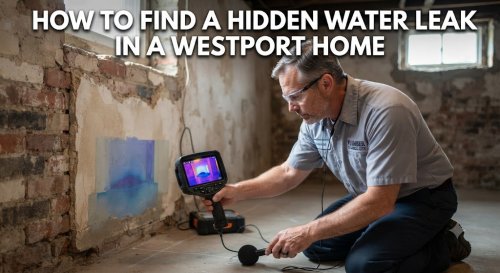
The plumber performs visual checks, checks static water pressure with digital gauges, and uses acoustic leak detectors or thermal imaging cameras to track hidden leaks behind plaster walls without destruction.
Step 2: Diagnostic Evaluation
The technician determines whether the failure is an isolated joint issue, galvanic corrosion between mismatched metals, or widespread pipe degradation requiring sectional repiping.
Step 3: Upfront Estimate & Solution Strategy
The plumber explains the issue, presenting clear options—such as localized pipe section replacement versus whole-home PEX or copper repiping—complete with upfront labor and materials costs.
Step 4: Safe Pipe Repair or Repiping
The technician isolates water lines, cuts out compromised pipe sections, installs proper dielectric isolators or code-compliant PEX/copper lines, and secures framing brackets.
Step 5: Pressure Testing
The system is pressurized beyond standard operational levels and monitored to verify that all new fittings, joints, and existing lines hold tight without pressure drops.
Step 6: Site Cleanup & Sanitization
Work areas inside living spaces are cleaned, protective coverings are removed, and damaged materials are safely disposed of.
Step 7: Ongoing Maintenance Plan
The plumber provides tailored recommendations for setting proper water pressure, managing seasonal winterization, and scheduling annual inspections.
Can You Fix It Yourself?
Knowing what you can safely handle—and when to hand the job to a professional—prevents accidental home flooding.
Safe DIY Measures Homeowners Can Handle
-
Applying Epoxy Putty or Pipe Clamps: Installing a temporary rubber patch and screw clamp over a pinhole leak to stop water while waiting for a plumber.
-
Replacing Fixture Supply Lines: Swapping out old, stiff rubber braided lines under sinks with modern stainless-steel flex hoses.
-
Insulating Exposed Pipes: Wrapping foam pipe insulation around exposed supply lines in unheated crawl spaces or basements before winter.
                  SAFE DIY ACTIONS                            CALL A PROFESSIONAL
   +------------------------------------------+    +------------------------------------------+
   | • Installing temporary rubber pipe clamps|    | • Soldering copper near wooden studs     |
   | • Swapping sink/toilet flex hoses        |    | • Repairing pinhole leaks inside walls   |
   | • Wrapping foam insulation on exposed line|   | • Replacing old galvanized or lead risers|
   | • Adjusting water heater temperature settings| • Installing pressure reducing valves  |
   +------------------------------------------+    +------------------------------------------+
When DIY Becomes Dangerous
Never attempt to solder copper pipes near dry wooden lath or framing inside old walls without specialized heat shields and fire-safety equipment. Additionally, using chemical pipe sealants or tightening corroded galvanized fittings with heavy wrenches can cause brittle threads to snap clean off inside walls, transforming a minor drip into an uncontrollable main line burst.
Tools Professionals Use for Leak Detection and Repair
Professional plumbers use specialized diagnostic equipment to find and fix leaks cleanly in vintage homes:
-
Thermal Imaging Cameras: Infrared devices that pinpoint temperature differences behind plaster walls, revealing exact moisture paths without opening walls.
-
Acoustic Leak Detectors: High-sensitivity ground microphones that listen for the microscopic sound of pressurized water escaping underground or under slabs.
-
Digital Water Pressure Gauges: Precision tools used to verify whether municipal supply pressure is exceeding safe residential thresholds.
-
Pipe Inspection Cameras: Flexible waterproof cameras fed into drain stacks to check cast-iron interiors for cracks or joint failure.
How Long Does the Repair Usually Take?
Repair timelines depend on pipe accessibility and the scope of work:
-
Isolated Pipe Section Patch or Joint Fix (1–3 Hours): Repairing an accessible line under a sink or in an exposed basement.
-
Concealed In-Wall Leak Repair (3–6 Hours): Locating, opening plaster, replacing damaged pipe sections, and pressure testing.
-
Partial or Whole-Home Repiping (2–5 Days): Replacing aging galvanized lines throughout an entire historic residence with modern PEX or copper piping.
Cost Factors in Pipe Leak Repair
Plumbing repair costs vary depending on the severity of the problem, accessibility, materials required, emergency service, property type, and local labor rates.
Key cost components include:
-
Accessibility: Repairs inside crawl spaces, concrete slabs, or behind historic lath and plaster walls require more labor time than exposed basement lines.
-
Diagnostic Equipment: Thermal imaging and acoustic leak detection involve specialized equipment time.
-
Pipe Material Chosen: Modern PEX tubing is generally faster and less expensive to install than rigid copper lines.
-
Permitting Fees: Municipal plumbing permits required by local building departments for major line replacements.
-
Structural Restoration: Repairing damaged drywall, original trim, or plaster after accessing hidden pipes.
Hidden Truths Homeowners Should Know
Understanding practical plumbing realities helps protect historic home investments:
-
Small Leaks Create Heavy Damage: A minor pinhole leak emitting just one gallon of water per hour can rot floor joists and breed dangerous mold within days.
-
Temporary Clamps Always Fail Eventually: Rubber patches and epoxy putties are temporary stabilization tools, not permanent fixes.
-
Insurance Excludes Gradual Leaks: Standard home insurance policies cover sudden pipe bursts, but frequently deny claims related to long-term leaks caused by age or poor maintenance.
-
Hard Water Accelerates Metal Failure: Unfiltered hard water continuously strips internal metal pipe walls, reducing plumbing lifespan significantly.
-
DIY Thread Over-Tightening Causes Fractures: Screwed pipe fittings forced too tight stress old brass and iron threads, causing sudden catastrophic splits later.
15 Common Mistakes Homeowners Make
-
Ignoring Minor Ceiling Stains: Waiting until plaster collapses before addressing a slow upper-floor leak.
-
Using Chemical Drain Cleaners: Pouring harsh acids down sluggish lines, accelerating metal pipe corrosion.
-
Mixing Metals Without Dielectric Unions: Connecting copper directly to galvanized iron, triggering rapid galvanic decay.
-
Ignoring High Water Pressure: Allowing water pressure above 80 PSI to stress aging pipe joints continuous.
-
Leaving Pipes Uninsulated in Winter: Exposing supply lines in crawl spaces to sub-zero freeze-thaw cycles.
-
Hiring Unlicensed Laborers: Working with unvetted handymen who lack insurance, permits, or local code knowledge.
-
Over-Tightening Valve Fittings: Cracking internal washers and brass threads during DIY repair attempts.
-
Hanging Heavy Items on Exposed Pipes: Using basement supply lines as storage racks for clothes or tools.
-
Waiting for Total Pipe Failure: Delaying recommended whole-house repiping until major flooding occurs.
-
Burying Cleanout Access Ports: Covering cleanouts behind drywall or under subflooring during room remodels.
-
Assuming All Leaks Are Fresh: Missing historical slow leaks that have rotted hidden structural framing.
-
Forgetting to Test the Water Shut-Off Valve: Neglecting the main valve until an emergency requires immediate shut-off.
-
Flushing Foreign Objects: Allowing wipes or grease down drains, building backpressure behind weak pipe joints.
-
Skipping Pre-Purchase Sewer Inspections: Buying a historic property without camera-inspecting aging clay lateral lines.
-
Relying Exclusively on Patch Repairs: Patching six different leaks on an aging pipe line instead of replacing the degraded run.
Practical Maintenance Tips for Homeowners
Protect aging plumbing infrastructure with these preventive habits:
-
Know Your Main Shut-Off Valve: Locate your main water shut-off valve, tag it clearly, and test it twice a year to ensure it turns smoothly.
-
Install a Pressure Reducing Valve (PRV): Keep incoming water pressure between 50 and 70 PSI to protect delicate vintage pipes.
-
Insulate Exposed Lines Before Winter: Wrap foam sleeves or heat tape around supply lines in unheated crawl spaces and attics.
-
Replace Rubber Washing Machine Hoses: Swap out old rubber hoses for braided stainless-steel flex lines every 5 years.
-
Monitor Utility Bills Monthly: Track water consumption to catch hidden slab or wall leaks early.
-
Schedule Annual Inspections: Have a licensed plumber evaluate exposed basement lines and test water pressure annually.
When Should You Call an Emergency Plumber?
Certain pipe leak situations demand immediate intervention to protect family safety and structural integrity:
                               EMERGENCY PLUMBING DECISION TREE

             Is water actively spraying or flooding living areas from a pipe?
                                    │
                  ┌─────────────────┴─────────────────┐
                 YES                                  NO
                  │                                   │
      [ Shut off main water line ]     Is it a slow drip contained under a sink?
      [ Call Emergency Plumber ]                      │
                                        ┌─────────────┴─────────────┐
                                       YES                          NO
                                        │                           │
                          [ Safe DIY / Schedule Visit ]  [ Multiple Wall Leaks ]
                                                         [ Schedule Plumber Visit ]
-
Burst Supply Lines: Uncontrollable water flow threatening electrical systems, ceilings, or structural flooring.
-
Sewage Backups in Low Fixtures: Wastewater overflowing from basement floor drains or lower-level bathtubs.
-
Gas Line Smells or Concerns: Natural gas odors near water heaters or gas-fired appliances (if licensed service is offered).
Frequently Asked Questions
Why does my older home keep having pinhole leaks in copper pipes?
Pinhole leaks in copper pipes are typically caused by erosion-corrosion from hard water minerals, high water velocity, or localized chemical reactions within older copper alloys.
How much does leak detection cost in Kansas City?
Plumbing repair costs vary depending on the severity of the problem, accessibility, materials required, emergency service, property type, and local labor rates. Non-invasive camera or acoustic leak detection is a focused service that prevents unnecessary wall damage.
Can high water pressure cause pipes to leak?
Yes. Water pressure above 80 PSI puts excessive stress on pipe walls, soldered joints, and appliance connections, leading to sudden bursts or chronic leaks.
How do I know if I have a leak under my concrete slab floor?
Signs of a slab leak include unexplained warm spots on basement floors, the sound of running water when all taps are off, damp carpeting, or sudden spikes in your water bill.
Is PEX piping safe for older historic homes?
Yes. Flexible PEX (cross-linked polyethylene) piping is highly durable, resistant to freeze damage and scale buildup, and can be routed through historic wall cavities with minimal damage to original plaster.
How long do galvanized steel pipes last?
Galvanized steel supply pipes generally last between 40 and 50 years. Most galvanized lines in Westport homes built before 1970 have reached the end of their operational lifespan.
Will insurance pay to replace old leaking pipes?
Insurance policies generally cover accidental water damage caused by a sudden burst pipe, but they rarely pay for the physical replacement of old, rusted, or neglected plumbing lines.
What is galvanic corrosion?
Galvanic corrosion is an electrochemical breakdown that occurs when two different metals (like copper and iron) are joined directly together in the presence of water, causing the weaker metal to corrode rapidly.
Why is my water pressure suddenly low across the whole house?
A sudden house-wide drop in water pressure usually points to a major main supply line leak, a failing pressure reducing valve, or a severe clog in aging galvanized risers.
When should I replace my plumbing instead of repairing individual leaks?
If you have experienced multiple leaks across different rooms within a short time frame, or if your home still uses original galvanized steel or lead lines, whole-house repiping is more cost-effective than continuous patch repairs.
Why Choose Plumber in Kansas City
When dealing with delicate plumbing inside historic properties, working with an experienced local specialist is essential.
At Plumber in Kansas City, we serve homeowners and business owners across the metro area—including historic neighborhoods like Westport, Midtown, Brookside, Waldo, Prairie Village, and Overland Park.
-
Experienced Licensed Plumbers: Our technicians understand the architectural intricacies and plumbing challenges of older Kansas City homes.
-
Upfront Pricing & Honest Advice: We evaluate your entire plumbing system, explain your options clearly, and provide upfront estimates without hidden fees.
-
Modern Non-Invasive Diagnostics: We use thermal imaging and acoustic sensors to find hidden leaks with minimal disruption to your home's plaster or original woodwork.
-
Quality Workmanship: From localized pipe repairs to whole-home PEX or copper repiping, we deliver reliable repairs backed by professional craftsmanship.