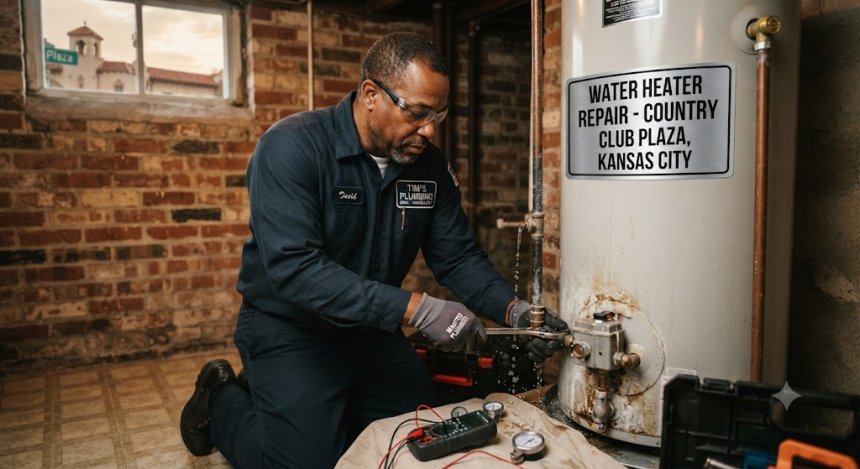
Introduction
There is nothing quite like stepping into the shower on a freezing winter morning only to be blasted with ice-cold water. For homeowners around the Country Club Plaza in Kansas City, a failing hot water system is more than just a minor inconvenience—it is an immediate disruption to daily life. Water heater repair in The Country Club Plaza, Kansas City is a critical service demanded by residents living in historic Spanish-inspired architecture, mid-century homes, and modern urban builds alike. Because Kansas City experiences severe seasonal temperature swings, from sub-zero winter freezes to humid summers, local plumbing infrastructure undergoes immense thermal stress. Sediment buildup from municipal water supplies, aging tank components, and heavy daily usage mean water heaters work overtime. Understanding how these systems fail, recognizing early warning signs, and knowing when to call a licensed master plumber can save you from catastrophic flooding and expensive structural damage.
What Is Water Heater Repair? Decoding the Mechanism
At its core, a residential water heater is a dedicated thermal storage or on-demand appliance designed to heat incoming cold water and deliver it reliably to your taps, showers, and appliances. Whether you rely on a traditional tank water heater—which stores 40 to 80 gallons of continuously heated water—or a modern tankless unit that flash-heats water as it flows through a high-efficiency gas burner or electric element, the underlying physics involve pressure management, thermal transfer, and combustion or electrical safety.
In a standard tank system, cold water enters via a dip tube down to the bottom of the tank, where a gas burner or electric heating element warms it. As water heats, it expands, creating pressure managed by a temperature and pressure (T&P) relief valve. When components fail—such as a corroded anode rod, a burned-out heating element, or a failing thermostat—the system loses its efficiency or stops producing hot water entirely.
Consider a typical historic home near the Plaza featuring a 15-year-old gas storage tank in a damp basement. Over years of service, local mineral-heavy water deposits hard-scale sediment at the base of the tank. This sediment acts as a thermal barrier between the burner and the water, forcing the system to overheat the bottom metal plate, resulting in rumbling noises, premature tank fatigue, and eventual tank rupture if left unaddressed.
Root Causes: Why This Problem Occurs in Kansas City Homes
Water heater failures rarely happen in a vacuum. They are typically the result of environmental, structural, and chemical factors unique to the Kansas City region:
-
Hard Water Mineral Scaling: Local water supplies carry high concentrations of dissolved calcium and magnesium. These minerals precipitate out when heated, forming rock-hard sediment layers inside tank bottoms and coating heating elements.
-
Aging Infrastructure & Galvanic Corrosion: Many charming homes near the Plaza feature older copper-to-galvanized pipe transitions. Without proper dielectric unions, dissimilar metals react chemically, accelerating corrosion on water heater nipples and tank walls.
-
Municipal Water Pressure Fluctuations: High municipal pressure spikes, combined with thermal expansion inside closed-loop plumbing systems, place excessive stress on water heater tanks, fittings, and internal glass linings.
-
Seasonal Temperature Swings: Frigid winter inlet water temperatures require water heaters to work significantly harder and burn more fuel to reach desired output temperatures, straining aging parts.
-
Neglected Maintenance: Skipping annual flushing and anode rod inspections allows silent internal corrosion to eat through steel tank walls unchecked.
Critical Warning Signs: When Your Home is Sounding the Alarm
Your water heater will almost always display subtle distress signals before it suffers a catastrophic failure. Keeping your senses alert to these indicators prevents emergency flooding:
-
Auditory Clues: Loud popping, rumbling, or banging noises from the tank indicate thick sediment boiling trapped water against the steel bottom. High-pitched whistling or hissing can point to pressure imbalances or steam buildup.
-
Olfactory & Visual Indicators: Discolored, rust-tinted, or foul-smelling (sulfur/rotten egg) water points to bacterial growth inside the tank or a deteriorating aluminum/magnesium anode rod.
-
Moisture & Dampness: Pooling water around the base, damp flooring, or calcified crust around connection fittings and the T&P relief valve signify micro-fractures or failing seals.
-
Inconsistent Temperatures: Water that runs lukewarm quickly or fluctuates wildly during a single shower signals failing dip tubes, malfunctioning thermostats, or heating element degradation.
Ignoring these warnings escalates minor component wear into major property damage, including warped subfloors, ruined drywall, mold proliferation, and electrical short circuits.
Professional Diagnostic & Repair Workflow
When you call a licensed master plumber for water heater service, the approach is systematic, safe, and code-compliant. Here is how professional remediation is executed:
-
Non-Invasive Triage & Safety Isolation: The technician immediately shuts off the electrical power supply (at the breaker) or gas supply valve, followed by closing the cold water supply inlet to isolate the appliance safely.
-
Precision Diagnostic & Digital Video Inspection: Technicians use multimeters to check electrical continuity, digital manometers for gas pressure, and camera scopes to inspect internal tank conditions or venting pathways.
-
Transparent, Upfront Options & Written Estimating: Before turning a single wrench, the plumber provides a clear, flat-rate price quote outlining whether component repair or full fixture replacement is the most cost-effective path.
-
Code-Compliant Remediation & Part Replacement: Faulty parts—such as gas control valves, heating elements, thermostats, anode rods, or T&P valves—are replaced using manufacturer-certified parts meeting current local plumbing codes.
-
Pressure Testing, Flow Verification, & Cleanup: The system is refilled, air is bled from lines, gas or electrical connections are leak-tested, and the workspace is left immaculate.
Advanced Diagnostics: The Professional Tool Arsenal
Guesswork has no place in professional plumbing. Modern service contractors utilize heavy-duty diagnostic gear to pinpoint issues with absolute precision:
-
Electronic Multimeters & Clamp Meters: Used to diagnose electrical shorts, failing resistance elements, and voltage drops in electric water heaters.
-
Digital Manometers: Measure precise gas pressure delivery and manifold pressure to ensure safe burner operation and prevent incomplete combustion or carbon monoxide risks.
-
Thermal Imaging Cameras: Detect hidden hot spots, insulation breakdown, and slow internal tank leaks behind walls or within insulated jackets.
-
Electronic Leak Detectors & Acoustic Sensors: Pinpoint underground or slab-based hot water line leaks before they cause major structural undermining.
DIY Reality Check: What You Can Safely Fix vs. When to Step Back
Homeowners love a good weekend DIY project, but water heaters involve high-voltage electricity, combustible gas lines, and scalding water under pressure. Know your boundaries:
-
Safe Homeowner Actions: Resetting a tripped high-limit safety switch on an electric water heater, clearing away items stored too close to the unit for proper combustion airflow, or visually inspecting the area for moisture.
-
The Danger Zone: Attempting to replace gas control valves, rewiring 240-volt heating elements without a voltage tester, soldering copper gas lines, or modifying exhaust venting yourself.
-
When to Call a Pro: Any active tank leaks, gas odors, flame rollout, persistent pilot light failures, or complete lack of hot water require immediate licensed intervention to avoid fire, explosion, or severe scalding.
Financial Breakdown: Cost Factors & Investment Realities
Plumbing repairs should be viewed as an investment in home safety and property value. Flat-rate pricing ensures you never face surprise hourly billing, but several variables influence total project costs:
-
Nature of the Repair: Replacing an inexpensive T&P relief valve or thermostat is vastly different from replacing a complex electronic gas control valve or rebuilding a commercial-grade mixing valve.
-
Accessibility: Units located in cramped attic spaces, tight crawlspaces, or finished basement utility closets require extra labor hours to safely access and service.
-
Equipment & Material Quality: Commercial-grade components, heavy-duty sacrificial anode rods, and premium expansion tanks carry higher upfront material costs but offer vastly superior longevity.
-
Permitting & Code Upgrades: Kansas City municipal building codes require specific safety upgrades during replacements, such as thermal expansion tanks, seismic strapping, and upgraded drip pans.
-
Repair vs. Replacement Economics: As a general rule of thumb, if your water heater is over 10 to 12 years old and requires a repair exceeding 50% of the cost of a new unit, full replacement is financially wiser.
Unique Expert Insights: Hard Truths Homeowners Learn Too Late
After over 15 years in the plumbing trenches, master plumbers see the same preventable mistakes repeated time and again. Keep these hard truths in mind:
-
Temporary patch kits mask deeper system failures. Using epoxy putty or rubber wrap on a leaking tank wall is a ticking time bomb that often bursts completely while you are asleep or away at work.
-
Chemical drain cleaners destroy plumbing from the inside out. Pouring harsh liquid chemicals down lines connected to your water heater or drain system corrodes pipe walls and ruins fixture finishes.
-
Unlicensed handymen create hidden code violations. Hiring unverified handymen for cheap fixes frequently results in improper venting, missing expansion tanks, and failed real estate home inspections down the road.
-
Preventive maintenance pays for itself. Annual flushing and anode rod replacement cost a fraction of a single emergency midnight flood cleanup.
-
Insurance claim denials are common. Home insurance policies often deny coverage for water damage if it is proven that a DIY modification or neglected, expired water heater caused the failure.
Comprehensive Home Plumbing Maintenance Framework
Proactive upkeep is the ultimate key to extending the lifespan of your home's plumbing and water heating equipment. Use this seasonal framework to stay ahead of trouble:
-
Spring & Summer Maintenance:
-
Test all outdoor hose bibs for proper flow and check for frost cracking.
-
Inspect and test sump pump operation before heavy spring rainstorms hit.
-
Check exterior foundation grading to ensure rainwater flows away from your home's perimeter.
-
-
Fall & Winter Preparation:
-
Flush your water heater tank to clear out summer sediment accumulation.
-
Insulate exposed water supply pipes in unheated basements, crawlspaces, and exterior walls.
-
Disconnect, drain, and store garden hoses safely indoors before the first freeze.
-
-
Year-Round Habits:
-
Use sink and shower hair strainers to protect drain lines from clogs.
-
Monitor your main water pressure reducing valve (PRV) to ensure household pressure stays below 80 PSI.
-
Avoid pouring grease, coffee grounds, or fibrous food waste down kitchen drains.
-
Emergency Protocol: When Immediate Dispatch is Non-Negotiable
Certain plumbing scenarios demand immediate action. If you encounter any of the following, shut off your main water or gas supply valve and call an emergency plumbing service immediately:
-
Catastrophic Tank Rupture: A sudden splitting of the water heater tank casing resulting in an uncontrolled gush of water flooding your living space.
-
Gas Leaks or Pilot Burner Failure: A persistent smell of rotten eggs or natural gas near the appliance, which can lead to explosive ignition risks.
-
Electrical Sparking or Smoke: Visible smoke, electrical burning smells, or sparks emitting from the water heater wiring box or breaker panel.
-
Total Potable Water Failure Combined with Backflow: Complete loss of clean water supply accompanied by discolored cross-contamination.
Frequently Asked Questions (FAQs)
How often should I flush my water heater in Kansas City?
Because of Kansas City's hard water mineral profile, you should flush your traditional tank water heater at least once every year to remove sediment buildup and prolong tank life.
Why is my hot water smelling like sulfur or rotten eggs?
This harmless yet unpleasant odor is caused by sulfur bacteria reacting with the magnesium or aluminum anode rod inside the tank. Replacing the anode rod with a zinc-alloy alternative usually resolves the issue.
Can I install a tankless water heater in an older Plaza home?
Yes, but older historic homes may require electrical service upgrades (if moving from gas to electric tankless) or gas line resizing to handle the high BTU demand required by instant-heating burners.
What is the average lifespan of a residential water heater?
Traditional tank water heaters typically last between 8 to 12 years, while tankless units can last 15 to 20 years with proper annual descaling and maintenance.
Why is my water heater making a loud popping noise?
Popping noises occur when hard water sediment settles at the bottom of the tank, trapping pockets of water that boil and pop as steam bubbles rise through the mineral layer.
What is a thermal expansion tank and do I need one?
A thermal expansion tank is a small auxiliary tank installed on your cold water supply line to absorb excess water volume created when water expands as it heats in a closed-loop plumbing system. Kansas City building codes often require them.
Is a leaking T&P relief valve always a sign of a broken water heater?
Not always. While it can indicate internal tank overheating or high pressure, it can also simply mean the relief valve itself is worn out and needs a straightforward replacement.
How do I know if my water heater element is burnt out?
If your electric water heater is producing only room-temperature water or no hot water at all, a multimeter test showing zero electrical continuity across the heating element terminals confirms it has failed.