"Why Kitchen Sinks Back Up When Washing Machine Runs",
"Kitchen sink backing up when the washing machine drains in Midtown? Learn the causes, warnings, and expert fixes for shared line clogs.",

Need a Plumber in Kansas City, MO?
Plumbing Problem? Call for professional plumbing help.
Get help with emergency plumbing, clogged drains, leaking pipes, water heaters, burst pipes and other residential plumbing problems in Kansas City, Missouri.
Need a Plumber in Kansas City, MO?
Plumbing Problem? Call for professional plumbing help.
Get help with emergency plumbing, clogged drains, leaking pipes, water heaters, burst pipes and other residential plumbing problems in Kansas City, Missouri.
{
"seo_title": "Why Kitchen Sink Backs Up When Washing Machine Runs",
"seo_desc": "Is your Midtown kitchen sink backing up during a wash cycle? Learn the causes, warnings, and how to fix shared drain line backups fast.",
"keyword": "kitchen sink backs up washing machine, washing machine drain backup, shared branch line clog, kitchen sink backing up Midtown, washing machine drain flood, sewer line clog Midtown, why sink gurgles washing machine, hydro jetting main drain, Midtown Kansas City plumber, washing machine water in kitchen sink",
"slug": "kitchen-sink-backs-up-when-washing-machine-runs-midtown"
}
Why Does My Kitchen Sink Back Up When the Washing Machine Runs in Midtown?
It usually starts with a strange gurgling noise coming from your kitchen sink while your washing machine drains. Then, suddenly, dirty, soapy water begins rising into the sink basin. This frustrating issue frequently hits homeowners living in Midtown Kansas City, where historic homes in neighborhoods like Hyde Park, Westport, Southmoreland, and Plaza Area often feature original or modified plumbing configurations.
Modern washing machines pump out water at a high velocity—discharging up to 15 to 20 gallons per minute during a spin and drain cycle. If there is a restriction down the pipe where your laundry line joins your kitchen drain, that massive volume of water has nowhere to go. It takes the path of least resistance, which is right back up into your kitchen sink. Immediate attention is essential because backed-up wash water carries lint, detergent scum, grease, and bacteria that can contaminate your food preparation areas and leak onto your cabinets.
What Is a Shared Drain Backup?
A shared drain backup occurs when a restriction downstream forces water from a high-discharge appliance back up into a lower or adjacent plumbing fixture.
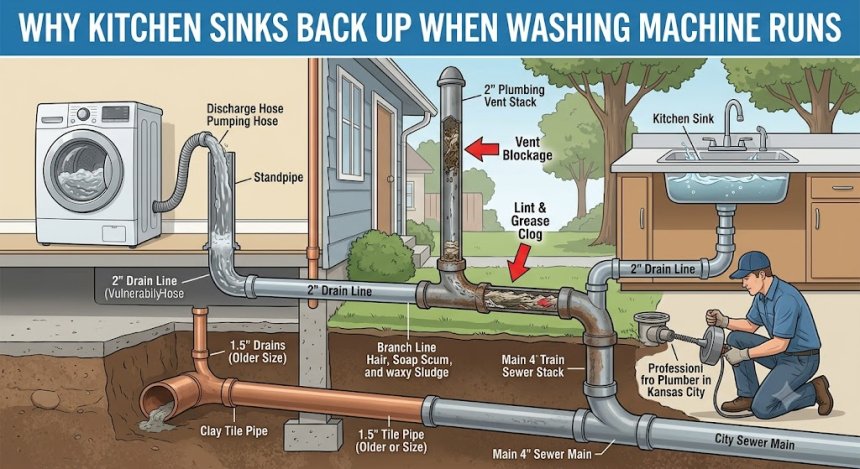
In many Midtown homes built between the 1900s and 1950s, the kitchen sink and laundry room share a common 2-inch or 1.5-inch branch drain line before tying into the main 4-inch sewer stack.
Common Scenarios and Examples
-
The Sudden Overflow: You start a heavy load of towels in the basement or kitchen-adjacent laundry nook. Midway through the cycle, soapy water floods your kitchen sink, carrying food particles from your garbage disposal with it.
-
The Gurgling Drain: When the washer drains, air bubbles push past the kitchen sink trap, creating a distinct glug-glug sound.
-
Slow Drainage After Laundry: The kitchen sink drains fine during light faucet use, but remains slow for an hour after running the washing machine.
Why Does This Plumbing Problem Happen?
Several underlying factors cause kitchen sinks to back up when the washing machine drains:
-
Shared Branch Line Clogs: Kitchen drains collect cooking oil, animal fats, coffee grounds, and food scraps. Laundry drains collect lint, hair, and soap scum. When these substances meet in a shared branch line, they combine to form a solid, waxy sludge that restricts water flow.
-
Aging Pipes & Scale Buildup: Many Midtown properties still have original cast iron or galvanized steel drain lines. Over decades, galvanized pipes corrode internally, narrowing a 2-inch pipe down to the diameter of a pencil. Cast iron builds up heavy rust scale that catches lint and grease.
-
Tree Root Intrusion: Clay tile sewer mains in older Kansas City neighborhoods are vulnerable to tree root invasion. Roots seek out moisture, creating partial blockages in the main line that show symptoms first at low-lying fixtures during high-volume discharge.
-
Improper Drain Line Sizing or Slope: Older plumbing codes allowed 1.5-inch drain lines for washing machines. Modern washers require a 2-inch standpipe to handle fast discharge rates. Additionally, sagging floor joists can cause pipes to lose their downward slope.
-
Plumbing Vent Blockages: Drain lines require air to flow smoothly. If birds, leaves, or snow block the plumbing vent stack on your roof, the draining water creates a vacuum that pushes air and water up through the kitchen sink P-trap.
Signs You Should Never Ignore
Ignoring minor drainage signs almost always leads to unexpected flooding. Watch for these indicators:
-
Standing Water in the Sink: Water taking more than a minute to clear after a wash cycle indicates a severe downstream bottleneck.
-
Gurgling Sounds from Nearby Fixtures: Air escaping through the sink trap means your drainage system is gasping for air due to a partial block or vent issue.
-
Bad Smells: Musty, sour, or sewage-like odors coming from your kitchen drain stem from trapped decomposing lint, food, and stagnant water.
-
Water Stains inside Cabinets: Small overflows under the sink or around pipe connections can rot cabinet bases and damage floorboards.
-
Mold Growth: Persistent dampness under sinks or behind washing machines creates a breeding ground for toxic mold within 24 to 48 hours.
Common Plumbing Problems Related to This Issue
A backup in your kitchen sink isn't just an isolated annoyance—it signals broader system stress:
-
Main Sewer Line Backups: The restriction in the branch line may actually be a symptom of a main sewer line block threatening the whole house.
-
Pipe Joint Leaking: Repeated hydraulic pressure from backing-up water weakens old slip-joint connections under your sink.
-
Floor Drain Overflows: Water backing up from the kitchen may also escape out of low-lying basement floor drains or laundry tubs.
-
Fixture Damage: Corrosive laundry detergents and stagnant grease deteriorate garbage disposal seals and basket strainers.
Step-by-Step Professional Repair Process
When you call Plumber in Kansas City, our licensed experts follow a thorough process to resolve your drainage issues:
[Step 1: Visual Inspection & Flow Testing]
                       │
                       ▼
[Step 2: Video Camera Inspection of Drain Line]
                       │
                       ▼
[Step 3: Upfront Estimate & Service Option Selection]
                       │
                       ▼
[Step 4: Mechanical Snaking or Hydro Jetting Clearing]
                       │
                       ▼
[Step 5: Main Line Flow Testing & Verification]
                       │
                       ▼
[Step 6: Complete Workspace Cleanup]
                       │
                       ▼
[Step 7: Custom Maintenance & Prevention Guidance]
-
Inspection: We evaluate the kitchen sink, trap configuration, washing machine standpipe, and basement cleanout access points.
-
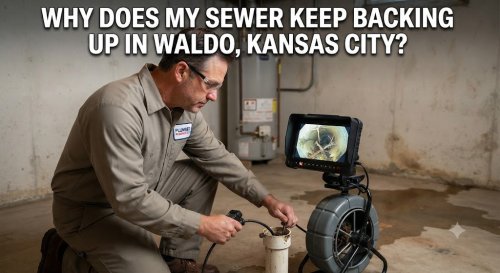
Diagnosis: We run water tests and, if necessary, feed a pipe inspection camera into the line to pinpoint whether the block is lint, grease, scale, or tree roots.
-
Estimate: We provide an upfront, flat-rate quote outlining the exact clearing or repair method needed.
-
Repair: Using heavy-duty drain augers or hydro jetting equipment, we scour the entire pipe wall clear of grease, lint, and rust scale.
-
Testing: We run the washing machine through a full drain cycle while monitoring the kitchen sink to verify rapid, uninterrupted drainage.
-
Cleanup: Our plumbers use drop cloths and sanitizing wipes to leave your kitchen and laundry area cleaner than we found it.
-
Maintenance Advice: We give you straightforward tips on how to keep the shared line clear based on your home's specific piping material.
Can You Fix It Yourself?
Understanding what you can safely handle—and when to call a pro—prevents accidental property damage.
Safe DIY Solutions & Temporary Fixes
-
Clean the Kitchen P-Trap: Place a bucket under the sink, unscrew the slip nuts on the curved P-trap, and clear out visible food debris and grease.
-
Use a Manual Hand Auger: Carefully run a 1/4-inch hand snake down the kitchen wall pipe (past the P-trap) to poke through minor soft clogs.
-
Install a Lint Catcher: Strap a mesh lint catcher to your washing machine discharge hose to prevent fabric fibers from entering the drain line.
When DIY Becomes Dangerous
-
Chemical Drain Cleaners: Never pour liquid drain openers down a backed-up sink. These harsh chemicals contain sulfuric acid or lye, which eat away at historic cast iron pipes, generate high heat that deforms PVC, and sit in a stagnant pool of water, posing a severe chemical burn risk to the plumber you eventually call.
-
Forcing Large Power Augers: Using an oversized motorized snake in thin, rusted galvanized pipes can puncture the pipe wall inside your kitchen plaster, leading to thousands of dollars in wall repairs.
Tools Professionals Use
Professional tools ensure lines are cleaned to their full original diameter without causing structural damage:
-
Drain Inspection Cameras: High-definition waterproof cameras allow us to see structural cracks, sagging pipes, and tree root penetrations inside the line.
-
Motorized Drain Augers (Snakes): Heavy-duty steel cables with specialized cutting heads bore through stubborn soap sludge, hair, and grease blocks.
-
Hydro Jetting Systems: High-pressure water streams (up to 3,500 PSI) blast away decades of grease buildup, scale, and lint along the entire interior wall of the pipe.
-
Pipe Locators: Radio-frequency transmitters attached to camera heads map out the exact location and depth of buried pipe breaks beneath your yard or slab.
How Long Does the Repair Usually Take?
-
Simple Branch Line Snaking (1 to 2 Hours): Clearing a localized grease or lint clog in the shared kitchen/laundry branch pipe.
-
Hydro Jetting & Camera Inspection (2 to 3 Hours): Deep-cleaning heavily scaled cast iron lines and verifying pipe condition with a video camera.
-
Major Drain Section Replacement (4 to 8 Hours): Cutting out collapsed galvanized pipe in a crawlspace or basement and installing modern PVC lines.
-
Emergency Main Line Clearing (1 to 3 Hours): Responding immediately to prevent active laundry water flooding in finished spaces.
Cost Factors
Plumbing repair costs vary depending on the severity of the problem, accessibility, materials required, emergency service, property type, and local labor rates.
Key factors that influence total pricing include:
-
Diagnostic Needs: Simple visual checks versus full-length camera inspections.
-
Access Point: Cleanouts readily available in a basement versus needing to pull a toilet or work in a tight, unexcavated Midtown crawlspace.
-
Method of Clearing: Basic mechanical cable snaking versus high-pressure hydro jetting.
-
Pipe Condition: Whether the pipe simply needs cleaning or requires partial replacement due to severe rust corrosion or cracking.
Hidden Truths Homeowners Should Know
-
Small leaks become expensive repairs: Water backing up repeatedly into a sink weakens basket seals, eventually rotting cabinet floors and subflooring unnoticed.
-
Cheap temporary fixes often fail: Chemical drain openers rarely clear heavy lint-grease matrixes; they simply melt a tiny hole through the clog that closes back up within days.
-
Insurance may not cover neglected plumbing: Most home insurance policies cover sudden pipe bursts, but deny claims for gradual water damage caused by unresolved drain backups.
-
Tree roots can repeatedly damage sewer lines: If your home's main lateral line has root intrusion, clearing the kitchen branch line is only a temporary fix until the main lateral is addressed.
-
Hard water shortens fixture lifespan: Kansas City water minerals combine with detergent fats, accelerating scale buildup on pipe walls.
-
DIY mistakes increase repair costs: Breaking a snake head inside a weak pipe requires cutting open walls to retrieve the tool and fix the line.
-
Delaying repairs causes structural damage: Sustained water exposure warps original hardwood floors and damages plaster ceilings in multi-story Midtown homes.
-
Hidden leaks increase utility bills: Water line pressure fluctuations from poor drainage can stress supply lines, leading to subtle leaks.
-
Mold develops quickly: Spills from backed-up sink water saturate drywall and insulation, fostering mold growth in under 48 hours.
-
Annual maintenance saves money: Scheduling periodic drain cleaning prevents middle-of-the-night emergency calls and costly flood damage.
15 Common Mistakes Homeowners Make
-
Running the washing machine while the kitchen sink is draining slowly.
-
Pouring commercial chemical drain cleaners into a fully backed-up sink.
-
Washing grease, bacon fat, or cooking oil down the kitchen disposal.
-
Flushing lint, paper towels, or baby wipes down toilets or utility sinks.
-
Ignoring slight gurgling sounds from the kitchen drain during laundry cycles.
-
Operating a modern high-efficiency washer on an uninspected, 80-year-old 1.5-inch drain line.
-
Hiring unlicensed, uninsured handymen who lack proper drain-cleaning machinery.
-
Skipping lint traps on washing machine discharge hoses.
-
Over-tightening plastic slip nuts under the kitchen sink, cracking the fittings.
-
Waiting until water overflows onto the kitchen floor before seeking professional help.
-
Using the wrong size drain snake and poking holes through thin galvanized pipes.
-
Neglecting routine root-clearing maintenance on old clay sewer main lines.
-
Covering up basement floor drains or cleanout access plugs during remodeling.
-
Ignoring low water pressure or sudden pressure surges that stress old joints.
-
Assuming a clear kitchen sink trap means the entire drainage line is clean.
Practical Maintenance Tips to Prevent Drain Backups
-
Install a fine mesh strainer over your kitchen sink drain to catch food scraps.
-
Never pour grease, oil, or liquefied fat down the drain; let it cool in a can and throw it in the trash.
-
Attach a removable mesh lint filter to your washing machine discharge line and clean it monthly.
-
Run cold water while operating your garbage disposal, and keep food waste loads small.
-
Flush your kitchen drain weekly with a kettle of boiling water to melt minor fat residues.
-
Inspect under-sink plumbing monthly for slow drips, rust spots, or dampness.
-
Keep roof vent pipes clear of leaves, nests, and ice buildup during seasonal transitions.
-
Upgrade old 1.5-inch laundry drain standpipes to code-compliant 2-inch PVC lines during kitchen or laundry updates.
-
Have a licensed plumber perform a preventative video camera pipe inspection every 2 years in older homes.
-
Avoid dumping paint, drywall mud, or heavy cleaning chemicals down household drains.
-
Keep trees planted away from main underground sewer line routes.
-
Know the location of your main sewer cleanout plug in your basement or yard.
-
Schedule professional hydro jetting every 3 to 5 years for historic homes with cast iron piping.
-
Maintain indoor heat above 55°F in winter to prevent uninsulated crawlspace drain lines from freezing.
-
Address slow drains immediately rather than waiting for complete blockages.
When Should You Call an Emergency Plumber?
Call an emergency plumber immediately if you encounter any of these urgent scenarios:
-
Active Flooding: Water is overflowing out of the kitchen sink, washing machine standpipe, or basement floor drain during a laundry cycle.
-
Sewage Backup: Foul-smelling black or grey water is coming up into your sink, shower, or floor drains.
-
Multiple Blocked Fixtures: Your kitchen sink, toilet, and bathtub are all backing up simultaneously.
-
Major Water Leaks: Drain water is seeping through kitchen floors or ceiling plaster into lower living spaces.
Frequently Asked Questions
Why does my kitchen sink gurgle when the washing machine drains?
Gurgling happens when draining water encounters a partial restriction downstream. As water squeezes past the block, it pulls air through your kitchen sink's P-trap, creating a bubbling sound.
Can a clogged washing machine drain cause the kitchen sink to overflow?
Yes. In many Midtown Kansas City homes, the kitchen sink and washing machine share a common branch drain line. If the shared line is blocked, the heavy volume of water from the washer pushes up into the kitchen sink.
Is hydro jetting safe for old cast iron pipes in historic homes?
Yes, when performed by an experienced plumber who first inspects the line with a video camera. Hydro jetting uses clear water at controlled pressures to safely strip away rust scale and grease without damaging structurally sound pipes.
How much does it cost to clear a kitchen sink and washing machine drain backup?
Plumbing repair costs vary depending on the severity of the problem, accessibility, materials required, emergency service, property type, and local labor rates. Contact us for an accurate, upfront estimate after an initial inspection.
Why shouldn't I use liquid drain cleaners for a shared line backup?
Chemical cleaners get trapped in standing water above the clog, generating intense heat that can damage pipes while failing to remove dense lint-grease blockages. They also pose safety hazards for plumbers doing manual repairs.
How do I know if the blockage is in my branch line or main sewer line?
If only the kitchen sink and washing machine back up, the blockage is likely in their shared branch line. If toilets, bathtubs, and basement floor drains also back up, the main sewer line is blocked.
Can tree roots cause my kitchen sink to back up?
If tree roots enter your underground sewer main, they restrict overall drainage capacity. During high-discharge events like a washer cycle, water backs up into the lowest available branch line fixtures, such as your kitchen sink or basement tubs.
What is the correct pipe size for a washing machine drain line?
Modern plumbing codes require a 2-inch drain line and standpipe to handle the high-volume pump discharge of modern washing machines. Older homes with 1.5-inch lines frequently experience backups.
How often should I clean my shared kitchen and laundry drain lines?
Preventative maintenance snaking or hydro jetting is recommended every 2 to 3 years for homes with older cast iron or galvanized piping systems.
When should I replace my old drain pipes instead of snaking them?
If a video camera inspection reveals heavy structural corrosion, collapsed pipe bottoms, continuous root intrusion, or persistent cracks, replacing the section with modern PVC is more cost-effective than continuous temporary drain clearings.
Why Choose Plumber in Kansas City?
When your kitchen sink backs up during laundry day, you need a local team that understands the unique architectural and plumbing quirks of Midtown Kansas City properties.
At Plumber in Kansas City, we bring:
-
Experienced Licensed Plumbers: Our team has extensive hands-on experience working with historic homes in Midtown, Hyde Park, Westport, and surrounding Kansas City neighborhoods.
-
Upfront Estimates: We explain the problem clearly and provide transparent pricing before any work starts.
-
Fast Response & Emergency Availability: We offer timely dispatch to prevent standing drain water from causing structural damage to your property.
-
Modern Diagnostic Equipment: We use high-definition camera inspections and hydro jetting tools to fix the root cause of the problem—not just temporary symptoms.
-
Local Expertise: As a trusted local service provider across Jackson County, Clay County, and Johnson County, we deliver long-lasting repairs tailored to our community's infrastructure.
Don't let a backed-up sink ruin your kitchen or flood your home. Contact Plumber in Kansas City today to schedule your drain inspection and restore smooth, worry-free drainage to your home.