Sump Pump Failure in Kansas City: Diagnostics & Repair Guide
Diagnose sump pump failures, check valve problems, and high water table issues in Kansas City homes. Expert repair insights and safe homeowner triage.


Need a Plumber in Kansas City, MO?
Plumbing Problem? Call for professional plumbing help.
Get help with emergency plumbing, clogged drains, leaking pipes, water heaters, burst pipes and other residential plumbing problems in Kansas City, Missouri.
Need a Plumber in Kansas City, MO?
Plumbing Problem? Call for professional plumbing help.
Get help with emergency plumbing, clogged drains, leaking pipes, water heaters, burst pipes and other residential plumbing problems in Kansas City, Missouri.
Understanding Sump Pump Failure and Subsurface Hydrostatic Pressure
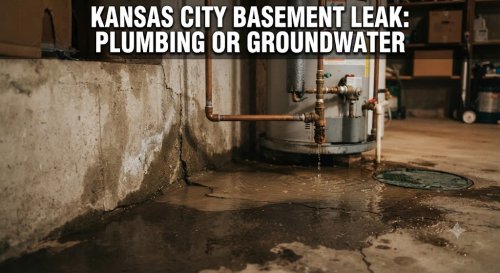
A sump pump failure typically manifests during heavy spring rains or rapid snowmelt when groundwater overwhelms the pit basin, resulting in immediate basement flooding. The physical mechanism behind basement water intrusion involves relentless hydrostatic pressure. As expansive clay soils across the Kansas City metropolitan area absorb moisture, they swell and exert immense lateral and downward force against foundation walls and sub-slab drainage tiles. This pressure drives groundwater toward the path of least resistance: your sump pit.
When a sump pump fails to activate, the root cause usually falls into one of three distinct categories: mechanical float switch obstruction, electrical power interruption, or hydraulic overload of the impeller. Establishing diagnostic boundaries is essential before taking action. A fixture-specific issue like a localized drain clog differs vastly from a sub-slab drainage failure. If water enters through wall cracks, the issue relates to exterior waterproofing and perimeter tile collection. If water overflows directly from the sump basin, the pump itself or its discharge line is compromised.
Overlooked Trade Secrets: Kansas City Hydrogeology and Drainage Mechanics
Plumbing professionals working throughout Jackson, Johnson, and Clay counties understand that Kansas City's unique soil composition creates severe subsurface challenges. The local gumbo clay expands exponentially when wet and shrinks during summer droughts, shifting underground drainage tiles and putting continuous stress on sump pump discharge lines. This soil movement frequently crushes or misaligns exterior corrugated discharge pipes.
Another common trade secret involves the phenomenon of a sump pump running continuously even after rain stops. Homeowners often assume the pump is failing, but the culprit is frequently a failed or missing check valve combined with a long discharge run. Without a properly functioning check valve positioned just above the discharge outlet, all the water remaining in the vertical PVC pipe flows right back down into the pit once the motor shuts off. This causes the float switch to immediately rise again, trapping the pump in an endless, motor-burning cycle.
Furthermore, property owners in historic neighborhoods like Brookside, Midtown, and Waldo often deal with legacy perimeter systems tied incorrectly into combined sanitary sewer lines or failing terracotta storm crocks, requiring careful separation and modern basin retrofitting to prevent backflow during severe thunderstorms.
Safe Homeowner Triage vs. Dangerous DIY Boundaries
Before calling a professional or attempting any corrective measures, homeowners must understand safe triage steps and dangerous DIY boundaries to prevent injury or property damage.
Safe Homeowner Steps
- Test the Float Switch: Manually lift the float arm or push the tether switch to verify if the motor engages instantly.
- Inspect the Pit Basin: Remove debris, silt, and mineral scale buildup from the intake screen at the bottom of the pump housing using a wet-dry vacuum.
- Check Power Sources: Confirm the GFCI outlet has not tripped. Reset the breaker or test the plug with a known working appliance.
- Examine the Discharge Loop: Walk the exterior discharge path to ensure water exits at least six to ten feet away from the foundation and that freezing temperatures have not iced over the terminal end.
Dangerous DIY Boundaries
- Never Touch Electrical Panels in Standing Water: If your basement is flooded, do not wade into water to reach wall outlets or breaker panels. Shut off power remotely if safe, or call emergency electrical services first.
- Do Not Modify Hardwired Circuits: Sump pumps draw significant amperage; splicing cords or bypassing dedicated GFCI protection creates severe shock and fire hazards.
- Avoid Corrosive Chemical Cleaners: Pouring chemical drain openers into a sump pit will ruin pump seals, damage the plastic basin, and splash hazardous caustic materials.
Symptom vs. Probable Cause Diagnostic Matrix
| Observed Symptom | Probable Mechanical Cause | Recommended Action |
|---|---|---|
| Pump hums loudly but moves no water | Stuck impeller, jammed debris, or closed discharge valve | Disconnect power, inspect intake screen, and clear obstruction. |
| Pump cycles on and off every few seconds | Faulty check valve allowing water backflow into basin | Replace defective check valve on the vertical discharge pipe. |
| Continuous running without stopping | Stuck vertical float switch or excessive groundwater inflow | Adjust float tether or evaluate external drainage capacity. |
| Frequent tripping of dedicated circuit breaker | Overheated motor winding, failing capacitor, or short circuit | Replace the sump pump unit before total electrical failure. |
Realistic Repair Approaches and Decision Support
When a sump pump system requires professional intervention, repair options generally range from targeted component replacement to full system overhaul. Understanding these options helps homeowners navigate local service visits effectively.
Minor repairs typically involve replacing a worn check valve, swapping out a tethered float switch, or clearing a blocked PVC discharge line. If the motor itself has seized or burned out due to thermal overload, complete pump replacement is necessary. Modern installations often utilize submersible cast-iron pumps with dual-switch technology to improve reliability over fragile vertical plastic models.
Pricing and project scope in the Kansas City area are heavily influenced by specific site conditions:
- Basement Access & Basin Depth: Deep sub-slab pits or confined mechanical utility rooms require specialized rigging and extraction.
- Discharge Routing: Municipal codes in KCMO and Johnson County dictate where storm water can be discharged, occasionally requiring subsurface trenching to daylight outlets away from neighboring properties.
- Emergency Dispatch Timing: Storm-driven surges often result in high call volumes across the metro, impacting response times during regional weather events.
Frequently Asked Questions
How often should a residential sump pump be replaced?
Most standard thermoplastic or cast-iron sump pumps last between 7 to 10 years. Units subjected to heavy silt loads, continuous high water tables, or aggressive iron bacteria may wear out faster. Proactive replacement is recommended around the 8-year mark if the property relies heavily on basement protection.
Why is my sump pump discharging water right back into the ground near the foundation?
If discharge water exits too close to the foundation wall, it simply seeps back down through the porous clay soil and re-enters your sump pit, creating an endless cycle. Discharge lines should extend a minimum of 6 to 10 feet away from the structure, preferably sloping downward toward a street curb, dry well, or dedicated stormwater easement.
What is the difference between primary sump pumps and battery backup systems?
A primary sump pump runs on household AC electrical current and handles routine and heavy water volume. A battery backup system operates independently on a 12V marine-grade battery and activates automatically if the primary pump fails, a float jams, or a power outage occurs during severe storms.
Can I connect my sump pump discharge line to my indoor sanitary sewer cleanout?
No. Connecting clean stormwater or groundwater from a sump pump into the sanitary sewer system violates municipal plumbing codes throughout the Kansas City metro. It overburdens local wastewater treatment facilities and can cause sewage backups in residential basements.
What causes a foul sulfur or rotten egg odor coming from the sump pit basin?
Stagnant water trapped in the basin often breeds sulfur-producing bacteria, iron bacteria, or organic matter. Flushing the pit with clean water and scrubbing the basin walls with a mild bleach solution typically eliminates the odor. If the smell persists, verify that your perimeter drain tile is not inadvertently tied into a sanitary line.