Why Water Pressure Suddenly Drops in Kansas City Home
Sudden water pressure drop in Kansas City? Learn the common causes, emergency DIY fixes, repair timelines, costs, and when to call a plumber.

Need a Plumber in Kansas City, MO?
Plumbing Problem? Call for professional plumbing help.
Get help with emergency plumbing, clogged drains, leaking pipes, water heaters, burst pipes and other residential plumbing problems in Kansas City, Missouri.
Need a Plumber in Kansas City, MO?
Plumbing Problem? Call for professional plumbing help.
Get help with emergency plumbing, clogged drains, leaking pipes, water heaters, burst pipes and other residential plumbing problems in Kansas City, Missouri.
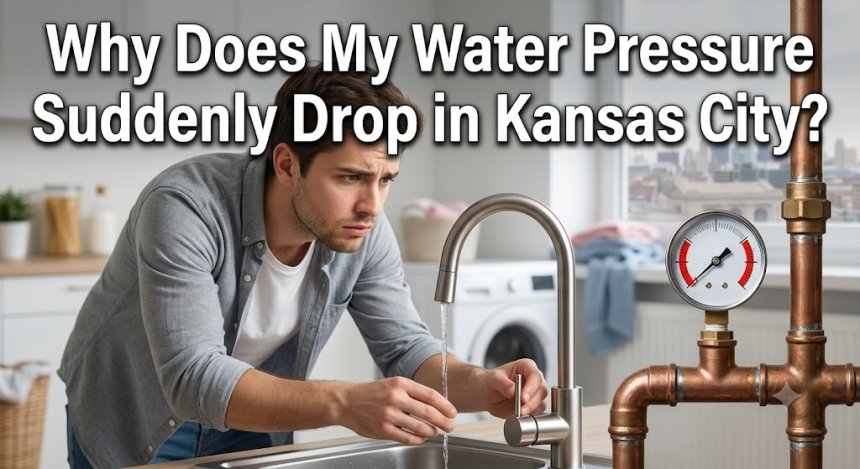
Why Does My Water Pressure Suddenly Drop in Kansas City?
You turn on your shower expecting a steady stream, but instead, you get a weak trickle. Or maybe your washing machine takes twice as long to fill while someone flushes a toilet downstairs. A sudden drop in water pressure is one of the most frustrating home issues because it instantly halts your daily routine.
Property owners across Jackson, Clay, and Platte counties—from historic homes in Midtown, Prairie Village, and Overland Park to newer developments in Northland—frequently search for solutions when water flow abruptly drops. A sudden pressure drop isn't just an annoyance; it is often an early warning sign of a municipal supply shift, a failing valve, or a serious hidden line rupture. Addressing it promptly protects your home from costly water damage and keeps your plumbing system running smoothly.
What Is a Sudden Water Pressure Drop?
A sudden water pressure drop occurs when the velocity and volume of water delivered to your household fixtures decrease abruptly. Unlike a gradual pressure decline caused by years of scale buildup, a sudden drop happens overnight or within minutes.
How Water Pressure Works in Your Home
City mains push municipal water into your property under high pressure. That water passes through your main shut-off valve, a pressure-reducing valve (PRV), and your water meter before branching out to your hot and cold lines.
-
Isolated Pressure Drop: Low flow affects only one fixture (like your kitchen faucet or upstairs shower).
-
Whole-House Pressure Drop: Flow plummets across every faucet, showerhead, and appliance in the home simultaneously.
Why Does This Plumbing Problem Happen?
A sudden drop in water pressure usually stems from one of several core plumbing or municipal issues:
-
Failing Pressure-Reducing Valve (PRV): Most Kansas City homes have a PRV installed where the main water line enters the home. When the internal diaphragm or spring breaks down, the valve can fail shut, strangling your home's water supply.
-
Hidden Main Supply Line Leak: A line split between your water meter and your house—or within a crawlspace or concrete slab—diverts gallon after gallon into the ground before it reaches your taps.
-
Partially Closed Main Shut-Off Valve: If recent home repairs occurred, your main gate valve or ball valve might not have been reopened completely.
-
Corrosion and Scale Dislodged in Aging Pipes: In older homes with galvanized steel lines, rust or mineral chunks can break free and clog small fixture orifices or shut-off valves.
-
Sub-Zero Midwestern Weather (Frozen Pipes): During extreme winter freezes, ice forming inside water lines restricts water volume before freezing the pipe completely shut.
-
Municipal Supply Issues or Main Breaks: Water utility maintenance or a nearby city main break can temporarily drop neighborhood water pressure.
Signs You Should Never Ignore
Ignoring subtle shifts in water flow can lead to structural damage or ruined appliances. Keep an eye out for these warning signs:
-
Sudden Low Water Pressure: A drastic drop across multiple fixtures without an obvious cause.
-
Water Stains on Ceilings or Drywall: Discolored rings or soft drywall signal an active overhead pipe leak diverting pressure.
-
Unexplained Spikes in Water Bills: A sudden increase in utility costs usually means water is leaking underground or inside walls.
-
Damp Walls or Musty Basements: Continuous moisture promotes rapid mold growth behind walls and under subfloors.
-
Strange Noises (Slamming or Banging): Thumping sounds when valves open or close (water hammer) indicate pressure instability.
-
Discolored or Rusty Water: Brownish water flowing from low-pressure taps indicates severe internal pipe corrosion or municipal main disturbances.
Common Plumbing Issues Related to Water Pressure Drops
Water pressure issues are rarely isolated. They often connect to other household plumbing vulnerabilities:
-
Pipe Leaks & Slab Leaks: High-pressure line ruptures beneath concrete foundations or inside walls.
-
Water Heater Strain: Pressure drops can cause erratic temperature spikes in tankless or tank water heaters.
-
Fixture & Braided Hose Damage: Pressure spikes before a valve failure can weaken appliance hoses, risking total ruptures.
Step-by-Step Professional Repair Process
When a licensed technician inspects a sudden pressure loss, they execute a precise diagnostic routine:
-
System Inspection: Check your main shut-off valve, water meter, and visible piping for leaks or partial valve closures.
-
Static & Dynamic Pressure Testing: Attach precision pressure gauges to exterior hose bibbs and indoor taps to measure incoming PSI.
-
PRV Valve Evaluation: Inspect the pressure-reducing valve to see if it responds to adjustment or requires internal rebuild/replacement.
-
Leak Detection: Use electronic leak equipment and thermal cameras if pressure drops point to a hidden pipe rupture.
-
Upfront Repair Estimate: Provide a transparent, written quote explaining line repairs, valve replacements, or pipe repiping options.
-
Professional Repair & Testing: Execute the repair, turn the water system back on, and run flow tests across all household fixtures.
-
System Sanitize & Advice: Clean up the workspace and offer practical guidance to protect your system long-term.
Can You Fix It Yourself?
Understanding what you can inspect safely saves time and prevents unintended damage.
-
Safe DIY Checks: Verify that your main shut-off valve is fully open. Check with neighbors to see if your street is experiencing a municipal outage. Unscrew and clean mineral buildup from faucet aerators.
-
Temporary Fixes: Opening clogged aerators or gently turning stuck valve handles can restore flow if the issue is minor.
-
When DIY Becomes Dangerous: Never attempt to adjust or rebuild a main PRV without proper tools. Do not dig around underground main lines without utility locator markouts. Improper repairs can burst pressurized lines and flood your home.
Advanced Tools Professionals Use
Licensed plumbers rely on specialized diagnostic tools to solve pressure issues efficiently:
-
Digital Pressure Gauges: Accurately measure baseline PSI and flow rates at multiple points in your plumbing system.
-
Ultrasonic & Acoustic Leak Detectors: Pinpoint hidden pipe leaks underground or behind concrete slabs by listening to acoustic vibrations.
-
Thermal Imaging Cameras: Locate concealed hot-water leaks through flooring and walls without demolition.
-
High-Definition Pipe Inspection Cameras: Inspect internal pipe conditions for scale buildup, corrosion, or severe restrictions.
How Long Does the Repair Usually Take?
| Repair Type | Scope of Work | Estimated Duration |
| Simple Repair | Cleaning clogged aerators, adjusting PRV, or fully opening main valves | 30 Mins – 1 Hour |
| Moderate Repair | Replacing a faulty Pressure-Reducing Valve (PRV) or main shut-off valve | 1 – 3 Hours |
| Major Repair | Locating and repairing an underground main water service line leak | 4 Hours – 1 Day |
| Emergency Repair | Isolating main line ruptures and restoring temporary bypass lines | 1 – 2 Hours |
Key Factors That Determine Repair Costs
Plumbing repair costs vary depending on the severity of the problem, accessibility, materials required, emergency service, property type, and local labor rates.
-
Diagnostic & Dispatch Charges: Equipment deployment for precision leak detection or after-hours service calls.
-
Pipe & Valve Accessibility: Replacing a valve in an open basement costs less than repairing a line buried under concrete driveways.
-
Part Specifications: High-grade brass PRV units, heavy-duty ball valves, or commercial fittings carry varying costs.
-
Repair vs. Repiping: Patching a small leak section versus installing a new main water service line.
Hidden Truths Homeowners Should Know
-
Small Leaks Become Expensive Repairs: A minor drip diverting line pressure can rot subfloors and destroy drywall over time.
-
Cheap Temporary Fixes Often Fail: Cranking a failing PRV adjustment screw higher only accelerates complete valve breakdown.
-
Insurance May Not Cover Neglected Systems: Insurers frequently deny claims caused by unaddressed long-term pipe corrosion.
-
Hard Water Shortens Fixture Lifespan: Kansas City's mineral-rich water accelerates scale deposits inside shut-off valves and aerators.
-
DIY Mistakes Increase Repair Costs: Striping soft brass valve threads can convert a quick replacement into an extensive emergency line repair.
-
Mold Develops Rapidly: Unseen line leaks causing pressure drops can spark mold colonies behind drywall within 24 to 48 hours.
15 Common Mistakes Homeowners Make
-
Ignoring Mild Pressure Drops: Letting small pressure drops escalate until water stops flowing entirely.
-
Using Harsh Chemical Cleaners: Pouring chemical cleaners down drains weakens aging metal pipes over time.
-
Flushing Non-Flushable Wipes: Blocking waste lines can create back-pressure and drainage issues across fixtures.
-
Pouring Cooking Fat Down Sinks: Fats solidify in cold lines, restricting pipe diameter and flow.
-
Ignoring Extremely High Pressure: Pressure over 80 PSI damages appliances and causes valves to fail suddenly.
-
Hiring Unlicensed Handymen: Unvetted work often leads to improper valve installation and code violations.
-
Skipping Annual Inspections: Forgetting routine PRV and main shut-off valve checkups.
-
Waiting Until Midnight Emergencies: Ignoring early warning signs until a valve breaks after hours.
-
Using Incompatible Pipe Materials: Joining copper directly to steel accelerates galvanic corrosion.
-
Over-Tightening Threaded Fittings: Stripping valve threads causes immediate secondary leaks.
-
Leaving Garden Hoses Connected in Winter: Trapped water freezes into sillcocks, bursting internal supply lines.
-
Using Supply Lines as Clothes Racks: Straining exposed basement lines can break soldered copper joints.
-
Not Knowing Main Shut-Off Locations: Wasting valuable time finding the shut-off valve during a main line burst.
-
Overloading Garbage Disposals: Forcing thick organic waste down disposals clogs main drain lines.
-
Delaying Leak Repairs: Hoping floor warm spots or low flow resolve themselves naturally.
15 Practical Maintenance Tips for Kansas City Property Owners
-
Test Home Water Pressure Twice a Year: Thread a pressure gauge onto an outside hose bibb; optimal home pressure is between 40 and 60 PSI.
-
Locate and Label Main Shut-Off Valves: Make sure every family member knows how to turn off the main water valve.
-
Exercise Valves Annually: Turn main ball valves off and on once a year to keep internal seals from seizing.
-
Clean Faucet Aerators Regularly: Unscrew aerator caps and soak them in vinegar to remove scale buildup.
-
Insulate Pipes in Unheated Areas: Wrap foam insulation around water lines in basements and crawlspaces before winter.
-
Replace Rubber Washing Machine Hoses: Upgrade to braided stainless steel supply lines every 3 to 5 years.
-
Disconnect Exterior Hoses Before First Freeze: Drain outside spigots to prevent ice from backing into indoor lines.
-
Flush Water Heater Tanks Annually: Clear sediment to maintain proper heating efficiency and water pressure.
-
Install Mesh Strainers in Sinks: Catch debris before it settles in fixture traps.
-
Open Cabinet Doors During Cold Snaps: Let warm room air circulate around pipes along exterior walls.
-
Drip Faucets During Sub-Zero Weather: Keep a slow trickle running on vulnerable taps during deep freezes.
-
Replace Wheel-Style Valves: Upgrade old gate valves to quarter-turn brass ball valves for reliable shut-off capability.
-
Check Toilet Tanks for Leaks: Put food coloring in your tank to check if water leaks silently into the bowl.
-
Monitor Monthly Water Bills: Watch for sudden, unexplained spikes in water usage.
-
Schedule an Annual Professional Plumbing Audit: Have a licensed technician evaluate your PRV, main line, and water heater.
When Should You Call an Emergency Plumber?
Shut off your water and call a professional immediately if you experience:
-
Total Whole-House Loss of Water: Water flow drops to zero while municipal supply is active.
-
Visible Water Flooding: Water spraying out from burst supply lines or failed valves.
-
Sewage Backups: Dark wastewater coming up through floor drains or shower tubs.
-
Loud Water Hammer Sounds: Severe pipe banging accompanied by drastic pressure drops.
-
Unexplained Water Pooling: Standing water accumulating near foundation walls or basement slabs.
Frequently Asked Questions
Why is my water pressure suddenly low?
A sudden drop across your home usually indicates a failing Pressure-Reducing Valve (PRV), a partially closed main shut-off valve, or a serious main line leak.
How much does leak detection cost?
Costs vary based on line accessibility and property size. Advanced electronic tools isolate hidden slab or wall leaks accurately without damaging property.
Can a clogged drain damage pipes?
Yes. Complete blockages trap standing water under pressure, putting extra stress on pipe joints and accelerating internal corrosion.
Is hydro jetting safe for old pipes?
Hydro jetting is safe when preceded by a camera inspection. If old cast-iron lines show severe cracking, technicians calibrate jetting pressure safely.
How do I know if my sewer line is broken?
Common signs include multi-fixture backups, sewer odors, extra green patches on your lawn, or ground sinkholes over the lateral line.
How long do water heaters last?
Traditional tank water heaters typically last 8 to 12 years. Tankless water heaters can last 15 to 20 years with annual flushing and care.
Why does my faucet keep dripping?
Faucets drip when internal rubber O-rings wear out, brass valve seats corrode, or ceramic cartridges collect scale deposits.
What causes pipes to burst in winter?
Water inside uninsulated lines freezes, expands, and creates extreme hydrostatic pressure that tears metal or PEX pipe walls open.
Can plumbing leaks increase my water bill?
Yes. Even a small hidden leak or running toilet can waste hundreds of gallons of water daily, drastically increasing utility charges.
When should I replace plumbing lines instead of repairing them?
Replace lines when pipes show severe internal scale, suffer repeated leaks across the same branch, or consist of obsolete materials like galvanized steel or lead.
Why Choose Plumber in Kansas City?
When your water pressure plummets unexpectedly, you need fast response, honest answers, and skilled technicians. Plumber in Kansas City provides reliable plumbing solutions tailored to local homes:
-
Experienced Licensed Plumbers: Fully certified technicians capable of diagnosing complex pressure drops, valve failures, and underground leaks.
-
Transparent Upfront Estimates: Clear quotes provided before any work starts—no hidden fees.
-
Rapid Response & Emergency Service: Prepared to respond quickly when plumbing emergencies threaten your home.
-
Modern Diagnostic Equipment: Outfitted with ultrasonic leak detectors, thermal cameras, and digital pressure testing tools.
-
Local Expertise: Proudly serving residential and commercial properties across Kansas City and nearby areas with quality workmanship.
Website: