Common Causes of Low Water Pressure in Kansas City Homes
Discover why your Kansas City home has low water pressure. Learn common causes, from mineral buildup to hidden leaks, and when to call a professional plumber.

Need a Plumber in Kansas City, MO?
Plumbing Problem? Call for professional plumbing help.
Get help with emergency plumbing, clogged drains, leaking pipes, water heaters, burst pipes and other residential plumbing problems in Kansas City, Missouri.
Need a Plumber in Kansas City, MO?
Plumbing Problem? Call for professional plumbing help.
Get help with emergency plumbing, clogged drains, leaking pipes, water heaters, burst pipes and other residential plumbing problems in Kansas City, Missouri.
Dealing with a weak trickle from your showerhead or kitchen faucet can turn everyday household chores into an exercise in frustration. When water pressure drops suddenly or fades gradually over time, it is rarely just an annoyance—it is usually a symptom of an underlying plumbing issue. For homeowners throughout the Kansas City metropolitan area, understanding what triggers these pressure drops can help determine whether a quick DIY fix is possible or if professional intervention is required.
Understanding Water Pressure in Residential Plumbing Systems
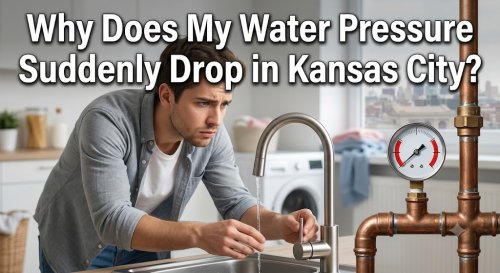
Normal residential water pressure typically ranges between 45 and 60 psi (pounds per square inch). When pressure falls below this range, multiple fixtures throughout the house are usually affected. Before diagnosing a problem, check whether the issue is isolated to a single fixture or impacting the entire home. This distinction is the single most important factor in locating the source of the restriction.
1. Clogged Aerators and Fixture-Specific Restrictions
If low water pressure only occurs at one specific sink or shower, the problem is almost always localized to that fixture. Kansas City municipal water carries natural mineral content, including calcium and magnesium, which over time accumulates inside faucet aerators and showerheads.
- Symptoms: Water sprays unevenly, splatters, or comes out in a weak stream from only one faucet while others work normally.
- Solution: Unscrew the faucet aerator, soak it in a vinegar solution to dissolve mineral scale, and rinse it thoroughly before reattaching.
2. Partially Closed Water Valves
Sometimes the culprit is simply a valve that has been inadvertently bumped or left partially closed. Every home has a main water shutoff valve, and individual fixtures often have supply stop valves underneath sinks or behind toilets.
If plumbing work was recently performed or maintenance was done in the basement or utility area, the main supply valve might not be fully opened. Inspect the main shutoff valve—typically located near the water meter or where the main water line enters the foundation—to ensure the handle is completely parallel to the pipe for full flow.
3. Mineral Buildup and Aging Galvanized Pipes
Many older residential properties throughout Kansas City, Missouri, and Kansas City, Kansas, feature aging plumbing infrastructure. Homes built several decades ago frequently contain galvanized steel pipes.
Over many years of service, the interior walls of galvanized steel pipes corrode and accumulate heavy mineral scale and rust. This internal buildup progressively narrows the pathway available for water to travel through, choking off flow volume and reducing pressure noticeably when multiple fixtures are used at once. When corrosion becomes severe, whole-house repiping may be the only permanent remedy.
4. Pressure Regulator Malfunctions
Many homes are equipped with a pressure reducing valve (PRV), usually installed near the main water shutoff where the supply line enters the building. This device protects household plumbing appliances from high municipal water pressure spikes.
When a PRV fails, it often defaults to a closed or severely restricted position, causing an abrupt and dramatic drop in water pressure throughout the entire house. Adjusting or replacing a faulty pressure regulator requires specialized plumbing tools and expertise.
5. Undetected Water Leaks
A sudden drop in water pressure can sometimes indicate a hidden leak somewhere in your supply system. If a pipe has cracked behind a wall, underneath a concrete slab foundation, or in the supply line running through the yard, water escapes before it reaches your taps.
To check for a hidden leak:
- Turn off all indoor and outdoor water fixtures.
- Locate your water meter and observe the leak indicator dial or low-flow triangle.
- If the dial is moving while all water is turned off, you likely have an active leak requiring professional leak detection services.
When to Call a Professional Kansas City Plumber
While cleaning a faucet aerator is a straightforward DIY task, systemic pressure issues require professional diagnosis. If your entire home experiences low pressure, if you suspect a hidden pipe leak, or if your home still utilizes aging galvanized pipes, contacting a qualified plumbing contractor in Kansas City ensures the underlying issue is resolved safely and effectively without risking further damage to your home's infrastructure.
Frequently Asked Questions
Why is my water pressure low only on the hot water side?
If only hot water has low pressure, the issue is typically connected to your water heater. Sediment accumulation inside the tank can restrict the hot water outlet, or the shutoff valve on top of the water heater may be partially closed.
Can municipal supply issues cause low water pressure in my home?
Yes. Main water line breaks, scheduled repairs, or high demand in your neighborhood can temporarily reduce municipal water supply pressure. Check with your neighbors to see if they are experiencing similar drops before investigating internal plumbing.
How do I know if my water pressure regulator needs replacement?
If your pressure dropped suddenly across the entire house and adjusting the adjustment bolt on top of the PRV has no effect, the internal diaphragm has likely failed, and the valve must be replaced by a licensed professional.