Low Water Pressure in Midtown Kansas City Homes
Struggling with low water pressure in your historic Midtown Kansas City home? Discover common causes, warning signs, local pipe issues, and solutions.

Need a Plumber in Kansas City, MO?
Plumbing Problem? Call for professional plumbing help.
Get help with emergency plumbing, clogged drains, leaking pipes, water heaters, burst pipes and other residential plumbing problems in Kansas City, Missouri.
Need a Plumber in Kansas City, MO?
Plumbing Problem? Call for professional plumbing help.
Get help with emergency plumbing, clogged drains, leaking pipes, water heaters, burst pipes and other residential plumbing problems in Kansas City, Missouri.
Introduction
Standing in your bathroom waiting an eternity to rinse the soap out of your hair because your showerhead is merely dribbling water is an intensely frustrating experience. For homeowners living in the historic Midtown neighborhood of Kansas City, low water pressure is a frequent and vexing issue. Nestled within Jackson County near Westport, downtown, and Hyde Park, Midtown features gorgeous, century-old architecture and established neighborhoods built during Kansas City's booming early development eras. Unfortunately, those vintage roots often include aging, deteriorating internal plumbing systems that struggle to meet modern household demands. Understanding why water pressure drops in historic properties and knowing how to address it helps protect your home from long-term plumbing degradation.
What Is Low Water Pressure?
Low water pressure refers to a noticeable reduction in the force with which water flows out of your home's faucets, showerheads, and household appliances.
Common situations include turning on the kitchen sink while the washing machine is running and watching the tap stream reduce to a miserable trickle, or waiting twice as long for your bathtub to fill up. Symptoms usually start gradually as a minor inconvenience before worsening into persistent drops across multiple fixtures. In older Midtown Kansas City properties, low water pressure is frequently caused by internal pipe narrowing, mineral build-up, or failing pressure-reducing valves.
Why Does This Plumbing Problem Happen?
Low water pressure in historic homes rarely occurs by coincidence; it is usually the physical result of structural wear and environmental stress on your supply lines.
-
Aging pipes: Many classic Midtown homes feature original galvanized steel or aging iron pipes that degrade extensively over decades.
-
Corrosion: Chemical interactions between mineral-rich Kansas City water and metal pipe interiors create thick internal rust scales that choke water flow.
-
Hard water: The mineral profile of regional water deposits calcium and magnesium carbonate inside pipes, slowly narrowing the interior diameter available for transit.
-
Closed valves: Partially shut main water shutoff valves or failing pressure-reducing valves (PRVs) restrict incoming municipal water flow.
-
High water pressure: While high pressure damages fixtures elsewhere, erratic municipal supply pressure swings can sometimes stress older neighborhood grids.
-
Improper installation: Past amateur remodeling work or incorrect pipe sizing can restrict balanced flow distribution throughout multi-story historic homes.
Signs You Should Never Ignore
Recognizing early warning signs of failing water pressure allows you to address underlying restrictions before pipes burst or leak catastrophically.
-
Water stains: Discolored patches on ceilings or drywall underneath bathrooms suggest hidden pipe corrosion or minor joint leaks.
-
Slow drains: While distinct from pressure, simultaneous drainage and flow problems point to a heavily stressed overall utility network.
-
Low water pressure: Consistent, multi-fixture pressure drops signal a systemic mainline blockage or severe internal pipe scaling.
-
High water bills: Undetected underground or in-wall supply leaks can quietly alter your monthly utility usage metrics.
-
Damp walls or floors: Moisture pooling around baseboards suggests pressurized supply lines are leaking behind structural barriers.
-
Mold growth: Musty odors and fuzzy mold patches near plumbing fixtures signal chronic dampness from unaddressed micro-leaks.
-
Strange noises: Banging, whistling, or hammering sounds echoing from pipes when turning off taps indicate water hammer or loose valves.
-
Bad smells: Trapped sediment and stagnant water within corroded lines can occasionally cause unpleasant tap odors.
-
Discolored water: Brown, red, or yellow tinted water pouring from faucets indicates heavy rust breaking free from aging galvanized lines.
Common Plumbing Problems Related to This Issue
Chronic low water pressure frequently triggers or accompanies other mechanical and structural failures throughout residential properties.
-
Pipe leaks: Extreme back-pressure and thinning metal walls caused by interior corrosion frequently lead to pinhole leaks.
-
Drain clogs: Intermittent water flow can disrupt proper waste carriage, indirectly contributing to household drainage sluggishness.
-
Water heater failures: Sediment buildup and restricted flow strain water heating appliances, causing premature tank burnout or heating element failure.
-
Fixture damage: Sediment-heavy, low-pressure streams clog faucet aerators and ruin delicate ceramic mixing cartridges.
Step-by-Step Professional Repair Process
When you call a licensed Kansas City plumbing team to diagnose persistent low water pressure, they execute a systematic troubleshooting methodology.
-
Step 1 Inspection: Plumbers test water flow rates at multiple indoor and outdoor fixtures to isolate whether the issue is localized or whole-house.
-
Step 2 Diagnosis: Technicians check the main water meter, shutoff valves, and pressure-reducing valves to determine if the restriction is external or internal.
-
Step 3 Estimate: You receive a clear, upfront breakdown of the required repair strategy, replacement parts needed, and associated costs before work starts.
-
Step 4 Repair: The professional implements the fix, ranging from PRV replacement and aerator cleaning to whole-home repiping of aging galvanized lines.
-
Step 5 Testing: Water pressure gauges are attached to system spigots to verify that pounds-per-square-inch (PSI) levels have returned to optimal safe ranges.
-
Step 6 Cleanup: The work area is thoroughly sanitized and tidied, leaving your historic home as neat as it was found.
-
Step 7 Maintenance Advice: Your plumber provides customized guidance on how to protect your upgraded supply lines from future scale and pressure swings.
Can You Fix It Yourself?
Homeowners frequently want to know whether restoring water pressure is a safe do-it-yourself weekend project.
-
Safe DIY solutions: You can easily unscrew and soak clogged faucet aerators in vinegar to dissolve hard water mineral buildup and restore localized flow.
-
Temporary fixes: Checking your main indoor water shutoff valve to ensure it is fully open can provide an immediate pressure boost.
-
When DIY becomes dangerous: Attempting to adjust high-pressure main valves or cutting into corroded historic supply lines without proper tools can cause massive indoor flooding.
-
When professional plumbing is necessary: If low water pressure affects every fixture simultaneously and cleaning aerators fails, certified professional intervention is required.
Tools Professionals Use
Modern plumbing relies on advanced diagnostic and pressure-testing equipment to resolve low water pressure accurately.
-
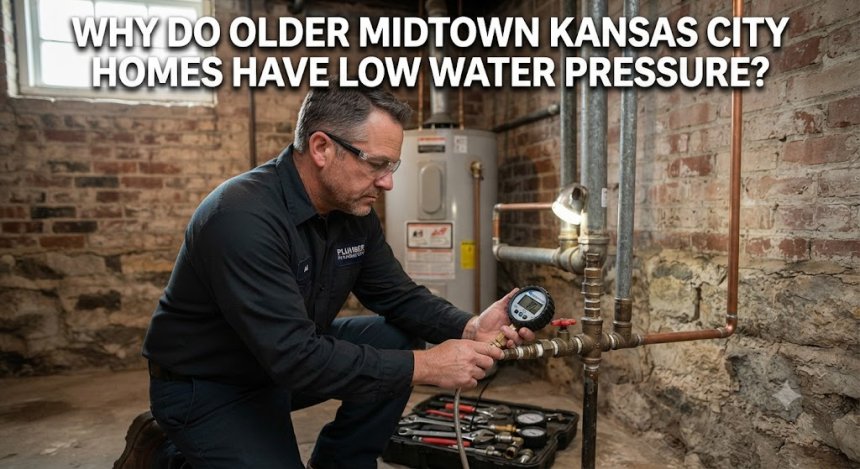
Pressure test gauges: Specialized screw-on gauges measure exact household PSI levels to identify whether a PRV is failing.
-
Pipe inspection cameras: Flexible fiber-optic scopes allow plumbers to peer inside supply lines to check for internal rust and scale blockages.
-
Acoustic leak detectors: Electronic listening devices pinpoint hidden pressurized supply leaks behind walls or beneath concrete slabs.
-
Pipe location tools: Electromagnetic sensors track the exact path of hidden metal or plastic water lines.
How Long Does the Repair Usually Take?
The timeframe required to resolve low water pressure depends entirely on the root cause of the restriction.
-
Simple repairs: Cleaning clogged aerators or replacing a faulty showerhead takes 30 minutes to 1 hour.
-
Moderate repairs: Replacing a broken pressure-reducing valve (PRV) or main shutoff valve takes roughly 1 to 3 hours.
-
Major repairs: Performing a whole-home repipe of an older Midtown residence to eliminate galvanized corrosion takes 2 to 5 days.
-
Emergency repairs: Immediate response interventions for sudden main line breaks begin within an hour of dispatch, with total restoration timelines varying by scope.
Cost Factors
Plumbing repair and pressure restoration costs fluctuate based on several distinct variables unique to your home environment.
-
Diagnostic fees: The professional time and testing equipment required to accurately isolate the source of low pressure.
-
Parts and materials: The expense of modern PEX or copper piping, new valves, or replacement regulators.
-
Labor rates: Professional expertise and local labor market pricing structures across the Kansas City region.
-
Accessibility: Whether the affected pipes are easily exposed in an open basement or hidden behind lath-and-plaster historic walls.
-
Emergency service charges: Additional fees for urgent, after-hours dispatching during nights, weekends, or holidays.
Plumbing repair costs vary depending on the severity of the problem, accessibility, materials required, emergency service, property type, and local labor rates.
Hidden Truths Homeowners Should Know
Understanding the practical realities of residential plumbing helps you protect your investment in Jackson County.
-
Small, localized pressure drops often signal major internal pipe corrosion that will eventually cut off water entirely.
-
Cheap temporary fixes and chemical scale removers fail completely against decades of thick galvanized rust buildup.
-
Standard homeowners insurance policies frequently deny claims resulting from long-term, neglected pipe degradation issues.
-
Hard water in the Kansas City area silently narrows pipe capacity and shortens the operational lifespan of plumbing fixtures.
-
Amateur DIY plumbing mistakes on fragile historic pipes frequently crack fittings, driving up final professional repair bills.
-
Delaying pressure-related repairs allows micro-fractures to saturate structural wood near your foundation, causing costly rot.
-
Hidden supply line leaks significantly alter household utility metrics and inflate monthly water bills.
-
Modernizing old supply lines dramatically increases the overall resale value of vintage Midtown properties.
-
Annual plumbing maintenance and proactive pressure checks save hundreds of dollars in emergency repair expenses.
15 Common Mistakes Homeowners Make
-
Ignoring pressure drops: Assuming a sluggish shower is just an old-house quirk rather than a sign of failing pipes.
-
Using harsh chemical cleaners: Pouring corrosive liquids into fixtures, which ruins metal finishes without fixing internal supply scale.
-
Overlooking aerators: Forgetting to check and clean mineral-choked faucet screens before calling a professional.
-
Closing valves accidentally: Bumping basement shutoff valves partially closed during storage organization.
-
Ignoring water hammering: Failing to address loud pipe banging that loosens threaded joints over time.
-
Hiring unlicensed handymen: Trusting complex plumbing restorations to unqualified individuals without proper warranties.
-
Skipping regular maintenance: Never scheduling professional plumbing checkups for historic homes.
-
Waiting until emergencies strike: Delaying minor pressure investigations until a pipe bursts on a freezing winter night.
-
Using wrong pipe materials: Mixing incompatible metals improperly during DIY fixes, accelerating galvanic corrosion.
-
Over-tightening fittings: Cracking threaded brass or iron connections by applying excessive torque with wrenches.
-
Forgetting municipal changes: Not checking if neighborhood-wide municipal supply updates are temporarily affecting local pressure.
-
Ignoring discolored water: Dismissing rusty tap water as a passing phase rather than advanced interior pipe rot.
-
Skipping PRV inspections: Never testing the home's pressure-reducing valve for functional wear.
-
Neglecting outdoor spigots: Leaving garden hose valves dripping or uninsulated against seasonal freezing.
-
Delaying professional diagnosis: Putting off expert service until low pressure turns into a total water outage.
Maintenance Tips
-
Clean faucet aerators biannually: Soak screens in white vinegar to dissolve trapped mineral scale and preserve steady flow.
-
Inspect your main shutoff valve: Test the main water valve annually to ensure it moves smoothly and opens completely.
-
Test water pressure yearly: Attach a simple pressure gauge to an outdoor spigot to monitor household PSI levels.
-
Flush your water heater annually: Remove sediment buildup from the tank bottom to protect overall system flow.
-
Insulate exposed pipes: Protect vintage basement supply lines from winter temperature drops to prevent freezing.
-
Monitor your water bills: Watch for sudden upward spikes in monthly usage that indicate hidden supply leaks.
-
Schedule annual plumbing inspections: Have a licensed Kansas City plumber evaluate your historic system for hidden vulnerabilities.
-
Upgrade aging fixtures: Replace outdated, restrictive showerheads with modern, high-efficiency models.
When Should You Call an Emergency Plumber?
Certain plumbing situations require immediate professional intervention to prevent catastrophic property damage.
-
Sudden total water loss: Zero water emerging from any fixture in the entire house without municipal notice.
-
Major supply line bursts: A high-pressure pipe rupture spraying water uncontrollably inside walls or ceilings.
-
Uncontrollable flooding: Standing water accumulating rapidly due to a failed connection or fitting.
-
Severe water heater leaks: Tanks splitting open and discharging gallons of water onto utility room floors.
-
Gas line concerns: Pungent gas odors or suspected leaks tied to shared utility spaces.
Frequently Asked Questions
Why is my water pressure suddenly low?
A sudden pressure drop typically indicates a partially closed main water valve, a failing pressure-reducing valve, or a hidden supply pipe leak.
How much does leak detection cost?
Leak detection costs vary based on home size and leak complexity, but professional electronic detection saves money by eliminating destructive guesswork.
Can a clogged drain damage pipes?
Yes, severe clogs increase internal pressure and strain pipe joints, occasionally leading to structural cracks or leaks over time.
Is hydro jetting safe for old pipes?
An experienced technician must inspect older historic lines first, as high-pressure water can damage fragile or severely corroded pipes.
How do I know if my sewer line is broken?
Signs include multiple slow drains, gurgling toilets, foul odors in your yard, and soggy patches of grass above the underground pipe path.
How long do water heaters last?
Standard tank water heaters typically last between 8 to 12 years depending on local water hardness and routine maintenance.
Why does my faucet drip?
Dripping faucets are usually caused by worn-out O-rings, rubber washers, or damaged internal ceramic cartridges.
What causes pipes to burst?
Freezing winter temperatures cause water inside pipes to expand, generating extreme pressure that splits metal or plastic lines.
Can plumbing leaks increase my water bill?
Yes, even a minor hidden leak can waste thousands of gallons of water monthly, driving up your utility costs significantly.
When should I replace plumbing instead of repairing it?
If your home features aging, deteriorating pipes prone to frequent clogs and leaks, a complete repiping project is more cost-effective than endless spot repairs.
Why Choose Our Plumbing Company
Partnering with a reliable, local plumbing team ensures your Midtown home receives expert care backed by honesty, transparency, and superior workmanship.
-
Experienced licensed plumbers: Our certified professionals understand the unique plumbing infrastructure of historic Kansas City neighborhoods.
-
Honest recommendations: We provide clear, straightforward advice without pushing unnecessary repairs or hidden fees.
-
Upfront estimates: You receive transparent pricing before any work begins so you stay in complete control of your budget.
-
Fast response: We respect your time and arrive promptly to resolve urgent plumbing problems efficiently.
-
Quality workmanship: Every repair is executed to strict industry standards for long-lasting reliability and safety.
-
Modern equipment: We utilize state-of-the-art testing systems and pressure gauges to protect your property.
-
Customer satisfaction: Our local reputation across Jackson County is built on trust, integrity, and exceptional service.