Why Does My Sewer Keep Backing Up in Waldo KC?
Dealing with repeating sewer backups in Waldo, Kansas City? Learn why sewer lines fail, warning signs, local causes, and when to call a plumber.

Need a Plumber in Kansas City, MO?
Plumbing Problem? Call for professional plumbing help.
Get help with emergency plumbing, clogged drains, leaking pipes, water heaters, burst pipes and other residential plumbing problems in Kansas City, Missouri.
Need a Plumber in Kansas City, MO?
Plumbing Problem? Call for professional plumbing help.
Get help with emergency plumbing, clogged drains, leaking pipes, water heaters, burst pipes and other residential plumbing problems in Kansas City, Missouri.
Introduction
Dealing with a sewage backup in your home is one of the most stressful experiences a property owner can face. For homeowners in the historic Waldo neighborhood of Kansas City, recurring sewer backups are an unwelcome reality for many older properties. Situated within Jackson County near areas like Brookside, Armour Hills, and Meyer Boulevard, Waldo features charming, mature neighborhoods surrounded by grand, established shade trees. Unfortunately, those very same trees and aging municipal infrastructure often spell trouble for underground private sewer lateral lines. Understanding why your sewer keeps backing up and knowing how to address it can protect your home from extensive property damage.
What Is a Sewer Backup?
A sewer backup occurs when wastewater from the municipal main or your home's main lateral line is blocked, forcing raw sewage, greywater, and debris to reverse direction and push up through your household drains, toilets, and floor drains.
Common situations involve flushing a toilet only to watch water bubble up into your basement shower floor drain, or noticing gurgling kitchen sinks every time your washing machine discharges water. Symptoms usually start subtly with slow-draining tubs before escalating into full overflows. In Kansas City’s established neighborhoods, these backups frequently happen when underground pipes become entirely occluded by solid obstructions or structural damage.
Why Does This Plumbing Problem Happen?
Sewer lines do not back up without an underlying physical obstruction or structural failure in the piping system.
-
Tree roots: Mature trees throughout Waldo seek out moisture, infiltrating tiny cracks or joints in older clay or cast-iron sewer pipes and expanding inside them.
-
Aging pipes: Many homes in this region still rely on vintage sewer materials that deteriorate, crack, or collapse over decades of shifting soil.
-
Corrosion and offset joints: Ground settling in Jackson County causes pipe sections to misalign, creating edges that catch toilet paper, grease, and debris.
-
Grease and food buildup: Pouring cooking oils and fats down kitchen sinks causes them to solidify inside the cold underground sewer line.
-
Improper flushing: Flushing items falsely labeled as "flushable"—such as wet wipes, paper towels, and hygiene products—quickly creates massive clogs.
-
Heavy seasonal rainfall: Torrential Kansas City spring storms can overwhelm municipal sewer mains, causing backflows into residential lateral lines.
Signs You Should Never Ignore
Recognizing the early warning signs of a failing sewer system gives you a chance to act before raw sewage invades your living spaces.
-
Water stains: Water pooling or staining around basement floor drains indicates past minor overflows.
-
Slow drains: When multiple fixtures throughout your house drain sluggishly at the same time, the problem lies in the main sewer line rather than a single branch pipe.
-
Low water pressure: While distinct, pressure anomalies sometimes accompany major plumbing disruptions affecting home infrastructure.
-
High water bills: Undetected leaks or broken lines can alter household water dynamics and utility readings.
-
Bad smells: Persistent, sulfurous sewer gas odors lingering around drains or in your yard signal a venting issue or a cracked pipe.
-
Standing water: Unexplained soggy patches or lush, green grass outbreaks directly above your underground sewer line layout.
Common Plumbing Problems Related to This Issue
Chronic sewer backups rarely exist in a vacuum and are frequently tied to broader household plumbing distress.
-
Drain clogs: Branch lines throughout the home struggle to clear waste when the main exit path is completely blocked.
-
Pipe leaks: Extreme internal pressure from stubborn clogs can force wastewater through weak pipe joints and cracked fittings.
-
Slab leaks: Shifting ground and compromised sewer lines underneath concrete foundations can destabilize your structural flooring.
-
Fixture damage: Overflowing toilets and backing-up bathtubs cause water damage to flooring, baseboards, and drywall.
Step-by-Step Professional Repair Process
When you call a trusted Kansas City plumbing team, they approach sewer backups with a precise, orderly methodology.
-
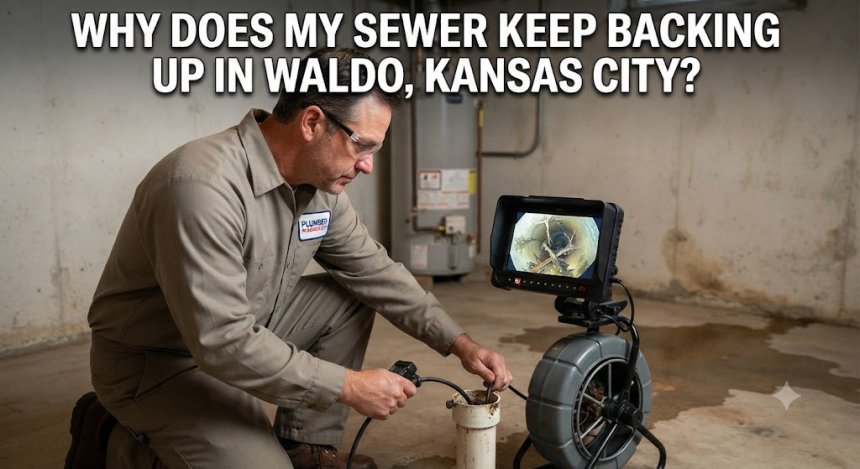
Step 1 Inspection: Plumbers use advanced video cameras threaded directly into your sewer lateral to visually assess the interior condition of the pipe.
-
Step 2 Diagnosis: Technicians pinpoint the exact depth, nature, and location of the obstruction, whether it is a root intrusion, a belly, or a collapsed pipe.
-
Step 3 Estimate: You receive a detailed, transparent cost estimate and repair strategy before any physical work begins on your property.
-
Step 4 Repair: The team performs the required solution, ranging from professional mechanical snaking and hydro jetting to localized excavation or trenchless pipe replacement.
-
Step 5 Testing: Water is run through the entire household system while the camera re-inspects the line to confirm smooth, unobstructed flow.
-
Step 6 Cleanup: The work area is thoroughly sanitized and restored, leaving your home and yard clean.
-
Step 7 Maintenance Advice: Your plumber provides practical guidelines to prevent future backups based on your property's specific layout.
Can You Fix It Yourself?
Homeowners often wonder if a repeating sewer backup can be resolved without professional intervention.
-
Safe DIY solutions: You can occasionally clear minor branch clogs near a single fixture using a standard sink plunger or a small manual hand auger.
-
Temporary relief: Using a plunger may provide temporary relief if the blockage is superficial and close to the drain opening.
-
When DIY becomes dangerous: Renting heavy industrial power augers without experience can severely damage fragile historic pipes or cause personal injury.
-
When professional plumbing is necessary: If multiple drains back up simultaneously, or if sewage is actively flooding your basement, DIY methods are entirely useless and professional help is mandatory.
Tools Professionals Use
Professional plumbing companies rely on heavy-duty, specialized equipment to diagnose and resolve deep-seated sewer line failures efficiently.
-
Drain and sewer cameras: High-resolution fiber-optic cameras reveal roots, cracks, grease buildup, and structural collapses inside buried pipes.
-
Hydro jetting equipment: High-pressure water streams blast away stubborn grease, scale, and root intrusions, scouring pipe walls clean.
-
Pipe locators: Electromagnetic surface transceivers track the exact path and depth of underground lines to eliminate guesswork during excavation.
-
Trenchless repair machinery: Specialized pipe-bursting and relining tools allow plumbers to rehabilitate broken pipes without tearing up your entire Waldo yard.
How Long Does the Repair Usually Take?
The duration of a sewer repair project depends heavily on the severity and nature of the underlying obstruction.
-
Simple clearings: Clearing a localized root mass or soft clog with an auger or hydro jet usually takes 1 to 2 hours.
-
Moderate repairs: Spot repairs or fixing an offset sewer joint typically require 3 to 6 hours of labor.
-
Major repairs: Replacing a collapsed main sewer lateral from the house to the street can take 1 to 3 days.
-
Emergency repairs: Immediate interventions to stop active sewage overflows begin within an hour of dispatch, with total restoration depending on damage scope.
Cost Factors
Plumbing repair costs vary based on several distinct variables unique to your specific situation.
-
Diagnostic fees: Time and technology required by a technician to run a camera inspection and locate the blockage.
-
Parts and materials: The expense of new PVC piping, cleanout installations, or trenchless lining resin.
-
Labor rates: Professional expertise and local labor market pricing in the Kansas City area.
-
Accessibility: Depth of the sewer line, presence of concrete landscaping, or proximity to utilities.
-
Emergency service charges: Fees associated with urgent, after-hours dispatching during weekends, nights, or holidays.
Plumbing repair costs vary depending on the severity of the problem, accessibility, materials required, emergency service, property type, and local labor rates.
Hidden Truths Homeowners Should Know
Understanding the realities of underground sewer lines helps you protect your investment in Jackson County.
-
Small, recurring clogs always escalate into complete, catastrophic sewer line collapses if left unaddressed.
-
Cheap chemical drain openers and temporary quick fixes fail completely against established tree root intrusions.
-
Standard homeowners insurance policies rarely cover damage caused by neglected, deteriorating sewer lines.
-
Tree roots will repeatedly reinvade sewer lines year after year unless the damaged pipe is structurally repaired or replaced.
-
Hard water and mineral scale shorten the overall lifespan of indoor plumbing fixtures and drain connections.
-
Amateur DIY plumbing mistakes frequently compound existing damage, driving up final professional repair costs.
-
Delaying sewer repairs allows toxic wastewater to saturate soil near your foundation, causing structural settling.
-
Hidden line cracks significantly increase moisture issues and attract destructive pests to your property.
-
Annual sewer maintenance and preventative cleanings save hundreds of dollars in emergency mitigation costs.
15 Common Mistakes Homeowners Make
-
Ignoring slow-draining fixtures: Waiting until a complete sewage overflow occurs before investigating slow drains.
-
Pouring chemical drain cleaners: Relying on harsh, corrosive liquids that damage old cast-iron or clay sewer pipes.
-
Flushing wet wipes: Treating "flushable" wipes as safe when they refuse to break down in sewer lines.
-
Disposing of cooking grease: Pouring liquid fats down the kitchen sink where they harden inside underground pipes.
-
Ignoring gurgling toilets: Failing to recognize bubbling sounds as a classic warning sign of trapped sewer air and blocked lines.
-
Hiring unlicensed handymen: Trusting complex underground sewer repairs to unqualified individuals without proper warranties.
-
Skipping video inspections: Buying or maintaining an older home without ever scoping the main sewer lateral.
-
Waiting until middle-of-night emergencies: Delaying routine maintenance until a catastrophic weekend backup hits.
-
Planting trees near sewer lines: Positioning large shade trees directly over underground lateral pipes.
-
Over-tightening pipe fittings: Forcing connections beyond their tolerance during DIY plumbing attempts.
-
Forgetting cleanout locations: Not knowing where your outdoor sewer cleanout access point is located.
-
Ignoring foul yard odors: Dismissing strange sewage smells outside as temporary neighborhood anomalies.
-
Disposing of coffee grounds: Pouring fibrous food wastes down kitchen drains that catch on pipe imperfections.
-
Neglecting sump pump connections: Allowing improper drainage systems to tie into sanitary sewer lines.
-
Delaying professional repairs: Putting off necessary structural fixes until property damage spreads to walls and flooring.
Maintenance Tips
-
Schedule annual hydro jetting: Clear out minor root buildup and grease before it triggers a complete backup.
-
Watch what you flush: Only flush human waste and toilet paper down your home's toilet system.
-
Install a backwater valve: Prevent municipal backups from reversing into your basement fixtures during heavy storms.
-
Map your trees: Keep large trees and aggressive root-bearing plants away from your main sewer lateral path.
-
Use strainers in sinks: Catch food particles and hair before they enter your drainage plumbing.
-
Inspect older pipes: Have a camera inspection performed every few years if your Waldo home is over 50 years old.
-
Know your shut-offs: Keep your main water and cleanout access points clear of boxes and landscaping.
-
Avoid grease down drains: Collect cooking oil in a container and dispose of it in the trash.
When Should You Call an Emergency Plumber?
Certain situations demand immediate professional dispatch to safeguard your health and property.
-
Sewage overflowing into living areas: Wastewater bubbling up through basement floors, showers, or toilets.
-
Complete drainage failure: Zero water or waste can exit your home from any plumbing fixture.
-
Uncontrollable backing up: Multiple fixtures flooding simultaneously despite DIY attempts.
-
Strong raw sewage smells: Pervasive gas odors inside the home indicating a major venting or line break.
-
Flooding: Standing water accumulating around foundational drain points.
Frequently Asked Questions
Why is my water pressure suddenly low?
A sudden pressure drop usually points to a failing pressure reducing valve, a closed main valve, or a hidden leak.
How much does leak detection cost?
Leak detection costs vary based on the complexity of the issue, but specialized equipment saves money by preventing destructive exploratory digging.
Can a clogged drain damage pipes?
Yes, severe clogs increase internal pressure and strain pipe joints, occasionally leading to structural cracks or leaks.
Is hydro jetting safe for old pipes?
An experienced technician must inspect older lines first, as high-pressure water can damage fragile, heavily deteriorated pipes.
How do I know if my sewer line is broken?
Signs include multiple slow drains, gurgling toilets, foul odors in your yard, and soggy patches of grass above the pipe path.
How long do water heaters last?
Standard tank water heaters typically last between 8 to 12 years depending on water quality and maintenance.
Why does my faucet drip?
Dripping faucets are usually caused by worn-out O-rings, rubber washers, or damaged internal cartridges.
What causes pipes to burst?
Freezing winter temperatures cause water inside pipes to expand, generating extreme pressure that splits metal or plastic lines.
Can plumbing leaks increase my water bill?
Yes, even a minor hidden leak can waste thousands of gallons of water monthly, driving up utility costs.
When should I replace plumbing instead of repairing it?
If your home features aging, deteriorating pipes prone to constant failures, a complete replacement is more cost-effective than endless repairs.
Why Choose Our Plumbing Company
Partnering with a reliable, local plumbing team ensures your Waldo home receives expert care backed by integrity and transparent service.
-
Experienced licensed plumbers: Our certified professionals understand the unique plumbing infrastructure of historic Kansas City neighborhoods.
-
Honest recommendations: We provide clear, straightforward advice without pushing unnecessary repairs or hidden fees.
-
Upfront estimates: You receive transparent pricing before any work begins so you stay in complete control.
-
Fast response: We respect your time and arrive promptly to resolve urgent plumbing problems efficiently.
-
Quality workmanship: Every repair is executed to strict industry standards for long-lasting reliability.
-
Modern equipment: We utilize state-of-the-art camera systems and hydro jetters to protect your property.
-
Customer satisfaction: Our local reputation across Jackson County is built on trust and exceptional service.