What to Do When Your Kansas City Basement Starts Flooding
Flooding basement in Kansas City? Act fast. Discover immediate steps, causes (sump pump failure, rain, sewer backups), repair costs, and professional solutions.Focus Keywords: flooded basement Kansas City, basement flooding repair KC

Need a Plumber in Kansas City, MO?
Plumbing Problem? Call for professional plumbing help.
Get help with emergency plumbing, clogged drains, leaking pipes, water heaters, burst pipes and other residential plumbing problems in Kansas City, Missouri.
Need a Plumber in Kansas City, MO?
Plumbing Problem? Call for professional plumbing help.
Get help with emergency plumbing, clogged drains, leaking pipes, water heaters, burst pipes and other residential plumbing problems in Kansas City, Missouri.
What to Do When Your Kansas City Basement Starts Flooding
Few household events trigger instant panic quite like walking down the stairs and hearing a distinct, rhythmic sloshing sound. Basement flooding is a nightmare scenario for many homeowners across the Kansas City metro area. Whether you are dealing with a finished living space in Overland Park or a utility basement in the Historic Northeast, immediate action is paramount.
When water infiltrates your basement, it doesn't just damage drywall and carpeting. It threatens your home's structural foundation, creates an ideal breeding ground for hazardous mold, and can even destroy critical mechanical systems like your furnace and water heater. Homeowners frequently search for "flooded basement Kansas City" during heavy rains or sudden system failures because they know that every minute water sits unmanaged, the restoration costs skyrocket exponentially. Immediate attention is necessary because the long-term risks—such as toxic mold growth that can affect air quality throughout the entire house—are too significant to ignore. This article provides critical, educational advice from experienced plumbing experts to help you navigate this crisis before calling in a professional.
What Is a Flooded Basement?
Simply put, a flooded basement is the presence of unwanted, standing water in the lowest level of your property. It’s important to understand the nuance, as the source of the flooding often dictates the appropriate emergency response and repair strategy.
Common Flooding Scenarios
We generally classify basement flooding into three primary categories:
-
Clean Water Intrusion: This occurs from "pure" sources, such as a burst fresh water supply line, a leaking water heater, or, commonly in our region, groundwater seeping through foundation cracks during heavy rains. While initially less dangerous, clean water must be addressed quickly before it degrades and becomes hazardous.
-
Gray Water Flooding: This water is sourced from household appliances that are not connected to a toilet. Examples include an overflowing washing machine or a failure of your sump pump system that allows accumulated gray water (groundwater collected by the perimeter drain tiles) to backup into the space. Gray water contains microorganisms and can cause illness if handled incorrectly.
-
Black Water / Sewer Backup: This is the critical scenario. Black water originates from sewer lines and contains raw human waste. It enters the basement through floor drains, toilets, or laundry sinks, typically caused by a blockage in your main sewer lateral, tree root infiltration, or a municipal sewer line surcharge. Black water requires specialized, professional biohazard remediation; do not attempt to clean this type of flood yourself.
Why Does This Plumbing Problem Happen in Kansas City?
Basement flooding is rarely the result of a single isolated failure; it's often a combination of environmental factors and system weaknesses. Kansas City, with its distinct four-season weather patterns and varied local soil compositions, presents unique challenges.
Primary Causes of Flooding
1. Severe Seasonal Weather
Our region Experiences intense spring thunderstorms that drop inches of rain in mere hours. This saturated ground puts immense hydrostatic pressure on your foundation. If your soil doesn’t drain well, or your perimeter drain system is overwhelmed or broken, that water will find its way into your basement. This pressure forces water through hairline cracks in concrete slabs or foundation walls. Heavy rains also contribute directly to groundwater seepage.
2. Sump Pump Failure (A Common KC Emergency)
Most Kansas City homes with basements rely on a sump pump system to collect groundwater from around the foundation (via a "French drain") and pump it safely away. When this pump fails—due to a sudden power outage during a storm, a jammed mechanical float, or simply reaching the end of its lifespan—water has nowhere to go but up and over the sump pit, directly onto your basement floor. This is a common and predictable emergency.
3. Sewer Backups
When your main sewer lateral (the line that connects your home to the city’s sewer main in the street) becomes blocked, waste from upstairs sinks, toilets, and showers has nowhere to go but back into the lowest drains, which are almost always in the basement. Blockages often occur from tree roots searching for moisture (a major issue with older KC sewers), "flushable" wipes that do not decompose, or grease poured down kitchen drains that solidifies inside the pipe. Municipal sewer surcharges during extreme rains can also force city sewage into residential basements.
4. Foundation Leaks and Structural Cracks
Your home's foundation concrete naturally shrinks as it cures, creating small fractures. In clay-heavy KC soil, that ground expands when wet and contracts when dry, putting constant, shifting pressure on your foundation walls. Over time, these small shrink cracks or settling fractures turn into direct conduits for groundwater infiltration, particularly if you do not have adequate basement waterproofing measures in place.
5. Burst Pipes and Plumbing System Failures
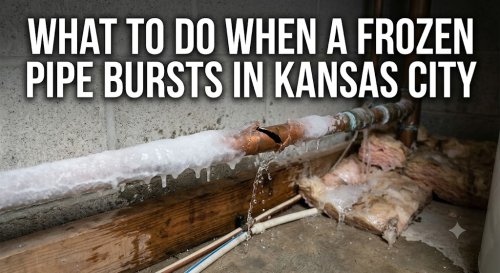
Severe winter temperatures in Kansas City create a constant risk for frozen pipes. Supply lines running through unheated crawlspaces, outer walls, or near drafty areas can freeze, expand, and shatter. When they thaw, unmanaged fresh water rushes out at full city pressure, quickly flooding a basement. Similarly, a water heater failure can release dozens of gallons in minutes.
6. Poor Exterior Drainage and Improper Installation
If your gutters are clogged or your downspouts are not extended at least 5-10 feet away from your foundation, rain from your entire roof area is deposited directly against your foundation wall. Furthermore, if your yard does not have proper grading (meaning it slopes towards the house instead of away), all landscape runoff is channeled straight to your basement.
Signs You Should Never Ignore: Warning Signals of Impending Flooding
Basements rarely flood without warning. Homeowners often search for "flooded basement Kansas City" because they ignored the preceding signs. Recognizing these subtle indicators can help you intervene with maintenance before a catastrophe occurs.
| Warning Sign | Why It Matters (The Real Risk) |
| New or Spreading Water Stains (Damp Walls) | Active water is seeping into your basement, degrading the wall and suggesting foundation issues. If ignored, a major foundation leak repair will be necessary. |
| Gurgling Floor Drains or Toilets | This noise indicates that air is trapped inside your sewer line, typically by a partial blockage. It is the number one sign that a full sewer backup is imminent. |
| A Sump Pump That Runs Constantly | While some sumps run often, a pump that never stops indicates your groundwater drain system is overwhelmed. The pump will burn out quickly, leading to a predictable sump pump failure KC scenario. |
| Sudden Bad Smells (Sulfur or Rotten Eggs) | This smell points directly to sewer gas, indicating either a dried-out drain trap or, worse, a sewage blockage that is about to back up. |
| Efflorescence (White, Powdery Residue) | This is not mold; it is crystalline mineral residue left behind when groundwater seeps through concrete walls and evaporates. It is a definitive sign of active water infiltration. |
| A High Water Bill (Unexplained) | Your bill increased dramatically but your water use habits didn't? You have a hidden leak—likely a fresh water supply line break inside your slab or foundation where you cannot see it. |
| Slow Drains (Especially in the Basement) | If multiple drains in your basement are sluggish, the main sewer line is likely obstructed. |
Step-by-Step Professional Basement Flooding Repair Process
When you call a licensed, reputable plumbing company in Kansas City to handle a flooded basement, they follow a methodical process. Transparency is vital so you understand what is happening in your home:
Step 1: Emergency Stabilization and Assessment
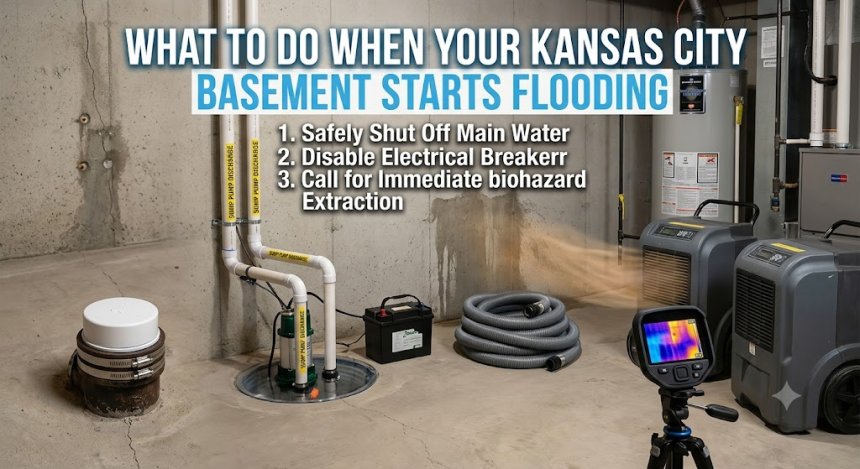
Upon arrival, our immediate priority is containment. We assess the flood's source. If it's a burst fresh water supply line, we locate and close the main house shut-off valve. If it’s a sewage backup or gray water failure, we stabilize the flow and immediately assess electrical hazards before recommending next steps.
Step 2: Honest Diagnosis and Estimate
Using specialized leak detection equipment, sewer camera inspections, and thermal imaging, our technicians pinpoint the precise point of failure—whether it’s a failed sump pump, a foundation crack, a root-infested sewer line, or an overwhelmed drainage system.Reputable plumbing contractors never provide fake, fixed prices for major flooding events. A licensed professional will provide a transparent, itemized estimate detailing the exact repairs, materials required, labor costs, necessary equipment, and permit fees (if applicable).
Step 3: Immediate Water Cleanup and Extraction
We work concurrently with or recommend professional water damage restoration specialists. This step is critical and must happen before any permanent repair. Commercial-grade truck-mounted extractors remove standing water, and specialized industrial air movers and dehumidifiers are utilized for thorough water cleanup and structural drying. Delaying this allows mold to develop quickly.
Step 4: biohazard Sanitization (For Sewer Backups)
For any sewer backup Kansas City situation, a specialized remediation team must completely sanitize the space with industrial biocides to kill bacteria, viruses, and pathogens present in black water. Do not handle this yourself.
Step 5: Permanent Repair
Once the source is identified and the area is safe, the repair begins:
-
Sump Pump Failure KC Repair: We install heavy-duty replacement pumps (often adding a crucial battery-backup system for power outages).
-
Foundation Leak Repair: Cracks are repaired using epoxy or polyurethane injection from the interior, often combined with installation of an interior perimeter drain system (a "French drain" within the basement slab) if the exterior waterproofing has completely failed.
-
Sewer Line / Root Repair: Options range from mechanical root cutting to full sewer line replacement. In some cases, specialized trenchless equipment (like hydro jetting to clear roots and pipe lining to seal the pipe from within) can be used to improve repair accuracy without massive excavation.
Step 6: Rigorous Testing
After the repair, we pressure test fresh water lines or use flow tests and camera re-inspections on drain lines to verify the repair's integrity and ensure the system is stable and code-compliant.
Step 7: Final Restoration and Clean-up
Work areas are completely cleared of debris and swept. For complex jobs, we provide comprehensive cleanup advice and detailed maintenance tips tailored to preventing another flood.
Can You Fix It Yourself? Understanding Safe DIY Solutions vs. Dangerous Scenarios
When faced with a crisis, many homeowners intuitively ask, "Can I fix this myself?" It is critical to know what you can safely do and when a professional plumber is necessary.
| Safe DIY Solutions (Containment) | Dangerous DIY Actions (Do NOT Attempt) |
| Locate and shut off the main water valve: If the source is a burst supply line, this is the most critical first step. Everyone in your home should know where this valve is. | Never handle black water or sewer backups yourself: Biohazard cleanup requires specific certifications, protective equipment, and sanitizing chemicals. |
| Turn off the main electrical breaker to the basement: If water is pooling near outlets, electrical panels, or critical mechanical systems, disable the power immediately before stepping into the water to avoid lethal electrocution. | Never enter a flooded basement with standing water near electrical panels or outlets: Wait for the utility provider or a licensed electrician to disable the power. |
| Use temporary patches or tape on active fresh water leaks: Minor localized leaks can sometimes be wrapped with self-amalgamating tape or temporary clamps until a plumber arrives. This buys you minutes, not days. | Never operate a standard residential "shop-vac" to extract large amounts of water: They are not designed for bulk extraction and pose an immediate electrocution hazard if not properly grounded and used. Commercial extractors are required. |
| Manually check and clear a sump pump's mechanical float: Sometimes debris jams the pump. Safely clearing it might restore operation, but the pump still needs professional inspection. | Never use chemical drain cleaners to try and clear a main sewer line blockage: They are ineffective on main line clogs and create a highly corrosive, dangerous soup that can burn a plumber when they do arrive. |
How Long Does the Repair Usually Take? Timelines for Basement Flooding Repair KC
Timeline expectations vary depending on the flooding’s cause and severity:
-
Emergency Stabilization and Water Extraction: The actual water removal typically takes several hours ($3\text{--}8$ hours), followed by several days of structural drying with industrial dehumidifiers ($2\text{--}5$ days).
-
Simple Repairs (Sump Pump Replacement, Pipe Patch): Replacing a failed sump pump system, fixing a water heater, or making a minor supply line repair usually takes $1\text{--}3$ hours.
-
Moderate Repairs (Root Removal, In-Slab Leak Patch): Mechanical root cutting, hydro jetting, or repairing an in-slab leak might require a full day of work ($4\text{--}8$ hours).
-
Complex / Major Repairs (Sewer Line Replacement, Foundation Drain Install): Major structural foundation leak repair combined with new perimeter drainage installation, or replacing a complete main sewer line lateral with heavy trenchless equipment, can take $2\text{--}5+$ days, often requiring excavation and permit inspection delays.
-
Biohazard Mitigation (For Sewer Backups): Sanitization and material removal often add an extra day to the extraction process ($1\text{--}2$ days).
Cost Factors for Basement Flooding Repair KC
When seeking service, do not accept fake fixed prices. Plumbing repair costs vary depending on the severity of the problem, accessibility, materials required, emergency service surcharge, property type, and local labor rates.
Primary Drivers of Final Cost
-
Diagnostic / Service Call Fee: repuatble companies charge a dispatch fee to have a licensed technician and fully stocked truck arrive at your location.
-
The Flood Source and Severity: Fixing a failed $500 sump pump is vastly different from replacing a $10,000 main sewer line collapse under your foundation.
-
Water Damage Cleanup and Extraction: This is a separate but concurrent cost. A reputatable plumber does not provide fixed prices for extraction, as it is based on equipment needed, hours, and the volume of water removed.
-
biohazard Mitigation for Sewer Backups: black water cleanup is significantly more expensive than clean water extraction due to required protective gear and chemicals.
-
Material Choice: The difference in price between schedule 40 PVC, SDR 35 sewer pipe, and copper PEX tubing for supply lines affects the final budget.
-
After-Hours or Emergency Service Charges: Response on a Saturday night or Christmas morning involves premium labor rates.
-
Accessibility of pipes: Replacing a line in an open, dry basement costs less than excavating a sealed slab or working in a tight, wet crawlspace.
-
Permit Costs (If Applicable): Complex repairs like main line work often require local municipal permits and code inspections.
Hidden Truths Kansas City Homeowners Should Know about Basement Flooding
Plumbing doesn't always operate as intuitively as we’d like. We believe in educating our KC neighbors about practical, inconvenient truths.
Small Leaks Become Expensive, Critical Repairs
That tiny pinhole leak in your basement slab isn't harmless. Small water infiltration degrading a foundation wall will compromise structural integrity over time. Waiting for it to turn into a full blowout guarantees an emergency call (and premium rates).
Cheap Temporary Fixes Often Fail (and Burst Worse Later)
The "easy repair patch" from the big-box store is almost never a permanent solution on a pressurized supply line. These "fixes" degrade and eventually fail, usually by blowing out completely when no one is home.
Delaying Repairs Causes Irreversible Structural Damage
Water doesn't just evaporate. It soaks into drywall, warps structural wood, and rots flooring. Within 24-48 hours of constant moisture, you will have structural rot. Furthermore, Delaying repairs causes structural foundation issues.
Hidden Leaks Directly Increase Utility Bills
Water meter dial spinning rapidly? A hidden fresh water supply line break can lose thousands of gallons underground.
Insurance Can, and Often Will, Deny Claims for Neglected Plumbing
This is the most crucial truth. Many standard homeowners insurance policies cover "sudden and accidental" water damage, but they deny claims for damage caused by long-term, unmanaged leaking—like ignoring a slow drip for months or leaving a home unheated during winter. Proper maintenance isn't just about saving water; it's about validating your insurance.
Mold Develops Quickly and Affects the Whole House
Mold thrives in as little as 24-48 hours in warm, damp environments. Mold can affect air quality throughout the entire house. Annual maintenance saves money.
15 Common Mistakes Homeowners Make: How to Avoid Winter Pipe Crises in KC
We help Kansas City neighbors avoid these exact errors daily:
-
Ignoring Minor Leaks: Assuming a small damp spot on a wall will fix itself.
-
Delaying Routine Maintenance: Skipping sump pump tests, water heater flushes, and drain cleanings.
-
Using Harsh Chemical Drain Cleaners: They do not clear clogs permanently and will structurally damage old pipes.
-
Flushing "Flushable" Wipes: They do not break down decompose like toilet paper and are a leading cause of local sewer clogs.
-
Pouring Grease down kitchen drains: Grease solidifies like cement inside your sewer lateral line.
-
Leaving Garden Hoses Connected in Winter: This traps water inside frost-proof sillcocks, causing supply pipes inside walls to freeze.
-
Ignoring High Water Pressure: consistently high pressure (above 80 PSI) destroys all household plumbing valves and fixtures.
-
Hiring Unlicensed Plumbers / Handymen: They lack proper licensing, liability insurance, and formal code training.
-
Waiting Until Emergencies to Call: Paying premium emergency rates for issues that were manageable.
-
Using the Wrong Pipe Materials: Mixing dissimilar metals (like copper and galvanized steel) creates rapid galvanic corrosion that eats through pipes.
-
Over-tightening plumbing fittings: This crushes seals or cracks brass.
-
Leaving a Home Unheated in Winter: A guaranteed recipe for frozen pipes.
-
Forgetting to Drain Irrigation Systems: Causes supply lines to freeze in wall cavities.
-
Not Knowing Where the Main Water Shut-off Valve Is: Turning a 20-minute emergency containment into a 2-hour flood.
-
Applying Open Flames near Framing: DIY torch work on frozen copper near dry lumber is an extreme fire hazard.
Pro Maintenance Tips to prevent basement flooding in your Kansas City Home
The best way to manage a plumbing emergency is to ensure it never happens. We want to work ourselves out of an emergency job.
Essential Seasonal and Annual Maintenance
-
Fall Winterization Checklist: disconnect all garden hoses before freezing temps arrive. Drains exterior spigots and sprinkler systems, and ensure any supply lines in unheated areas (crawlspaces, garages) are insulated with foam sleeves or heat tape.
-
Annual Water Heater Flush: Drain and flush your tank to remove sediment.
-
Check and Test your pressure valve: verify that your water heater’s temperature-and-pressure (TPR) relief valve is not seized.
-
Exercise Your Main Water Shut-off Valve: Once a year, fully close and reopen your main valve to ensure it doesn’t lock up.
-
Verify Household Pressure: Use a cheap gauge (screwed onto any hose bibb) to ensure your household pressure is between 50-70 PSI. Replace the pressure regulator if it cannot manage high pressure.
-
Sump Pump Quarterly Test: Pour a five-gallon bucket of water into the basin once a quarter to verify the pump activates and pumps the water out. Important: Check the sump pump discharge line to confirm it’s not blocked by leaves, ice, or snow.
-
Install a crucial Battery Backup for your Sump Pump: Sump pumps fail most often when the power goes out. A battery backup system provides peace of mind during spring thunderstorms.
-
gutter maintenance: Clean gutters every fall and spring. Important: verify that downspouts are extended at least 5-10 feet away from your foundation wall.
-
Grading Maintenance: Look at the ground around your foundation. The soil must slope away from the home at a minimum pitch of 1 inch per foot for the first 6 feet to ensure landscape runoff doesn’t pool against your foundation.
-
Basement Dehumidification: Run a quality dehumidifier in your basement during the spring and summer months to maintain humidity below 50%, inhibiting mold and mildew growth.
-
Video Camera Inspection: Request a video camera sewer inspection before buying a new property, or once every 3-5 years for older properties, to check for root infiltration, cracks, or collapses.
When Should You Call an Emergency Plumber in Kansas City?
Some residential plumbing failures are so dangerous to your property or health that you must contact an emergency plumber in Kansas City immediately. call us now if:
-
Water is actively flooding your basement from a burst fresh water supply line or major water heater failure.
-
Sewage is actively backing up into your basement from a floor drain or toilet. This is a direct biohazard threat.
-
You have completely lost water service (and it is not a public utility outage).
-
You suspect a natural gas line concern. (If your plumber is licensed for gas service).
-
An overflowing toilet cannot be isolated.
-
A burst pipe cannot be isolated.
Frequently Asked Questions
Why is my water pressure suddenly low?
Sudden low pressure suggests a major fresh water supply line leak, possibly underground or inside your foundation slab. It requires specialized leak detection equipment immediately.
How much does leak detection cost?
A basic service call usually covers initial checks. However, specialized sub-slab or subterranean leak location using high-tech ultrasonic or thermal imaging equipment can cost several hundred dollars. Reputable plumbing contractors provide detailed upfront estimates before this advanced work begins.
Can a clogged drain damage pipes?
Yes. The constant hydraulic pressure from water backup can cause joints to fail. Furthermore, relying on chemical drain cleaners structurally weaknesses old cast iron or PVC pipes.
Is hydro jetting safe for old pipes?
This depends entirely on the pipe's condition. High-pressure hydro jetting is extremely effective on grease and roots, but it can damage fragile, corroded cast iron, old clay tile, or orangeburg pipes. A true professional plumber will perform a video camera inspection before hydro jetting to verify the line's integrity.
How do I know if my sewer line is broken?
Persistent, repeating backups (even after clearing roots), sunken patches or lush green spots in your lawn, and the distinctive smell of raw sewage inside the house are all signs of a possible broken or collapsed sewer lateral. A video camera inspection is required to confirm a broken line.
How long do water heaters last?
Tank water heaters generally last 8 to 12 years. Regular maintenance (flushing, checking anode rods) can extend that life, while hard water can shorten it significantly.
Why does my faucet drip?
This is almost always a worn-out internal washer, O-ring, or ceramic cartridge. While it seems minor, a single dripping faucet can waste dozens of gallons of water a month.
What causes pipes to burst?
Frozen water lines (which expand up to 9% by volume) are the number one cause of sudden burst pipes in Kansas City. Other causes include severe corrosion, structural shifting, and accidental physical impact.
Can plumbing leaks increase my water bill?
Absolutely. A running toilet or hidden supply line leak can lose thousands of gallons, increasing a monthly water bill by hundreds or even thousands of dollars.
When should I replace plumbing instead of repairing it?
If you have persistent, repeating leaks in a specific section of pipe, visible widespread corrosion, or your home uses dangerous materials like lead or old galvanized steel, repiping (full replacement) is the most cost-effective long-term solution.
Why Choose Our Plumbing Company in Kansas City?
When you are facing a flooded basement emergency in Kansas City, you need dependable, licensed professionals who understand how to stabilize, contain, and permanently repair the problem. Don't let a managed crisis turn into a permanent disaster.
-
Experienced licensed plumbers: We are certified professional plumbers, not handymen. Every technician on our team is highly trained, formally licensed, and fully insured.
-
Honest, upright estimates: We do not provide fake fixed prices for complex flooding events. Reputable plumbers provide itemized estimates that detail exact repair solutions, material costs, and labor so you understand what you are paying for before work begins.
-
fast response: We understand that every minute counts. Our dispatch team is ready to respond promptly to your emergency call.
-
Emergency availability: Water disasters don't wait for business hours. We offer reliable emergency services for burst pipes, sewage backups, and SUMP pump failures KC.
-
Quality workmanship: We back our repairs with quality commercial-grade materials and meticulous attention to code compliance. We back our labor with standard warranties (specifics provided on the estimate). Customer satisfaction is our priority.
-
Modern equipment: We utilize sub-slab leak detection, trenchless sewer camera inspections, thermal imaging, and high-tech hydro jetting to deliver precise, accurate repairs.
-
Local expertise: We are locally owned and operated right here in Kansas City. We serve neighbors in Overland Park, Olathe, Lee's Summit, Independence, and surrounding communities. We understand the local soil and weather patterns.
Don't panic—stabilize your property and call our expert plumbing team for dependable, fast basement flooding repair.