Kansas City Water Heater Replacement Cost:
Worried about water heater replacement costs in Kansas City? Learn about price factors, installation types (tank vs. tankless), warning signs, and process.

Need a Plumber in Kansas City, MO?
Plumbing Problem? Call for professional plumbing help.
Get help with emergency plumbing, clogged drains, leaking pipes, water heaters, burst pipes and other residential plumbing problems in Kansas City, Missouri.
Need a Plumber in Kansas City, MO?
Plumbing Problem? Call for professional plumbing help.
Get help with emergency plumbing, clogged drains, leaking pipes, water heaters, burst pipes and other residential plumbing problems in Kansas City, Missouri.
How Much Does Water Heater Replacement Cost in Kansas City?
Stepping into an icy-cold shower when you expect a warm blast is an instant morning ruiner. It’s also the moment reality sets in: your water heater is likely on its last legs.
As an experienced
You’re here because you want to know: "How much will water heater replacement cost in Kansas City?" We know unexpected home repairs are stressful, especially when they impact your daily comfort. We are not going to give you fake, too-good-to-be-true fixed prices over the phone or in a blog post. Every KC home is unique—the type of power available (gas or electric), the unit’s location (an accessible utility room or a cramped attic), and your desired performance all factor heavily into the final cost.
In this guide, I’ll answer all your critical questions about water heater replacement, including the common causes of failure, warning signs to watch for, the professional installation process, estimated timelines, and most importantly, the clear factors that drive water heater replacement cost in Kansas City.
What Is {Topic}?
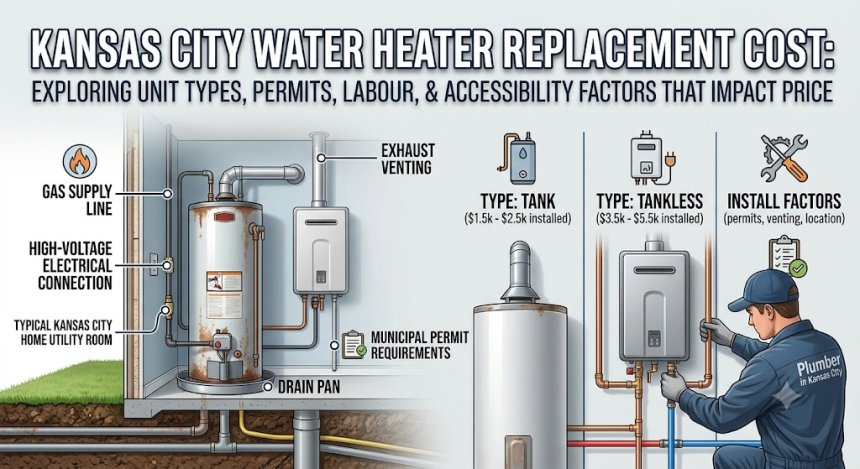
Water heater replacement involves removing an old, failing, or outdated water heating unit and professionally installing a new one in its place. This is not a simple DIY project; it is a complex installation involving pressurized water supply lines, hazardous exhaust venting (for gas units), high-voltage electrical connections (for electric units), and local municipal permits.
Common situations requiring replacement:
-
The "Icy Shower" Scenario: The heater produces NO hot water.
-
Routine Inspection Failure: During a check-up, your
Kansas City plumber -
Proactive Upgrade: You are upgrading an old, inefficient 10-15-year-old unit to a modern, high-efficiency model before it fails and floods your home.
Why Does This Plumbing Problem Happen?
Most water heaters only fail for a few consistent reasons, all accelerated by conditions in the local Kansas City water supply:
Hard Water & Sediment Buildup (The #1 Culprit in KC)
Water across the Midwest, including the KC area, has high mineral content. Over time, calcium, lime, and other minerals settle at the bottom of the tank. This hardened "sediment" creates an insulating barrier that prevents the heating element (electric) or burner (gas) from efficiently heating the water above. It causes the tank to work harder, overheat, and prematurely corrode.
Corrosion
Water heaters are essentially large metal pressure cookers constantly exposed to water. While they have internal protection like a sacrificial anode rod, that protection eventually fails. The steel tank will eventually rust through, usually from the bottom up. Once a tank is rusted through, it cannot be "repaired"—it must be replaced.
Aging
Standard tank-style water heaters generally last 8-12 years. If your unit is in this range and requires repetitive, expensive repairs (elements, thermostats, gas valves), it is nearing the end of its reliable lifespan.
High Water Pressure
Pressure spikes strain the tank’s seams and connections continuously. If your home water pressure exceeds 80 PSI without a working Pressure Reducing Valve (PRV), your water heater’s lifespan is significantly shortened.
Poor Maintenance
Skipping essential annual maintenance—like flushing the sediment from the tank or checking the anode rod—is guaranteed to cut years off your unit's life.
Signs You Should Never Ignore
You don’t have to wait for the water to get completely cold. Your water heater will often signal it is struggling:
-
Icy Hot/Lukewarm Showers: This often means one heating element has failed (electric) or the burner assembly is compromised (gas).
-
Popping or Rumbling Noises: This is the classic sound of sediment boiling underneath the heating source at the bottom of the tank. If you ignore this, component failure or a burst tank is inevitable.
-
Rusty or Discolored Water (Hot Water Only): If your cold water is clear but hot water is discolored, it means the anode rod has failed and the inside of your tank is actively corroding.
-
Puddles of Water Around the Base: This is the critical, often unrepairable red flag. A leak from the tank itself, even a small pinhole, cannot be patched and requires immediate replacement.
-
Strange Smells (Rotten Eggs/Sulphur): This often points to bacterial growth inside the tank enabled by a failed anode rod.
-
Fluctuating Water Temperature: The water is hot one minute, lukewarm the next.
Common Related Plumbing Problems
When a water heater fails or is replaced, other related problems might be discovered, requiring a
-
Slab Leaks: High pressure or failing water lines leading to the heater embedded in concrete foundation slabs.
-
Pipe Leaks: Aged supply connections near the heater fail under stress.
-
Faucet Damage: Sediment from the failing tank travels to aerators and cartridges in expensive fixtures.
-
Sewer Backups: Sometimes discovered during a basement flood caused by a burst heater.
-
Drain Clogs: Clogged floor drains prevent leaking water from escaping, causing basement flooding.
Step-by-Step Professional Replacement Process
When you hire
-
Step 1 Inspection: We perform a complete initial inspection to verify a new unit is the optimal solution and confirm the space's requirements.
-
Step 2 Diagnosis: We confirm the exact cause of failure (e.g., rusted-through tank vs. simple heating element) to prevent repeat issues.
-
Step 3 Estimate: We provide a clear, written, itemized estimate detailing the cost of the recommended new unit, labor, required parts, and municipal permits.
-
Step 4 Safe Removal: We shut off the water, drain the old, 400+ pound, sediment-filled tank safely, and disconnect the gas, electric, and exhaust.
-
Step 5 Preparation: We verify the new space, check for proper code-compliant support, install a drain pan (required in many scenarios), and prepare new flexible water and gas connectors.
-
Step 6 Professional Installation: Our licensed technicians position the new unit, connect water lines using modern flexible connectors, hook up the gas and exhaust, or complete the high-voltage electrical work. We ensure strict adherence to all Kansas City plumbing codes.
-
Step 7 Testing: We fill the tank, re-pressurize the water system, test for gas or exhaust leaks, light the burner, and verify proper temperature cycling.
-
Step 8 Cleanup & Disposal: We remove all installation debris, recycle your old unit responsibly, and leave the work area tidy.
-
Step 9 Final Instructions & Advice: We show you how to operate the unit and provide custom maintenance advice to maximize its lifespan.
Can You Fix It Yourself?
When it comes to water heater replacement, we highly discourage DIY. While homeowners can safely try simple troubleshooting like checking a tripped breaker, replacing the unit involves high-stakes risks:
DIY Dangers for Homeowners
-
Severe Burns: Working on pressurized, near-boiling water systems risks massive scalding injuries.
-
Gas Leaks & Carbon Monoxide Poisoning (Gas Heaters): Improperly connected gas lines or failing exhaust venting can create fatal hazardous environments.
-
High-Voltage Electrical Shock (Electric Heaters): Electric heaters are hard-wired 240V, high-amperage systems.
-
Catastrophic Flooding: A poorly sealed new tank or supply line can burst, flooding your basement or utility closet.
-
Code Violations & Fine Risks: Kansas City municipalities require permits for water heater replacement to ensure safety compliance. DIY installations without permits risk substantial city fines and will fail home inspections.
When Professional Plumbing is Necessary
A
Tools Professionals Use
Licensed plumbers invest heavily in specialized equipment that improves installation accuracy and safety compliance:
-
Sewer & Inspection Cameras: To scope related drain issues.
-
Gas Gauges & Manometers: Crucial for testing and ensuring leak-free natural gas connections on new units.
-
Anode Rod Wrenches: Specialized heavy-duty tools required to break the factory seal on anode rods, especially on aged units.
-
Combustible Gas Detectors: Non-invasive sensors that can spot invisible gas leaks on new installations.
-
Digital Multimeters: To test and verify proper function of elements and thermostats during testing.
How Long Does the Replacement Usually Take?
A straightforward water heater replacement is surprisingly fast:
-
Tank-to-Tank (Direct Replacement): typically 2 – 4 hours.
-
Convert (Electric to Gas or Vice Versa): 4 – 8 hours (due to extensive new utility work).
-
Emergency Stabilization: 1 – 2 hours (to shut off water, drain a burst tank, and stop immediate flooding).
Factors that extend replacement time: complex gas venting routing, difficult access (like attic crawl spaces), and upgrading outdated electrical panels.
Cost Factors for Kansas City Water Heater Replacement
Providing a fake, too-good-to-be-true fixed price for a water heater replacement is impossible and dishonest. Your
Here are the real factors that impact your final water heater replacement cost in Kansas City:
-
Diagnostic/Dispatch Fee: typically $100-$150. This covers the technician’s time, vehicle, and expertise to arrive and inspect your unique space.
-
Unit Type & Size (Huge Factor)
-
Standard Tank: Prices start around $1,500 – $2,500+ installed for reliable 40-50 gallon models. Electric is generally cheaper than gas to install, but gas has lower operating costs.
-
Tankless: Offer endless hot water and higher efficiency but have a higher upfront cost, typically $3,500 – $5,500+ installed, including required extensive utility (gas/electric) upgrades.
-
-
Unit Location & Accessibility (A Significant Cost Factor)
-
Basement Utility Pad (Accessible): generally lowest labor cost.
-
Attic Crawlspace: labor cost significantly increases due to complexity and risk.
-
-
Utility Hookup Upgrades (Gas & Electric)
-
Gas units require a specific diameter natural gas line and modern exhaust venting. Aged lines or insufficient venting increase installation costs.
-
High-amperage electric hard-wiring requires proper 240V circuitry. Upgrading an electrical panel to handle a new electric unit can add $1,000+ to the project cost.
-
-
Municipal Permits (Mandatory in Kansas City)
-
Kansas City and surrounding municipalities require permits for water heater installation to ensure compliance with hazardous exhaust venting (for gas units) and electrical safety (for electric units). Permits ensure your home inspection passes. Fees generally run $50 - $150+, depending on the city.
-
-
Labor & Code Compliance
-
Installation includes labor, specialized code-compliant rigid copper and flexible supply connectors, gas flex lines, new T&P relief valve, drain pan (often required by code), and code-mandated shut-off valves.
-
-
Hidden Structural Problems
-
Discovering a failed foundation slab, extensive water damage requiring floor reconstruction, or non-compliant, unsafe exhaust venting hidden inside walls.
-
-
Seasonal Demand
-
Prices may naturally adjust slightly higher during extreme cold snaps (KC winters).
-
Note: Plumbing repair and replacement costs vary depending on the severity of the problem, accessibility, materials required, emergency service, property type, and local labor rates.
Hidden Truths Homeowners Should Know
-
The "Cheapest" Unit Often Costs You Thousands in Repetitive Repairs: Cheap "builder-grade" units have thinner tank walls and cheap elements that fail quickly in hard water.
-
Insurance Companies Deny Mold Claims on Neglected Units: If a burst heater floods your finished basement and creates mold, and the inspector finds years of documented sediment buildup, your insurance claim can be denied.
-
Delaying Replacement on an Aged Unit Risks Catastrophic Flooding: Once a tank corrodes, a complete burst can happen without further warning, releasing 50 gallons of water into your home.
-
Tree Roots Target Underground Sewer Lines near Buried Heaters: If your heater fails in a way that leaks warm water into subsoil, it attracts aggressive root growth.
-
Annual Maintenance Saves Money on Both Utility Bills and Unit Lifespan: A simple annual flush keeps energy efficiency high and helps the unit last 2-4 years longer.
-
Hard Water Mineral Damage Shortens Every Water-Using Fixture's Life: If your heater is sediment-filled, your fancy faucet cartridges, showerheads, and dishwasher are also struggling.
15 Common Mistakes Kansas City Homeowners Make
-
Ignoring visibly high water bills, thinking it is a municipal metering issue.
-
Relying on generic DIY videos to replace complex gas venting or high-voltage electrical hard-wiring.
-
Ignoring "kettling" or rumbling sounds from the tank.
-
Setting the thermostat too high (above 140°F), which accelerates wear.
-
Skipping maintenance, especially an annual tank flush and anode rod check.
-
Believing a tankless heater never requires maintenance (they scale up faster than tank units!).
-
Waiting until a total hot water crisis occurs before scheduling an inspection.
-
Hiring unvetted, unlicensed contractors offering suspiciously low quotes.
-
Installing a new unit without obtaining the mandatory municipal
Kansas City permit -
Using chemical drain cleaners on main lines or supply lines.
-
Ignoring slow drips from connections or the T&P valve until major failure occurs.
-
Storing paint, gasoline, or other flammable liquids next to a gas water heater.
-
Over-tightening plumbing fittings, causing cracks and slow leaks.
-
Letting a failed heater continue to operate, risking major structural damage.
-
Failing to test the T&P relief valve periodically, allowing it to block.
Essential Maintenance Tips tailored for KC
-
Flush the Tank Annually: Forcefully draining sediment is crucial for local water conditions. Best done in Spring after winter sediment has settled.
-
Check the Anode Rod Every 2-3 Years: Replace it before it’s gone! This is the most crucial step for stopping tank corrosion.
-
Test the T&P Relief Valve: Lift the handle; water should release and stop immediately. If it drips, replace it.
-
Set Temperature to 120°F: A balanced setting that prevents scalding, saves energy, and reduces component wear.
-
Insulate the First 6 Feet of Hot Pipe: Reduces heat loss, making your unit work less.
-
Drain Sediment Quarterly: Do a quick 2-3 minute drain to keep major buildup at bay.
-
Maintain 2 Feet of Clear Space Around the Unit: Crucial for ventilation and safety.
-
Insulate Supply Pipes in Crawlspaces: Essential seasonal prep for KC winters.
-
Inspect Venting Annually (Gas Units): Ensure it isn’t blocked by bird nests or debris.
-
Keep Cleanouts Clear: Never cover basement floor drains with rugs.
-
Test the PRV quarterly: Ensure home water pressure is below 80 PSI.
-
Know Your Main Shut-off Valve: Practice finding and operating it.
-
Address Dripping Faucets Instantly: Backpressure wears down heater supply lines.
-
Schedule Professional Inspections Yearly: Let an expert check connections and code compliance.
-
Install Wireless Leak Detectors: Place wireless sensors under sinks and near the heater for instant alerts.
When to Call an Emergency Plumber
Some water heater scenarios demand an immediate, 24/7 response. Contact
-
The Tank Has Burst: Constant, high-volume flooding that cannot be isolated.
-
There is NO Running Water: A total disruption affecting all household tasks.
-
You Smell Natural Gas: Evacuate immediately and call from a safe distance. Gas line issues around a heater are critical.
-
The Unit is Leaking From the Tank Itself: A rusted-out tank can burst fully at any moment.
A quick response is essential to stop water damage, prevent mold growth, and avoid electrical or gas hazards in your home.
Frequently Asked Questions
Why is my water pressure suddenly low across the whole house?
This can be a failing Pressure Reducing Valve (PRV), a hidden leak on the main supply line, or even a temporary issue with the municipal Kansas City supply.
How long do traditional water heaters last?
Tank-style units generally last 8 to 12 years. Tankless units can last 15 to 20 years with regular maintenance.
What is hydro jetting and is it safe for old pipes?
Hydro jetting uses intense pressure and is only safe for old pipes (like clay or cast iron) if a camera inspection confirms they are structurally sound with no major collapses.
Why does my faucet drip?
Usually a worn-out rubber washer, an O-ring, or a failed internal cartridge that no longer creates a watertight seal.
Can plumbing leaks increase my water bill?
Absolutely. A seemingly minor pinhole leak on a pressurized supply line can waste thousands of gallons of water per month.
When should I replace plumbing instead of repairing it?
If you have extensive generalized corrosion (like aged galvanized pipes), frequent leaks, or aged cast iron lines that are collapsing, full replacement is a wiser long-term financial move.
Why Choose Our Plumbing Company
When you face a hot water emergency in the middle of a Kansas City winter, you need a plumbing company that delivers honesty, expertise, and reliable service. This is what we offer at
-
Experienced licensed plumbers: Our technicians are fully vetted, background-checked, and understanding of local KC codes.
-
Honest recommendations: We will not take your money for repetitive, expensive repairs on a 15-year-old tank. We will always tell you if replacement is the wiser financial decision.
-
Upfront, written estimates: You will know the total cost of installation, required parts, and city permits before work begins.
-
Fast response: We strive to get you back to comfort quickly.
-
Emergency availability: We are here 24/7 when you need us most.
-
Quality workmanship: Our installations are code-compliant and built to last.
-
Modern equipment: We invest in advanced diagnostic tools for faster troubleshooting.
-
Warranty: We stand behind our work (ask for details!). Customer satisfaction is our goal.
-
Local expertise: We understand Kansas City’s water quality, soil, and unique architectural challenges.