How to Fix Low Water Pressure in Hyde Park Apartments
Fix low water pressure in your Hyde Park, Kansas City apartment. Discover causes, DIY tips, professional repairs, and call Plumber in Kansas City.

Need a Plumber in Kansas City, MO?
Plumbing Problem? Call for professional plumbing help.
Get help with emergency plumbing, clogged drains, leaking pipes, water heaters, burst pipes and other residential plumbing problems in Kansas City, Missouri.
Need a Plumber in Kansas City, MO?
Plumbing Problem? Call for professional plumbing help.
Get help with emergency plumbing, clogged drains, leaking pipes, water heaters, burst pipes and other residential plumbing problems in Kansas City, Missouri.
How to Fix Low Water Pressure in a Hyde Park Apartment
Starting your morning with a pathetic, trickling shower stream is one of the most frustrating ways to begin the day. For residents living in historic Hyde Park apartments across Kansas City, dealing with inconsistent or weak water flow is a surprisingly common headache. This vibrant neighborhood is celebrated for its stunning early 20th-century architecture, vintage multi-family buildings, and charming courtyards. However, those historic architectural traits often mean aging galvanized or cast iron infrastructure hiding behind the walls. When water pressure drops suddenly in a single bathroom or across the entire apartment, it ruins daily routines and usually points to an underlying plumbing restriction. Plumber in Kansas City is here to help local apartment dwellers and property owners understand what triggers low water pressure, how to diagnose the culprit, and when it is time to call a licensed professional.
What Is a Low Water Pressure Issue?
A low water pressure issue occurs when the velocity and volume of water exiting your apartment faucets, showerheads, or appliances fall significantly below normal operating standards. Instead of a strong, steady stream, water sputters, trickles, or takes twice as long to fill a basin.
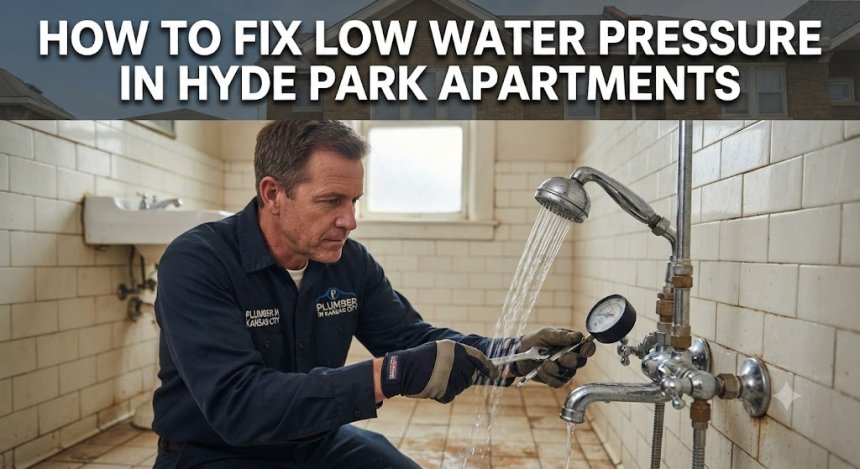
Common situations involve sediment choking individual fixture screens or aging building supply lines narrowing from decades of interior mineral scale accumulation. Symptoms range from a weak kitchen faucet that struggles to rinse dishes to a shower that cannot maintain a consistent spray when a neighbor flushes. For example, if you turn on your Hyde Park apartment bathroom sink and notice the water sputtering out in a twisted, weak angle, you are likely dealing with a localized restriction or a broader building pressure glitch.
Why Does This Plumbing Problem Happen?
Water pressure loss in urban apartments can stem from several mechanical, environmental, and structural triggers:
-
Aging pipes: Decades-old iron and galvanized supply lines inside historic walls collect heavy rust and mineral buildup, choking interior pipe diameters.
-
Corrosion: Chemical reactions between minerals and metal pipe walls pit the interior surfaces, restricting smooth water flow.
-
Tree roots: While primarily affecting main lines entering multi-family buildings, root intrusion can disrupt overall municipal supply volume.
-
Hard water: Mineral-rich water common throughout the Kansas City region leaves behind calcium and lime scale inside pipes and fixtures.
-
High water pressure: While counterintuitive, thermal expansion or faulty pressure regulators can sometimes cause erratic pressure behavior.
-
Improper installation: Poorly sized branch lines or unaligned pipe fittings during past renovations restrict optimal water volume.
-
Poor maintenance: Neglecting routine building-wide valve inspections and filter cleanings allows debris to accumulate unchecked.
-
Seasonal weather changes: Ground freezing and shifting soil in Jackson County can stress supply risers feeding older apartment complexes.
-
Frozen pipes: Winter frost can partially freeze exterior-facing apartment walls, restricting water flow until thawed.
-
Clogs and debris: Loose solder, sediment, or scale particles breaking loose during repairs and jamming fixture cartridges.
-
Sewer backups: Though distinct from clean water supply, major drainage bottlenecks can sometimes coincide with overall building utility stress.
-
Worn plumbing fixtures: Damaged mixing valves, faulty faucet cartridges, or clogged showerhead nozzles choking output flow.
Signs You Should Never Ignore
Spotting low water pressure early helps prevent minor clogs from turning into major building-wide plumbing failures. Keep an eye out for these warning signs:
-
Water stains: Discolored patches on ceilings or walls near apartment riser pipes indicating hidden pinhole leaks.
-
Slow drains: Sluggish wastewater evacuation that can sometimes mimic or accompany supply restriction issues.
-
Low water pressure: A sudden or gradual loss of water force across one or multiple fixtures in your unit.
-
High water bills: Unexplained increases in master utility statements for building owners managing multi-family properties.
-
Damp walls: Drywall or plaster feeling cool and moist to the touch near shared utility chases.
-
Mold growth: Musty odors and mildew developing rapidly in tight utility closets or bathroom vanities due to hidden moisture.
-
Strange noises: Whistling, banging, or humming sounds echoing through walls when taps are opened.
-
Bad smells: Stagnant water odors if pressure drops coincide with cross-connections or drainage leaks.
-
Standing water: Puddles forming around basement utility meters or laundry rooms in apartment complexes.
-
Discolored water: Brown, red, or rust-tinted water gushing briefly when a tap is first turned on after a period of low flow.
Common Plumbing Problems Related to This Issue
Low water pressure rarely occurs entirely on its own; it is frequently linked to or accompanied by other household plumbing challenges:
-
Pipe leaks: Pinholes in aging interior pipes that bleed off system pressure before it reaches your faucet.
-
Drain clogs: Accumulating hair and soap scale compounding overall fixture sluggishness.
-
Sewer backups: Main line blockages creating backpressure that impacts overall building plumbing performance.
-
Water heater failures: Sediment-choked apartment water heater inlets reducing hot water pressure specifically.
-
Burst pipes: Catastrophic failure of heavily corroded and pressurized supply lines inside apartment walls.
-
Slab leaks: Sub-foundation leaks reducing total water volume delivered to ground-floor apartments.
-
Fixture damage: Faucet cartridges and shower valves wearing out prematurely from grit and restricted flow stress.
Step-by-Step Professional Repair Process
When you contact Plumber in Kansas City to resolve chronic low water pressure in a Hyde Park apartment, our licensed technicians follow a precise, structured repair protocol:
-
Step 1 Inspection: Professionals visually evaluate all affected fixtures, shut-off valves, and accessible water meters or pressure regulators.
-
Step 2 Diagnosis: Using pressure gauges and acoustic listening devices, plumbers determine whether the pressure drop is isolated to a single fixture or affects the entire apartment.
-
Step 3 Estimate: The plumber provides a clear, upfront cost breakdown outlining the necessary repair steps, parts, and expected timeframes.
-
Step 4 Repair: Technicians perform the required fix, whether cleaning sediment, replacing a faulty mixing valve, or replacing corroded supply piping.
-
Step 5 Testing: The water system is fully pressurized and tested across all taps to verify that normal flow and pressure are restored.
-
Step 6 Cleanup: The work area inside your apartment is thoroughly sanitized and left spotless.
-
Step 7 Maintenance Advice: Homeowners and renters receive practical tips on preventing future mineral buildup and protecting apartment fixtures.
Can You Fix It Yourself?
Many minor causes of low water pressure can be safely resolved without professional help. If only one specific sink or shower in your apartment has weak flow, the issue is often a clogged aerator or showerhead choked with hard water mineral scale. You can unscrew the faucet aerator tip, soak it in a small container of vinegar overnight to dissolve the calcium, and scrub it clean with an old toothbrush before screwing it back on. However, if low water pressure affects every tap in your apartment, or if it involves shared building risers and main shut-off valves, DIY intervention becomes dangerous. Tampering with main building valves or attempting to cut into aging apartment supply pipes can cause major flooding, property damage, and costly lease violations. Always contact a licensed plumber or property manager for whole-apartment pressure issues.
Tools Professionals Use
Professional plumbers utilize advanced equipment to diagnose and resolve water pressure issues accurately without causing unnecessary damage to historic apartment interiors:
-
Drain cameras: High-resolution waterproof video snakes used to inspect internal branch lines where applicable.
-
Leak detection equipment: Specialized electronic listening gear that tracks water movement behind finished plaster and drywall.
-
Hydro jetting: High-pressure water scouring systems used to clear heavy mineral scale from commercial and multi-family supply mains.
-
Pipe locators: Electromagnetic devices used to trace hidden metal pipes running through walls and floors.
-
Pressure testing gauges: Precision mechanical gauges attached to hose bibs and faucets to measure static and dynamic water pressure accurately.
-
Pipe inspection cameras: Micro-cameras designed for tight fixture lines and small-diameter tubing.
-
Trenchless equipment: Advanced rehabilitation tools used to repair or line aging building water mains with minimal surface disruption.
These professional instruments ensure precise diagnostics, saving time and preventing guesswork in historic buildings.
How Long Does the Repair Usually Take?
Repair timelines for low water pressure vary based on the root cause and the complexity of the apartment's plumbing layout:
-
Simple repairs: Cleaning clogged faucet aerators, soaking showerheads, or adjusting an individual fixture shut-off valve takes 30 minutes to 1 hour.
-
Moderate repairs: Replacing a faulty faucet cartridge, swapping out a broken mixing valve, or replacing a local supply line takes 1 to 3 hours.
-
Major repairs: Replacing major sections of corroded branch piping inside apartment walls or servicing a building pressure regulator takes 4 to 8 hours.
-
Emergency repairs: Stabilizing sudden main supply breaks or severe riser leaks is handled immediately, with full system restoration completed within 24 hours.
Factors affecting this timeline include historic wall construction materials, building management approval processes, and ease of access to shut-off valves.
Cost Factors
Reputable plumbing providers never quote blind fixed rates before inspecting the property because repair costs depend on several key variables:
-
Diagnostic fees: Professional pressure testing and system evaluation.
-
Parts and materials: Quality and type of replacement valves, cartridges, or corrosion-resistant piping.
-
Labor: Specialized hours required to work carefully within finished historic apartment interiors.
-
Emergency service charges: After-hours, weekend, or holiday dispatch rates for urgent apartment plumbing calls.
-
Equipment needed: Deployment of specialized pressure gauges, electronic leak locators, or pipe-threading tools.
-
Permit costs: Local Kansas City municipal plumbing permits where major multi-family system modifications are required.
-
Replacement vs repair: Replacing an entire faucet assembly versus cleaning a simple aerator screen.
-
Accessibility of pipes: Obstructions like tiled shower enclosures, custom cabinetry, or lathe-and-plaster walls.
Plumbing repair costs vary depending on the severity of the problem, accessibility, materials required, emergency service, property type, and local labor rates.
Hidden Truths Homeowners and Renters Should Know
Living in historic Kansas City apartments comes with practical realities that every resident and property owner should keep in mind:
-
Small pressure drops in older buildings rarely fix themselves; mineral scale and corrosion compound steadily over time.
-
Cheap temporary tape or quick fix clamps on high-pressure supply lines frequently fail, causing sudden indoor floods.
-
Standard renter's or homeowner's insurance policies may exclude water damage caused by long-term, unaddressed plumbing neglect.
-
Hard Kansas City water mineral content rapidly coats interior pipe walls, choking water flow across older plumbing networks.
-
DIY mistakes on apartment plumbing can lead to costly water damage liability for surrounding units.
-
Delaying minor pressure investigations invites sudden pipe ruptures and extensive structural damage.
-
Hidden pipe leaks drive up master utility bills and create damp breeding grounds for mold.
-
Mold develops within 24 to 48 hours of constant moisture exposure, threatening indoor air quality.
-
Annual plumbing maintenance and pressure checks save property owners thousands of dollars in emergency repairs.
Taking proactive steps ensures your apartment remains comfortable, dry, and fully functional.
15 Common Mistakes Homeowners and Renters Make
Avoiding these common errors protects your plumbing and prevents frustrating water flow bottlenecks:
-
Ignoring gradual pressure drops: Assuming weak water flow is just a quirk of living in an older building rather than checking aerators.
-
Using harsh chemical drain cleaners: Pouring corrosive liquids down sluggish sinks, which can damage older metal pipes and fixture finishes.
-
Flushing inappropriate items: Trowelling wipes or hygiene products down toilets, causing downstream blockages that strain building drainage.
-
Pouring grease into kitchen sinks: Allowing cooking oils to congeal inside apartment drain lines.
-
Ignoring water pressure warnings: Leaving high or low pressure unchecked, which accelerates wear on all connected appliances.
-
Hiring unlicensed handymen: Trusting complex historic apartment plumbing to unqualified contractors who ignore building codes.
-
Skipping regular maintenance: Failing to clean faucet screens and showerheads periodically.
-
Waiting until total water loss: Calling for help only when taps run completely dry instead of addressing early warning signs.
-
Using mismatched pipe materials: Splicing incompatible metals together during DIY fixes, causing rapid galvanic corrosion.
-
Over-tightening fittings: Cracking fragile brass nuts or porcelain fixtures by applying excessive torque.
-
Neglecting shut-off valve locations: Failing to know where the apartment water shut-off valve is located during an emergency.
-
Burying or blocking access panels: Obstructing plumbing access panels in apartment walls with heavy furniture or built-ins.
-
Disregarding banging noises: Ignoring water hammer sounds that shake apartment walls and stress pipe joints.
-
Skipping property manager notification: Attempting unauthorized major plumbing repairs in a rented apartment instead of contacting management and licensed pros.
-
Disregarding minor leaks: Allowing small faucet drips to persist until cartridges fail completely.
Maintenance Tips
Keeping your apartment water pressure steady and your plumbing system healthy requires simple, consistent habits:
-
Remove and soak your bathroom and kitchen faucet aerators in vinegar every six months to dissolve mineral scale buildup.
-
Clean showerhead nozzles regularly by scrubbing away calcium deposits with a soft brush and vinegar solution.
-
Test your apartment shut-off valves twice a year to ensure they turn smoothly and stop water flow completely when needed.
-
Report any sudden pressure changes or mysterious damp spots to your landlord or property manager immediately.
-
Avoid using harsh chemical descalers on delicate historic fixtures to protect their internal rubber seals.
-
Run hot water through your kitchen sink weekly to help clear minor soap and grease accumulation.
-
Keep cabinet doors under sinks open slightly during extreme freezing weather to prevent local pipe freezing.
-
Monitor your water flow consistency across all taps to catch developing restrictions early.
-
Educate household members on gentle faucet handle operation to prevent premature cartridge wear.
-
Request professional plumbing inspections when moving into older historic apartment buildings.
-
Keep emergency plumber contact information handy in case a sudden leak or pressure loss occurs.
-
Avoid hanging heavy items or shelving directly over exposed plumbing pipe runs inside apartment closets.
-
Clean your refrigerator water and ice maker filters on schedule to maintain optimal kitchen water flow.
-
Report any dripping fixtures or running toilets to maintenance right away.
-
Trust licensed professionals for any repairs involving shared building supply risers or main valves.
When Should You Call an Emergency Plumber?
Certain plumbing scenarios require immediate professional intervention to protect your apartment and belongings:
-
Burst pipes: High-volume water gushing from a ruptured supply line behind apartment walls.
-
Total loss of water pressure: Sudden, complete disappearance of water supply without any reported municipal outage.
-
Major water leaks: Uncontrolled spraying from broken fixture connections or supply valves.
-
Overflowing fixtures: A toilet or sink backup that cannot be stopped using local shut-off valves.
-
Flooding: Rapid water accumulation on apartment floors threatening electrical outlets and neighboring units.
Immediate action mitigates property damage, prevents structural rot, and restores safe living conditions.
Frequently Asked Questions
-
Why is my water pressure suddenly low? A sudden drop is usually caused by a clogged faucet aerator, a partially closed supply valve, or a main line issue in the building.
-
How much does leak detection cost? Costs vary depending on apartment size and equipment needed, but professional detection saves money by pinpointing hidden problems accurately.
-
Can a clogged drain damage pipes? Severe blockages combined with water pressure can stress joints and cause leaks over time.
-
Is hydro jetting safe for old pipes? Professional plumbers inspect pipe condition first; while great for modern lines, historic pipes require careful evaluation before jetting.
-
How do I know if my sewer line is broken? Signs include multiple slow drains, foul odors, gurgling toilets, and pooling water near building lines.
-
How long do water heaters last? Standard tank water heaters typically last 8 to 12 years with proper annual maintenance.
-
Why does my faucet drip? Dripping faucets are usually caused by worn rubber washers, O-rings, or mineral-corroded valve cartridges.
-
What causes pipes to burst? Pipes burst primarily due to water freezing and expanding inside uninsulated walls or from extreme pressure spikes.
-
Can plumbing leaks increase my water bill? Even a small pinhole leak or running toilet can waste thousands of gallons monthly, driving up utility bills.
-
When should I replace plumbing instead of repairing it? If pipes suffer from frequent recurring leaks, widespread corrosion, or outdated materials, full replacement is more cost-effective.
Why Choose Our Plumbing Company
When you face plumbing challenges in Hyde Park and surrounding Kansas City neighborhoods, partnering with a trusted local expert ensures peace of mind. Plumber in Kansas City is committed to delivering honest, high-quality service tailored to your property's needs.
-
Experienced licensed plumbers equipped with advanced technical training and local knowledge.
-
Honest recommendations focused on practical, long-term solutions rather than temporary fixes.
-
Upfront estimates ensuring complete pricing transparency before any work begins.
-
Fast response times for urgent residential, apartment, and commercial plumbing service calls.
-
Emergency availability when unexpected plumbing crises strike your home.
-
Quality workmanship backed by industry best practices and respect for your property.
-
Modern equipment designed to diagnose and resolve issues with minimal disruption.
-
Customer satisfaction rooted in respectful, friendly, and reliable communication.
-
Deep local expertise serving historic Kansas City neighborhoods with pride.
Contact Plumber in Kansas City today for professional plumbing services you can trust.