Sediment Buildup in Water Heaters: Kansas City Causes
Is your Kansas City water heater making strange noises or providing less hot water? Learn why sediment builds up, the warning signs, and how our local plumbers can help.

Need a Plumber in Kansas City, MO?
Plumbing Problem? Call for professional plumbing help.
Get help with emergency plumbing, clogged drains, leaking pipes, water heaters, burst pipes and other residential plumbing problems in Kansas City, Missouri.
Need a Plumber in Kansas City, MO?
Plumbing Problem? Call for professional plumbing help.
Get help with emergency plumbing, clogged drains, leaking pipes, water heaters, burst pipes and other residential plumbing problems in Kansas City, Missouri.
Introduction
There are few things more frustrating than stepping into a shower expecting steaming hot water, only to be greeted by a lukewarm trickle or an outright cold spray. If this has happened in your Kansas City home, and your water heater is making rumbling, popping, or banging noises, you are likely dealing with a common plumbing issue: sediment buildup.
This problem is particularly prevalent in the Kansas City metro area, affecting homeowners from the Northland down to Johnson County and out to Lee's Summit. Water heater sediment buildup isn't just an annoyance; it’s a serious issue that can compromise your appliance's efficiency, shorten its lifespan, and lead to unexpected failures.
Understanding why this happens, recognizing the early warning signs, and knowing when to call a professional plumber in Kansas City can save you from costly emergency repairs or premature replacement. As experienced local plumbing experts, we are here to educate you on protecting your hot water supply.
What Is Water Heater Sediment Buildup?
Simply put, water heater sediment buildup is the accumulation of solid materials at the bottom of your water heater tank. Over time, minerals, primarily calcium and magnesium, precipitate out of the water as it is heated. These minerals, along with loose sand, dirt, and other debris present in municipal or well water supplies, settle at the bottom of the tank, forming a layer of sediment.
This accumulation occurs in both traditional tank-style gas and electric water heaters. While all water heaters will experience some degree of buildup over their lifespan, the rate at which it occurs depends heavily on the quality of your water supply.
Why Does This Plumbing Problem Happen in Kansas City?
The primary culprit behind heavy sediment buildup in Kansas City is hard water.
Like many municipalities across the Midwest, Kansas City sources a significant portion of its water from the Missouri River and the Kansas River (or Kaw River). As this water travels through the ground and through aging infrastructure, it dissolves and picks up high concentrations of dissolved minerals, particularly calcium and magnesium.
When this "hard water" enters your home and is heated inside your water heater tank, the minerals become less soluble and solidify. These solids separate from the water and sink, baking onto the bottom of the tank and around heating elements or burners.
Even if your water supplier treats the water, residual hardness remains. Furthermore, homes relying on private well water in surrounding areas such as Cass, Clay, and Platte counties often contend with even higher levels of naturally occurring sediment and hardness.
Other contributing factors include:
-
Tank Age: Older water heaters naturally have more time for sediment to accumulate.
-
Infrequent Maintenance: Failure to regularly flush the tank allows the sediment layer to grow thick and harden.
-
Low Water Usage: If hot water is rarely used, water sits stagnant in the tank, encouraging mineral precipitation.
Practical Example: Imagine a typical Kansas City household. Every time the dishwasher runs, the washing machine fills, or someone takes a shower, dozens of gallons of hard water are heated. Over several years, hundreds of pounds of minerals are introduced into the tank, creating a sandy, sometimes rocky layer several inches thick at the bottom.
Signs You Should Never Ignore
Ignoring the warning signs of sediment buildup is a common mistake that leads to bigger problems down the road. Your water heater will "tell" you when it's struggling.
-
Strange Noises (Rumbling/Popping): This is the most classic symptom. As sediment accumulates, it traps water underneath layers of hardened mineral scale. When the burner heats the bottom of the tank, these pockets of trapped water boil rapidly, creating steam that bursts through the sediment. This causes a distinct rumbling, popping, or banging sound, often referred to as "kettling."
-
Fluctuating Water Temperature: Sediment acts as an insulator between the burner (or heating element) and the water. This inconsistent heating means your hot water may run out much faster than usual, or temperatures may fluctuate unexpectedly during use.
-
Longer Heating Times: Because the burner has to heat through a layer of sediment before heating the water, it takes significantly longer for the tank to recover after hot water is used.
-
Discolored or Smelly Water: Heavy sediment can cause hot water to appear rusty, brown, or cloudy. It can also foster bacterial growth within the tank, leading to a distinct "rotten egg" odor (sulfur smell) in your hot water.
-
Reduced Hot Water Pressure: While usually a sign of pipe issues or clogged aerators, significant sediment buildup can sometimes partially block the hot water outlet pipe, leading to reduced flow.
-
Leaking Tank: In severe cases, the overheating caused by sediment can stress the glass lining of the tank, leading to cracks and eventual catastrophic leaks.
Common Plumbing Problems Related to This Issue
Sediment buildup is often the root cause of cascading plumbing failures.
-
Burnout of Lower Heating Elements: In electric water heaters, the lower heating element is often embedded directly in the sediment layer. This causes it to overheat and burn out prematurely because it cannot dissipate heat into the water.
-
Damage to Gas Burners: In gas water heaters, accumulated sediment can create hot spots on the tank bottom, leading to metal fatigue and leaks. It can also obstruct proper airflow to the burner.
-
Clogged Drain Valves: When attempting to flush the tank, hardened sediment can easily clog the drain valve, making maintenance difficult or impossible without professional help.
-
Premature Tank Failure: The cumulative effect of overheating, expansion, and contraction caused by sediment significantly shortens the lifespan of the entire water heater unit, often forcing replacement years sooner than expected.
Step-by-Step Professional Repair Process
If you notice signs of sediment buildup, it is highly recommended to contact a licensed plumber in Kansas City. While flushing a tank can be a DIY task, it carries risks, especially with older tanks or heavy buildup. Here is how professionals handle it:
-
Step 1 Inspection: The plumber will assess the age and condition of your water heater and listen for the characteristic rumbling sounds to confirm diagnosis.
-
Step 2 Diagnosis: They verify that the issue is indeed sediment and not a failing thermostat or heating element.
-
Step 3 Estimate: You will receive a transparent quote for the service, which typically involves a thorough power flush.
-
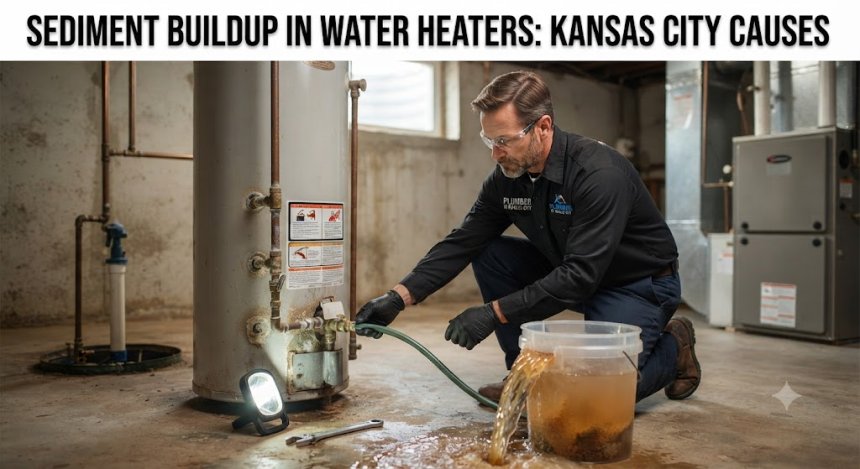
Step 4 Repair (Flushing): The plumber shuts off the power/gas and water supply. They attach a hose to the drain valve and run water until it flows clear, often using specialized equipment to break up stubborn, hardened sediment at the bottom of the tank.
-
Step 5 Testing: After refilling the tank and purging air, they ensure the burner or heating elements are functioning correctly and that hot water is restored.
-
Step 6 Cleanup: The work area is left clean and tidy.
-
Step 7 Maintenance Advice: The plumber will advise you on how often you should schedule maintenance based on your home's water hardness.
Can You Fix It Yourself?
Flushing a water heater tank is a task many handy homeowners attempt themselves. However, there are significant risks.
-
Safe DIY Solutions: Installing a whole-home water softener can help reduce the future rate of sediment buildup by addressing hardness at the source. You can also visually inspect your anode rod (the "sacrificial rod" that prevents tank corrosion) periodically.
-
Temporary Fixes: Unfortunately, once sediment has hardened into scale at the bottom of the tank, there is no effective "temporary fix" other than physically removing it. Chemical descalers exist but are generally not recommended for residential tank flushing without professional guidance, as they can damage tank linings and seals.
-
When DIY Becomes Dangerous:
-
Old Tank Risks: Flushing a very old tank (10+ years) that has never been maintained can dislodge a large chunk of sediment that immediately clogs the drain valve, leaving you with a half-empty, unusable tank.
-
Valve Failure: Old brass or plastic drain valves are brittle and prone to breaking off completely when manipulated, creating a major flood in your utility room.
-
Scalding Hazards: Dealing with 50+ gallons of scalding hot water requires proper protective gear and caution to avoid severe burns.
-
-
When Professional Plumbing is Necessary: If your tank is making loud banging noises, has never been flushed, or you are uncomfortable with the process, it is time to call a Kansas City plumber. Professional flushing ensures the job is done safely and thoroughly without risking damage to your home or appliance.
Tools Professionals Use
Professional plumbers have access to equipment beyond standard garden hoses.
-
High-Pressure Flush Systems: These systems use pumps to cycle water through the tank aggressively, effectively breaking up and removing stubborn, hardened scale that gravity-fed flushing leaves behind.
-
Wet/Dry Vacuums: Used to clear out stubborn clogs in drain valves or to handle accidental spills.
-
Inspection Cameras (Borescopes): Sometimes used to visually inspect the interior condition of the tank and the extent of the sediment layer.
-
Water Quality Test Kits: Used to confirm the severity of hard water issues.
How Long Does the Repair Usually Take?
For a standard power flush of a sediment-filled tank:
-
Simple Repairs: A basic flush on a moderately maintained tank takes about 1 to 1.5 hours.
-
Moderate Repairs: If the drain valve is partially clogged or the sediment is heavily hardened, requiring a more aggressive power flush, it may take 2 to 3 hours.
-
Major Repairs: If the sediment has led to component failure (e.g., burned-out element) or tank leakage, the timeline shifts from repair to replacement, which typically takes half a day.
-
Emergency Repairs: If a neglected tank bursts, emergency response begins immediately, but total resolution involves water mitigation and replacement.
Cost Factors
The cost for professional water heater flushing in Kansas City varies depending on several factors.
-
Diagnostic Fees: Standard service call fee to assess the situation.
-
Labor Rates: Local plumbing rates in the Kansas City metro area.
-
Severity of Buildup: Heavily scaled tanks require more time and specialized equipment (power flushing) than lightly affected tanks.
-
Accessibility of Unit: Units in tight closets or crawlspaces are harder to service.
-
Condition of Drain Valve: If the valve breaks or needs replacement during the service, parts and additional labor costs apply.
Plumbing repair costs vary depending on the severity of the problem, accessibility, materials required, emergency service, property type, and local labor rates.
Hidden Truths Homeowners Should Know
-
Most homeowners in the Kansas City area are unaware that their water heater manufacturer recommends annual flushing to maintain the warranty.
-
A layer of just 1/4 inch of sediment at the bottom of your tank can increase your water heating costs by up to 25-30% due to lost efficiency.
-
Many home insurance policies may deny claims for water damage caused by a ruptured water heater tank if it can be proven the failure resulted from long-term, unaddressed sediment buildup and neglect.
-
You cannot completely prevent sediment buildup in Kansas City due to the geology of the region, but you can manage it effectively through proactive maintenance.
-
DIY mistakes in flushing older tanks are a leading cause of emergency plumbing calls during winter months.
15 Common Mistakes Homeowners Make
-
Ignoring the "rumbles and pops": Thinking it's normal operation for an aging heater.
-
Never flushing the tank: Allowing sediment to accumulate for 5+ years creates an unmanageable brick of scale.
-
Using harsh chemical cleaners: Attempting to dissolve scale with unapproved chemicals can destroy tank linings.
-
Hiring unlicensed handymen: Complex plumbing diagnostics require certified, insured professionals.
-
Skipping annual maintenance: Failing to schedule routine check-ups.
-
Waiting until failure: Delaying service until the unit breaks completely.
-
Using incompatible replacement parts: Installing wrong-sized heating elements or incorrect anode rods.
-
Overtightening plumbing fittings: Cracking ports and valves by applying excessive torque.
-
Neglecting temperature settings: Setting water too hot accelerates mineral precipitation and scalding risk.
-
Not knowing main shut-offs: Failing to locate water and gas shut-offs in case of emergency.
-
Ignoring water leaks: Minor drips from pressure relief valves signal internal pressure issues.
-
Neglecting water softeners: Failing to maintain whole-home treatment systems defeats their purpose.
-
Performing DIY gas work: Never attempt to repair gas lines or connections on gas water heaters yourself.
-
Draining onto lawns: Hot, chemically treated water from flushing can kill grass and plants.
-
Delaying professional diagnosis: Putting off expert service turns minor sediment issues into tank replacement projects.
Maintenance Tips
-
Schedule Annual Professional Flushing: Given Kansas City's hard water, annual power flushing by a qualified plumber is the best investment to extend tank life.
-
Install a Whole-Home Water Softener: Address the root cause by reducing mineral hardness before water enters your heater.
-
Check the Anode Rod: Inspect the sacrificial anode rod every 2-3 years and replace it when consumed to prevent tank corrosion.
-
Test the T&P Valve: Periodically lift the lever on the Temperature & Pressure relief valve to ensure it operates correctly (use caution as hot water will discharge).
-
Monitor Water Pressure: Ensure your home's water pressure regulator is set correctly (typically below 80 PSI) to prevent undue stress on the tank.
-
Set Appropriate Temperature: Maintain your water heater temperature between 120-130°F to balance efficiency, comfort, and mineral scaling rates.
-
Flush It Yourself (With Caution): If you are confident and have a modern tank with a robust valve, perform a basic flush annually, but always be prepared for valve failure.
-
Know Your Plumber: Keep the number of a trusted, local Kansas City plumbing company handy for preventative maintenance and emergencies.
When Should You Call an Emergency Plumber?
Some situations require immediate professional intervention.
-
Catastrophic Tank Leak: Water is actively gushing from the tank itself.
-
Ruptured Gas Line: Smelling gas near the water heater (immediately leave the home and call 911 and your gas provider).
-
Total Loss of Hot Water in Winter: While not always an "emergency," freezing temperatures make it urgent.
-
Scalding Water: Water from taps is dangerously hot, indicating a runaway thermostat or pressure issue.
-
Flooding Utility Room: Drain valve failed during DIY attempt.
Frequently Asked Questions
Why is my water pressure suddenly low only on hot water?
This can indicate sediment partially blocking the hot water outlet pipe at the top of the tank, restricting flow.
How much does professional water heater flushing cost in Kansas City?
Costs typically range from $150 to $400 depending on factors like tank size, location accessibility, and the severity of the sediment buildup requiring standard vs. power flushing.
Can a clogged drain valve on a water heater damage pipes?
No, but a clogged valve prevents maintenance, leading to buildup that does damage the water heater itself.
Is hydro jetting safe for old pipes leading to my water heater?
Hydro jetting is used for sewer lines, not potable water supply lines. For supply lines, professionals may use descaling solutions or, more commonly, recommend repiping aging galvanized lines that are choked with rust and scale.
How do I know if my water heater tank is cracked from sediment?
A cracked tank usually results in a steady, undeniable leak from the bottom or side of the unit, often preceded by kettling noises.
How long do water heaters last in the Kansas City area?
With Kansas City's hard water, a standard tank-style water heater typically lasts between 8 to 12 years; aggressive annual flushing is required to reach the higher end of that range.
Why does my faucet drip when the hot water heater runs?
This is often due to thermal expansion, where heating water increases system pressure, causing drips at faucets or activation of the T&P valve; an expansion tank may be needed.
What causes pipes to burst related to water heaters?
Sediment buildup causes overheating and pressure spikes that weaken tanks and connections, leading to ruptures; freezing pipes in unheated areas are a separate winter risk.
Can plumbing sediment increase my water bill?
No, but it drastically increases your gas or electric bill because the heater must run much longer to heat water through the sediment barrier.
When should I replace plumbing instead of repairing it regarding sediment?
If your home has aging galvanized steel pipes that are severely restricted by internal rust and mineral scale, repiping with modern PEX or copper is the only permanent solution to restore water pressure and quality.
Why Choose Our Plumbing Company
We are your dedicated Kansas City plumbing partners, serving the entire metro area. Our licensed, experienced professionals understand the unique plumbing challenges posed by our local water supply. We offer:
-
Expert Diagnostics: We accurately identify whether sediment, a failing element, or another issue is causing your hot water problems.
-
Transparent Pricing: Upfront estimates before any work begins.
-
Local Expertise: Deep understanding of Kansas City water conditions and housing stock.
-
Quality Workmanship: Thorough flushing and repair services designed to extend the life of your appliance.
-
Emergency Availability: We're here when you need us most, 24/7.