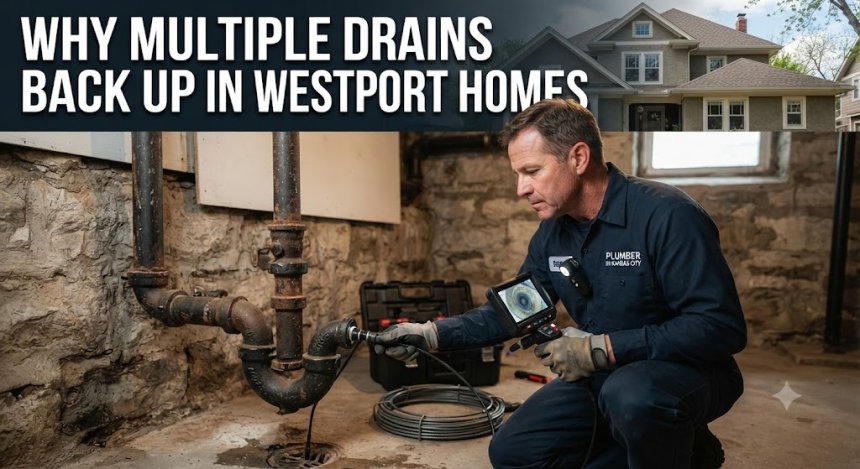
Why Multiple Drains Back Up in Westport Homes
Discover why multiple drains back up at once in Westport, Kansas City homes. Learn warning signs, causes, and when to call Plumber in Kansas City.

Need a Plumber in Kansas City, MO?
Plumbing Problem? Call for professional plumbing help.
Get help with emergency plumbing, clogged drains, leaking pipes, water heaters, burst pipes and other residential plumbing problems in Kansas City, Missouri.
Need a Plumber in Kansas City, MO?
Plumbing Problem? Call for professional plumbing help.
Get help with emergency plumbing, clogged drains, leaking pipes, water heaters, burst pipes and other residential plumbing problems in Kansas City, Missouri.
Why Do Multiple Drains Back Up at Once in Westport Homes?
Noticing water bubbling up in your basement floor drain while your kitchen sink refuses to empty can quickly turn a quiet evening into a stressful emergency. For homeowners and business owners living in the historic Westport neighborhood of Kansas City, dealing with simultaneous plumbing backups is a uniquely frustrating challenge. Westport is celebrated for its vibrant commercial district, bustling nightlife, and charming, century-old residential properties. However, that rich architectural heritage often means aging underground infrastructure that struggles to keep up with modern water usage. When multiple plumbing fixtures start backing up at the exact same time, it is rarely a coincidence or a simple localized hair clog in a single sink. Instead, it points directly to a major bottleneck in your home's main sanitary sewer line. Plumber in Kansas City is here to help local property owners understand why multiple drains fail simultaneously, how to identify the warning signs, and when it is time to call a licensed professional.
What Is a Multiple Drain Backup?
A multiple drain backup occurs when wastewater from various fixtures throughout your property—such as toilets, showers, bathtubs, and sinks—is unable to escape down the sewer lateral, causing it to pool or reverse flow into other lowest-level fixtures. Unlike a single clogged bathroom sink where only that one basin fills up, a multi-fixture backup creates a domino effect across your entire household plumbing network.
Common situations involve washing a load of laundry only to watch gray water bubble up into your basement floor drain or flushing an upstairs toilet and hearing a distinct gurgling sound from the downstairs shower. Symptoms range from slow, sluggish draining across every wet room to raw sewage spilling out of low-lying basement floor drains. For example, if your kitchen sink fills up every time your upstairs washing machine empties, your central drainage line is severely compromised.
Why Does This Plumbing Problem Happen?
When multiple drains fail at once, the issue always lies deep within your main drainage collection system rather than in individual branch pipes. Several distinct factors contribute to these widespread blockages:
-
Aging pipes: Historic homes in Westport often feature original clay, cast iron, or orangeburg sewer pipes that crumble, sag, or collapse over decades of shifting ground.
-
Corrosion: Interior oxidation and rust scale inside old metal waste stacks catch grease and paper, narrowing the effective pipe diameter.
-
Tree roots: Aggressive roots from mature neighborhood trees infiltrate tiny cracks or loose joints in underground sewer lines, creating massive organic nets that trap solid waste.
-
Hard water: Mineral scale accumulation inside waste pipes creates rough interior surfaces that cling to debris and accelerate major clogs.
-
High water pressure: While mostly affecting supply lines, excessive household water usage or high pressure can overwhelm fragile, aging drainage networks during peak hours.
-
Improper installation: Non-compliant past plumbing alterations or incorrect pipe grading prevent gravity from draining wastewater effectively.
-
Poor maintenance: Skipping routine cleanings allows years of organic sludge and grease to choke the main sewer lateral.
-
Seasonal weather changes: Ground freezing and heavy spring rains in Jackson County cause soil shifting, placing immense mechanical stress on buried sewer connections.
-
Frozen pipes: Deep winter frost can freeze vulnerable waste lines running through uninsulated crawl spaces, halting all drainage.
-
Clogs and debris: Massive accumulations of non-flushable wipes, feminine hygiene products, and paper towels lodging tightly at structural bends.
-
Sewer backups: Municipal main line blocks in city easements forcing city wastewater back up into residential service laterals.
-
Worn plumbing fixtures: Damaged backwater valves or failing check valves failing to stop reverse wastewater flow.
Signs You Should Never Ignore
Recognizing the early warning signs of a failing main sewer line can mean the difference between a simple cable clearing and a catastrophic basement flood:
-
Water stains: Discolored patches on lower basement walls where backed-up wastewater or moisture has wicked into drywall and masonry.
-
Slow drains: Every sink, tub, and shower in the house draining sluggishly rather than just one isolated fixture.
-
Low water pressure: While primarily a supply issue, simultaneous utility strains can occasionally accompany complex whole-house plumbing stress.
-
High water bills: Unexplained increases that may point to continuous running water or hidden line breaches affecting overall property volume.
-
Damp walls: Basement walls and utility corners feeling persistently cool and moist to the touch.
-
Mold growth: Musty odors and rapid mold development in lower living areas due to chronic wastewater vapor and humidity.
-
Strange noises: Gurgling, bubbling, or burping sounds echoing through toilet bowls and shower drains when appliances are running.
-
Bad smells: Foul, sulfurous, or sewage-like odors drifting persistently through bathrooms, kitchens, and basements.
-
Standing water: Puddles of dirty water pooling around basement floor drains, laundry standpipes, or utility cleanout plugs.
-
Discolored water: Murky or rust-tinted water backing up into tubs and sinks during heavy household usage.
Common Plumbing Problems Related to This Issue
Simultaneous drain backups are frequently linked to or accompanied by other serious property plumbing challenges, including:
-
Pipe leaks: Joint separations and cracked waste stacks leaking graywater behind finished interior walls.
-
Drain clogs: Intermittent secondary branch blockages compounding the stress on the primary sewer lateral.
-
Sewer backups: Municipal or private main line failures forcing raw sewage directly into living spaces.
-
Water heater failures: Sediment and pressure fluctuations straining tank inlets during severe whole-house drainage bottlenecks.
-
Burst pipes: Catastrophic failure points occurring when heavily corroded or frozen underground waste lines finally fracture completely.
-
Slab leaks: Sub-foundation drainage breaks undermining structural concrete floors.
-
Fixture damage: Toilet flanges, wax rings, and bathtub seals wearing out prematurely from hydrostatic pressure and backup stress.
Step-by-Step Professional Repair Process
When you contact Plumber in Kansas City for multiple drain backups, our licensed team follows a thorough, structured resolution process designed to protect your property:
-
Step 1 Inspection: Technicians perform a comprehensive evaluation of your interior fixtures, basement cleanouts, and accessible exterior sewer access points.
-
Step 2 Diagnosis: Using high-resolution waterproof drain cameras, professionals travel deep inside the sewer lateral to pinpoint the exact obstruction or structural break.
-
Step 3 Estimate: The plumber provides a clear, transparent cost breakdown detailing the required repair methods, materials, and expected timeframes.
-
Step 4 Repair: Experts execute the necessary solution, whether clearing stubborn root masses with a mechanical auger, hydro jetting sludge, or excavating a collapsed pipe section.
-
Step 5 Testing: The drainage system is thoroughly tested by flushing multiple high-volume fixtures simultaneously to verify unrestricted flow.
-
Step 6 Cleanup: Technicians sanitize the work area, disinfect affected basement floors, and leave your property immaculate.
-
Step 7 Maintenance Advice: Homeowners receive customized guidance on how to prevent future whole-house clogs and protect their sewer lateral.
Can You Fix It Yourself?
Many homeowners make the dangerous mistake of reaching for chemical liquid drain cleaners when multiple drains back up at once. Pouring harsh acid cleaners into a multi-fixture backup is completely ineffective because the blockage is located deep in the main sewer lateral, not in a local sink trap. Furthermore, if the clog does not clear, those caustic chemicals will sit in the pipes, creating a severe splash-back hazard for anyone working on the line. While homeowners can safely plunge a single toilet or clear a bathroom sink strainer, any scenario involving multiple drains backing up simultaneously requires professional intervention. Attempting to snake a main sewer line yourself without proper safety gear and commercial equipment can damage fragile historic pipes and fail to resolve root or collapse issues.
Tools Professionals Use
Professional plumbers utilize advanced diagnostic and clearing technology to resolve main sewer line backups quickly and accurately without unnecessary property destruction:
-
Drain cameras: High-resolution waterproof video snakes that provide a crystal-clear look at the interior condition of underground sewer laterals.
-
Leak detection equipment: Specialized acoustic and electronic gear used to trace underground pipe pathways and problem zones.
-
Hydro jetting: High-pressure water scrubbing equipment that obliterates grease, scale, and tree roots, scouring pipe walls back to a like-new condition.
-
Pipe locators: Electromagnetic transmitters that map the exact depth and route of buried sewer pipes beneath your Westport lawn or driveway.
-
Pressure testing gauges: Precision instruments used to verify system integrity before and after major repairs.
-
Pipe inspection cameras: Micro-cameras designed for tight branch lines and historic pipe elbows.
-
Trenchless equipment: Advanced pipe-bursting and structural lining tools that allow technicians to rehabilitate broken underground sewer lines with minimal surface digging.
These high-tech instruments eliminate guesswork, ensuring targeted, long-lasting repairs for your home.
How Long Does the Repair Usually Take?
Repair timelines for multiple drain backups vary depending on the severity of the obstruction and the condition of your plumbing system:
-
Simple repairs: Clearing a standard root clog or grease plug using a commercial auger or hydro jet typically takes 1 to 2 hours.
-
Moderate repairs: Removing severe root intrusions, repairing a damaged section of a basement waste stack, or fixing a localized belly in the line takes 2 to 4 hours.
-
Major repairs: Excavating and replacing a collapsed outdoor sewer lateral or performing a trenchless line relining takes 1 to 2 full working days.
-
Emergency repairs: Immediate midnight mitigation of active sewage backups is stabilized within hours, with permanent repairs scheduled promptly.
Factors affecting this timeline include soil composition, utility line congestion, historic foundation layouts, and local weather conditions in Kansas City.
Cost Factors
Reputable plumbing providers never quote blind fixed rates before inspecting the property because main sewer repair costs depend on several critical variables:
-
Diagnostic fees: Professional camera inspections and electronic sewer locating services.
-
Parts and materials: Quality, diameter, and length of replacement piping, PVC fittings, and cleanout risers.
-
Labor: Crew hours required for specialized manual excavation or advanced trenchless equipment operation.
-
Emergency service charges: After-hours, weekend, or holiday dispatch premiums for urgent sewage overflow calls.
-
Equipment needed: Deployment of heavy hydro jetting trailers, camera reels, or trenchless boring rigs.
-
Permit costs: Local Kansas City municipal plumbing permits where exterior street or easement excavation is necessary.
-
Replacement vs repair: Spot repairs on localized breaks versus full main sewer line replacement.
-
Accessibility of pipes: Obstructions like concrete porches, stone foundations, mature trees, or finished basement floors.
Plumbing repair costs vary depending on the severity of the problem, accessibility, materials required, emergency service, property type, and local labor rates.
Hidden Truths Homeowners Should Know
Operating a historic property in Westport comes with practical realities that every homeowner should understand:
-
Small, recurring slow drains in multiple rooms never fix themselves; they steadily worsen into total sewer blockages.
-
Cheap temporary chemical fixes or consumer drain snakes fail to remove tree roots and heavy sludge from main lines.
-
Standard homeowner insurance policies frequently exclude damage caused by neglected, worn-out underground sewer lines.
-
Invasive tree roots will repeatedly re-enter cracked sewer laterals unless mechanical barriers or trenchless liners are installed.
-
Hard water mineral deposits accelerate internal pipe roughness, trapping debris and causing frequent multi-drain backups.
-
DIY plumbing mistakes on main sewer lines nearly always multiply ultimate professional repair costs.
-
Delaying minor sewer investigations invites severe basement flooding, biohazard risks, and expensive structural damage.
-
Hidden wastewater leaks drive up humidity levels, encouraging rapid mold and mildew growth in foundations.
-
Annual plumbing maintenance and camera inspections save thousands of dollars over the lifetime of your home.
Taking a proactive approach preserves the safety, health, and value of your historic Westport property.
15 Common Mistakes Homeowners Make
Avoiding these common pitfalls protects your drainage network and prevents unexpected household emergencies:
-
Ignoring slow multiple drains: Assuming multi-fixture sluggishness is normal in old houses rather than booking an inspection.
-
Using chemical drain cleaners: Pouring harsh acid liquids down multiple sinks, which damages older cast iron pipes and creates splash hazards.
-
Flushing unflushable wipes: Troweling wet wipes, paper towels, or hygiene products down toilets, creating massive main line blockages.
-
Pouring grease into kitchen sinks: Allowing cooking fats to cool and congeal inside waste pipes, trapping solid debris.
-
Ignoring gurgling noises: Disregarding bubbling sounds in toilets and tubs, which are classic warning signs of main vent or sewer blockages.
-
Hiring unlicensed handymen: Trusting complex historic sewer line repairs to unqualified contractors who skip building codes.
-
Skipping annual plumbing maintenance: Failing to inspect basement floor drains and main sewer cleanouts regularly.
-
Waiting until a severe emergency: Calling a plumber only when raw sewage overflows into living areas instead of handling early warnings.
-
Using mismatched pipe materials: Splicing modern plastic pipe directly to ancient clay without proper transition couplings.
-
Over-tightening cleanout plugs: Cracking brass or PVC cleanout fittings by applying excessive torque.
-
Neglecting outdoor cleanouts: Burying outdoor sewer cleanout caps beneath deep landscaping mulch or patio pavers.
-
Planting trees near sewer lines: Positioning large shade trees directly over underground lateral easement paths.
-
Disregarding basement dampness: Ignoring soft, wet soil patches in the yard above the underground sewer line.
-
Skipping municipal utility locates: Digging in the yard without calling 811 before tackling any exterior excavation.
-
Delaying root treatment: Failing to apply root-inhibiting treatments after clearing heavy root intrusions from older lines.
Maintenance Tips
Keeping your main drainage system clear and preventing multi-drain backups requires consistent, sensible care throughout the year:
-
Never pour grease, cooking oil, or coffee grounds down any household sink drain; wipe them into the trash instead.
-
Install hair catchers in all bathroom showers, tubs, and sinks to prevent hair accumulation from reaching branch lines.
-
Test your Westport home's basement floor drains semi-annually by pouring water down them to ensure traps stay full.
-
Schedule professional camera inspections every few years if your property is over forty years old and surrounded by mature trees.
-
Educate all household members on what items are safe to flush down toilets and put down garbage disposals.
-
Run hot water and a biological enzyme cleaner down your drains monthly to break down organic slime buildup.
-
Keep outdoor sewer cleanout caps tightly secured and clearly visible above ground level.
-
Avoid planting aggressive root-seeking trees like willows or maples near your underground sewer lateral path.
-
Monitor your drainage speed across all fixtures monthly to catch developing restrictions early.
-
Inspect exposed basement waste pipes annually for any signs of sweating, rust, or joint leaks.
-
Clean your garbage disposal regularly with ice cubes and citrus peels to prevent fibrous food blockages.
-
Keep gutters and downspouts directed away from your home's foundation to prevent soil movement around sewer lines.
-
Hire licensed professionals for any major root clearing or structural sewer repairs.
-
Keep emergency plumber contact numbers readily accessible on your refrigerator.
-
Address minor fixture leaks promptly before they contribute to broader wastewater system stress.
When Should You Call an Emergency Plumber?
Certain plumbing scenarios involving drainage systems require immediate, professional emergency intervention:
-
Sewage backup: Raw wastewater bubbling up through bathtub drains, showers, or basement floor drains simultaneously.
-
Total drainage failure: Complete inability of any fixture in the house to drain wastewater.
-
Overflowing toilets: Persistent toilet overflows that cannot be stopped using local fixture shut-off valves.
-
Foul gas odors: An overwhelming, nauseating sulfur or methane smell permeating the entire living space from the drainage network.
-
Flooding: Contaminated water pooling rapidly across basement floors, threatening electrical panels and structural integrity.
Immediate action mitigates biohazard risks, prevents structural water damage, and restores safe living conditions in your home.
Frequently Asked Questions
-
Why are multiple drains backing up at the same time? A simultaneous backup across multiple fixtures always indicates a major blockage or structural collapse in your main sewer lateral, not a local fixture clog.
-
How much does main sewer line repair cost? Costs vary depending on the depth, location, and severity of the damage, but professional camera diagnostics ensure you only pay for necessary work.
-
Can tree roots cause multiple drains to back up? Yes, tree roots routinely infiltrate older clay or cast iron sewer pipes, creating massive blockages that halt all household drainage.
-
Is hydro jetting safe for old historic pipes? Professional plumbers inspect pipe condition first; while excellent for modern lines, highly deteriorated historic pipes require careful evaluation before jetting.
-
How do I know if my main sewer line is broken? Warning signs include multiple slow drains, gurgling toilets, foul odors in the basement, and soggy lawn patches above the pipe run.
-
Can I use chemical drain cleaners for main line clogs? Chemical cleaners are strongly discouraged because they fail to remove tree roots or structural collapses and create dangerous splash hazards.
-
How often should sewer lines be inspected? Homes older than forty years benefit from a professional camera inspection every two to three years to catch root intrusion early.
-
What is a sewer cleanout? A sewer cleanout is an access point in your plumbing system that allows plumbers to easily clear blockages and run inspection cameras.
-
Why does my basement floor drain bubble? Bubbling in a floor drain means air is being displaced by rising wastewater trapped in a blocked main sewer line.
-
When should I replace my sewer line instead of repairing it? If your sewer line suffers from recurring collapses, heavy root damage, or widespread material failure, full replacement is more cost-effective.
Why Choose Our Plumbing Company
When you face challenging plumbing issues in Westport and surrounding Kansas City neighborhoods, partnering with a trusted local expert ensures peace of mind. Plumber in Kansas City is committed to delivering honest, high-quality service tailored to your property's needs.
-
Experienced licensed plumbers equipped with advanced technical training and local knowledge.
-
Honest recommendations focused on practical, long-term solutions rather than temporary band-aids.
-
Upfront estimates ensuring complete pricing transparency before any repair work begins.
-
Fast response times for urgent residential and commercial plumbing service calls.
-
Emergency availability when unexpected plumbing and backup crises strike your home.
-
Quality workmanship backed by industry best practices and respect for your property.
-
Modern equipment designed to diagnose and resolve issues with minimal disruption.
-
Customer satisfaction rooted in respectful, friendly, and reliable communication.
-
Deep local expertise serving historic Kansas City neighborhoods with pride.
Contact Plumber in Kansas City today for professional plumbing services you can trust.