Sump Pump Failure Causes & Kansas City Basement Drainage
Discover why sump pumps fail during Kansas City storms. Learn check valve mechanics, high water table pressures, and safe homeowner triage steps.


Need a Plumber in Kansas City, MO?
Plumbing Problem? Call for professional plumbing help.
Get help with emergency plumbing, clogged drains, leaking pipes, water heaters, burst pipes and other residential plumbing problems in Kansas City, Missouri.
Need a Plumber in Kansas City, MO?
Plumbing Problem? Call for professional plumbing help.
Get help with emergency plumbing, clogged drains, leaking pipes, water heaters, burst pipes and other residential plumbing problems in Kansas City, Missouri.
Direct Mechanics of Sump Pump Failures During Heavy Kansas City Storms
A sump pump failure typically occurs when the volume of groundwater entering the basin exceeds the discharge capacity, or when mechanical components such as the float switch, check valve, or motor seize up under heavy operational loads. In the Kansas City metropolitan area, heavy spring rains and rapid snowmelt saturate the surrounding clay soils, driving massive hydrostatic pressure against foundation walls and driving water directly into perimeter weeping tile systems that feed the sump pit.
Physically, a submersible or pedestal sump pump relies on an impeller driven by an electric motor to create a low-pressure zone that lifts water out of the basin and forces it up through the discharge pipe. When the intake screen becomes clogged with sediment, silt, or iron bacteria scale, cavitation occurs—reducing the pump's flow rate (GPM) drastically. Furthermore, if the discharge line freezes during winter freeze-thaw cycles or becomes obstructed by debris outdoors, the trapped water creates back-pressure that stalls the motor, burning out internal windings.
Establishing diagnostic boundaries helps isolate the issue: a pump that hums but refuses to spin points to a jammed impeller or failed capacitor, whereas a pump that runs continuously without moving water indicates either an airlock, a severed float tether, or a completely worn-out check valve that lets discharged water cycle right back into the pit.
Overlooked Trade Secrets: Clay Soils, Check Valves, and Water Tables
Standard DIY advice often misses the complex geotechnical factors at play in older and newer neighborhoods across Johnson County, Jackson County, and surrounding suburbs. The expansive smectite clay soils prevalent throughout the Kansas City region swell dramatically when wet and shrink during summer droughts. This shifting soil places immense lateral stress on foundation walls and underground drainage lines, occasionally pinching PVC discharge lines or cracking exterior weeping tiles before water ever reaches the sump pit.
Another common oversight involves the sump pump check valve. A failing or missing check valve allows the entire column of water remaining in the vertical discharge pipe to rush backward into the basin the moment the motor shuts off. This causes the float to immediately rise again, forcing the pump to cycle endlessly—a condition known as "short-cycling" that will prematurely burn out even a commercial-grade cast-iron pump within a single heavy rain season.
Additionally, homeowners in high-water-table zones often mistake a continuously running pump for a mechanical failure when it is simply performing its designed function. If groundwater sits persistently higher than the basement floor level, the pump will cycle frequently until the subterranean water table drops naturally or external yard grading directs surface runoff away from the foundation perimeter.
Safe Homeowner Triage vs. Dangerous DIY Boundaries
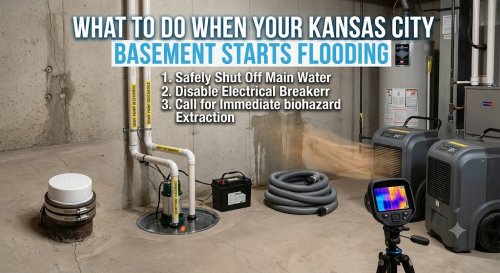
Before calling a professional or attempting any hands-on inspection, homeowners must recognize strict safety boundaries, especially concerning electricity and flooded basements.
Safe Homeowner Triage Steps:
- Inspect the Float Switch: Ensure the mechanical float or tether is not wedged against the side of the basin or entangled with power cords.
- Check the Discharge Line: Walk the exterior pipe path to verify water is exiting freely at least six to ten feet away from the foundation and that the outlet is not blocked by leaves, ice, or landscaping.
- Test the Circuit Breaker: Check the main electrical panel to see if a GFCI outlet or dedicated breaker has tripped due to moisture or motor overload.
- Perform a Bucket Test: Pour a bucket of water directly into the basin to see if the float rises smoothly and triggers the motor to engage and empty the pit.
Dangerous DIY Boundaries to Avoid:
- Never step into standing water in a basement if the electrical power to the area is still active, as submerged outlets, frayed cords, or shorted appliances create lethal shock hazards.
- Do not attempt to disassemble sealed submersible pump housings or tamper with electrical wiring unless you are a licensed electrician or plumber.
- Avoid pouring harsh chemical degreasers or acid-based cleaners into the sump pit to clear scale, as these chemicals can degrade plastic basin walls and destroy submersible seals.
Realistic Repair Approaches and Decision Support
Addressing a compromised sump system requires evaluating whether to repair individual components or replace the entire assembly. The table below outlines common failure symptoms, probable causes, and realistic repair paths suited for Kansas City properties.
| Symptom | Probable Cause | Realistic Repair Approach |
|---|---|---|
| Pump hums loudly but does not pump water | Jammed impeller, debris in intake, or seized motor bearing | Disconnect power, clear pit debris, inspect impeller; replace pump if motor is seized. |
| Pump cycles continuously every few seconds | Faulty check valve allowing backflow, or float switch stuck in upper position | Replace faulty flapper/swing check valve or adjust/replace vertical float switch assembly. |
| Water rises above basin rim despite pump running | Frozen or blocked discharge line, or pump capacity (GPM) mismatched to inflow | Clear exterior discharge blockage; thaw frozen lines; upgrade to higher-capacity primary pump. |
| Frequent electrical breaker trips during storms | Internal motor winding short, or overloaded shared circuit | Verify pump is on a dedicated electrical circuit; replace failing pump motor. |
When planning repairs or upgrades, local factors matter. In municipalities across the Kansas City metro, municipal codes dictate where sump discharge water must drain. Discharging stormwater directly into the sanitary sewer system is strictly prohibited in many jurisdictions, requiring exterior daylight discharge or proper connection to designated storm drainage easements. Furthermore, complex basement configurations with high hydraulic inflow often benefit from installing a dual-pump system featuring a primary unit paired with a battery-powered backup pump to ensure uninterrupted protection during severe regional power outages.
Frequently Asked Questions About Sump Pumps
Why does my sump pump run constantly even after the rain stops?
A continuously running pump is usually caused by a stuck float switch, a broken check valve allowing water to cycle backward into the pit, or an exceptionally high local water table where groundwater continuously seeps through the foundation weeping tile system.
How often should a residential sump pump be replaced?
Most standard thermoplastic or cast-iron sump pumps last between 7 to 10 years. Units subjected to heavy silt loads, iron bacteria, or continuous high-volume pumping may wear out sooner and should be inspected annually.
Can I connect my sump pump discharge line to the home sewer cleanout?
No. Connecting a sump pump to the sanitary sewer is illegal in most Kansas City area municipalities because it overloads municipal treatment plants during heavy storms, risking severe fines and basement sewage backups.
What is the benefit of a battery backup sump pump?
Severe thunderstorms in the Midwest frequently cause power outages right when heavy rainfall demands maximum pumping capacity. A secondary battery backup pump operates independently on a DC power source to prevent basement flooding during power failures.
Why is my sump pump making a loud banging noise when it turns off?
That banging sound is "water hammer," caused by the check valve slamming shut too quickly under the weight of the water column in the vertical pipe. Installing a spring-loaded silent check valve typically resolves this issue and reduces stress on the plumbing joints.